'Mysterious Skin' Explained: Themes, Plot Breakdown, and Streaming Availability Guide
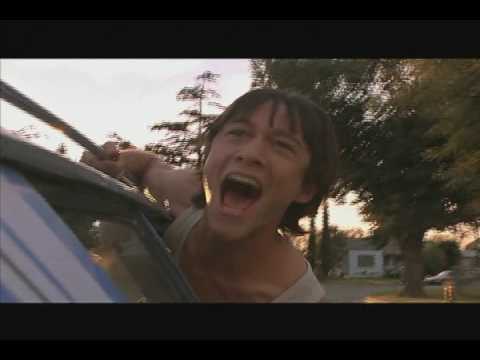
Two decades after its premiere at the Venice Film Festival, Gregg Araki's Mysterious Skin continues to provoke intense critical reevaluation. Long categorized alongside the raw provocations of 1990s New Queer Cinema, the 2004 coming-of-age indie film stands apart for its unflinching, compassionate dissection of early abuse. As highlighted in a recent retrospective loudandclearreviews.com Report, modern audiences and critics increasingly view the picture as an unmatched study of how shattered memory reorganizes identity. Driven by breakout turns from Joseph Gordon-Levitt and Brady Corbet, the film captures the lifelong shockwaves of predatory exploitation with uncompromising narrative clarity.
The film's visibility has expanded significantly throughout 2025 and 2026, sparked by boutique physical restorations, digital repertory streaming, and Scott Heim's reissued source novel. Viewers encountering the title today discover an intricate repressed memory trauma drama that trades exploitation shocks for atmospheric dread and emotional weight. Untangling its narrative mechanics requires looking closely at its literary origins, its sonic architecture, and the contrasting psychological survival strategies of its dual leads.
📌 Key Takeaways:
- The Core Narrative: The story traces two boys from Hutchinson, Kansas, whose childhood encounter with a Little League coach shatters their reality into completely opposite psychological survival strategies.
- The Dissociative Armor: Brian Lackey invents an alien abduction metaphor to shield his conscious mind from blackouts and physical violations, while Neil McCormick embraces reckless hypersexuality to reassert control.
- Current Accessibility: Restored in native 4K, the feature streams across boutique platforms like The Criterion Channel and Kanopy while remaining available through major digital video storefronts.
Scott Heim's Novel and Gregg Araki's Stylistic Departure
Before adapting the material in 2004, director Gregg Araki built his reputation on the anarchic, hyper-saturated energy of his "Teenage Apocalypse Trilogy" (Totally F***ed Up, The Doom Generation, and Nowhere). Those earlier features embraced camp surrealism, nihilistic humor, and punk confrontation. When Araki acquired the rights to Scott Heim's 1995 debut novel, industry observers expected another blast of acid-hued satire. Instead, the director produced his most patient, disciplined, and emotionally devastating screen adaptation.
Heim wrote the novel drawing partly on his own upbringing in rural Kansas, anchoring the story in vast plains, suffocating small-town closets, and baseball dugouts. Araki preserved the book's dual-narrative architecture almost entirely. The screen translation retains the distinct voices of its two protagonists, letting their lives run parallel until their inevitable collision in the final act. Rather than leaning on cinematic shock tactics, Araki approached the material with profound empathy for young survivors, stripping away sensationalism in favor of stark human behavior.
Two Paths Through Trauma: Joseph Gordon-Levitt and Brady Corbet
The emotional core of the film hinges on the polar-opposite responses of Neil McCormick and Brian Lackey. Neil, played with raw magnetism by Joseph Gordon-Levitt in what remains a career-defining role, internalizes his molestation as a source of affection and unique validation. To preserve his sense of self-worth, Neil rationalizes that Coach loved him exclusively. This rationalization propels him into a life of teenage sex work in New York City, where he seeks transaction-based intimacy to maintain the illusion that he holds all the power.
Brady Corbet's Brian Lackey occupies the opposite end of the trauma spectrum. Plagued by persistent nosebleeds, five missing hours from his eighth year, and profound social alienation, Brian cannot consciously recall the violation. Instead, his psyche creates a science-fiction defense screen: extraterrestrial intervention. Corbet plays Brian with a hunched, trembling interiority, portraying a young man desperately hunting down fellow UFO obsessives to validate a fantasy that protects him from an unbearable reality.
| Psychological Marker | Neil McCormick (Joseph Gordon-Levitt) | Brian Lackey (Brady Corbet) |
|---|---|---|
| Coping Strategy | Hypersexual agency, conscious romanticization | Psychogenic amnesia, alien abduction mythos |
| Physical Manifestation | Reckless bodily risk, high-risk sex work | Chronic nosebleeds, night terrors, bedwetting |
| Adult Environment | Urban streets of New York City | Suburban Kansas basements and bedrooms |
| Psychological Blindspot | Refusal to acknowledge he was exploited | Refusal to accept the human origin of his injury |
The Alien Abduction Metaphor and Psychological Dissociation
The alien abduction metaphor operates as the film's most striking conceptual device. When Brian wakes up in his cellar with blood flowing from his nose and no memory of the afternoon, his eight-year-old brain cannot process the violation committed by Coach. In 1980s middle America, where widespread media fascination with UFOs saturated daytime talk shows, extraterrestrial mythology provided an accessible framework for an impossible horror. Bright blinding lights, physical paralysis, medical violation, and missing time matched his subjective sensory memory.
Psychologists recognize this dynamic as profound dissociation, a survival mechanism where extreme terror causes the mind to sever conscious connection from the body. By trading predatory pedophilia for cosmic visitors, Brian protects himself from the terrifying truth that a trusted adult neighbor assaulted him. The metaphor holds firm until early adulthood, when his meetings with fellow abductee claimants, particularly an encounter with a woman who similarly uses alien narratives to mask childhood assault, begin cracking his internal defenses.

The Sonic Texture: Harold Budd and Robin Guthrie's Dream-Pop Score
A crucial factor in the film's lasting critical reputation is its haunting sonic environment. Araki enlisted ambient composer Harold Budd and Cocteau Twins co-founder Robin Guthrie to compose the original score. Their atmospheric, reverb-heavy instrumentation bathes the midwestern settings in a melancholic haze that sharply offsets the harsh brutality on screen.
Tracks like "Neil's Theme" and "The Memory" float through scenes with crystalline guitar work and fragile piano arrangements. Rather than relying on ominous horror stingers to cue dread, the soundtrack uses gentle dream-pop layers that mirror the seductive illusions shielding the characters. Combined with licensed cuts from Slowdive and Sigur Rós, the score wraps the horror in a sorrowful, hypnotic spell that lingers long after the credits roll.
Mysterious Skin Ending Explained: The Christmas Eve Revelation
The convergence of Neil and Brian in the final act delivers one of the most devastating climaxes in modern independent film. Desperate to uncover what happened during his lost five hours, Brian tracks down Neil, who has fled back to Kansas after a horrifying, near-fatal assault in New York by an aggressive client. On Christmas Eve, sitting in Neil's childhood home, the two young men confront the truth together.
Neil brings out Coach's old scorebook and a hidden VHS cassette, forcing Brian to look directly at the reality of their shared summer. In that living room, Brian's alien myth evaporates entirely. He breaks down, realizing the blinding lights and missing hours were simply the clinical, deliberate abuse of a man they trusted. Neil, meanwhile, watches his own romantic illusion crumble. He finally admits that Coach did not love him; Coach simply saw him as an available target. The closing scene, set against the snow and Guthrie's mournful guitar, offers no tidy redemptive Hollywood resolution. It offers only shared recognition: two shattered survivors sitting shoulder to shoulder, bearing witness to each other's survival.
2026 Streaming Availability and Home Media Formats
Finding high-definition presentations of early 2000s independent cinema can be challenging, but Araki's film remains accessible across curated digital catalogs. Thanks to physical media preservation initiatives from Strand Releasing and international boutique labels, the movie completed a full 4K digital restoration from the original 35mm camera negatives, overseen by Araki himself.
North American viewers can currently access the film through multiple streaming options and rental platforms:
- The Criterion Channel: Frequently featured in New Queer Cinema, coming-of-age, and 2000s indie cinema rotations.
- Kanopy: Available to stream for free with supported university credentials or public library accounts.
- Digital Video-on-Demand (VOD): Available to rent or purchase in high definition across Apple TV, Amazon Prime Video, and Fandango at Home.
- Physical Media: Strand Releasing maintains the definitive collector's edition Blu-ray and 4K UHD release, featuring audio commentaries with Araki, Gordon-Levitt, and Corbet, alongside deleted scenes and archival interviews.
Frequently Asked Questions (FAQ)
Q1: Is Mysterious Skin based on a true story?
A1: The film is an adaptation of Scott Heim's 1995 semi-autobiographical novel. While Heim drew on his real childhood surroundings in Kansas and personal emotional observations, the specific plot mechanics and central narrative concerning Little League exploitation are works of fiction.
Q2: Why does Brian believe he was taken by extraterrestrials?
A2: Brian's young mind suffered severe psychogenic amnesia during his abuse by Coach. To survive the trauma, his psyche substituted the blinding light and lost hours with popular 1980s alien abduction imagery, creating a fantasy barrier that kept him from facing the reality of human assault.
Q3: Does the film contain graphic depictions of child abuse?
A3: Araki deliberately avoids graphic, explicit physical depictions of minors during the abusive sequences. The director instead relies on heavy psychological suggestion, off-screen sound design, and the facial reactions of the performers to convey the severity of the acts without tipping into exploitative exploitation.
The Enduring Cultural Legacy of Araki's Coming-of-Age Landmark
Decades removed from its initial release, Mysterious Skin maintains an exceptional position within independent film history. It marked the moment Gregg Araki expanded beyond the kinetic satire of his early filmography to deliver a rigorous, deeply moving psychological drama. The film launched Joseph Gordon-Levitt from sitcom familiarity into serious dramatic acting and established Brady Corbet as an essential voice in contemporary American independent cinema, both in front of and behind the camera.
The film endures because it treats the mechanics of childhood survival with clinical honesty. It does not pathologize its characters' broken defenses, nor does it force an artificial happy ending upon unresolved trauma. By allowing Neil and Brian to simply sit together in shared truth on a cold Kansas evening, the production honors the complicated reality of survival: acknowledging the pain of the past without pretending it can ever be undone.


