Never Say It Wrong Again: The Real Way to Ask for the Restroom in Spanish
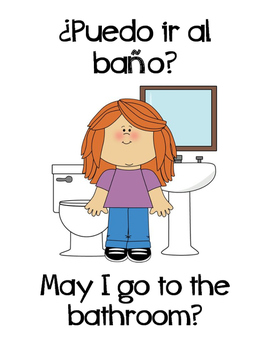
Travelers routinely freeze in a crowded Madrid café or a Mexico City taquería when urgent biological needs strike. Most fall back on the eight-word formula drilled into their heads during secondary school: ¿Puedo ir al baño? While grammatically intelligible, blurted out to a busy server, the phrase instantly registers as clumsy. Native adults do not ask strangers for permission to step away to the toilet.
Linguistic missteps carry real social friction abroad. Cultural misunderstandings often mirror non-verbal faux pas, an issue documented in a recent rd.com Report on common gestures that carry offensive meanings in other countries. Just as an innocent hand signal can provoke cold stares, using juvenile sentence patterns creates an immediate conversational barrier. Navigating daily interactions abroad requires understanding how real speakers request directions, soften their speech, and select vocabulary appropriate to the room.
📌 Key Takeaways:
- The Classroom Trap: Asking ¿Puedo ir al baño? requests permission rather than location, making adult travelers sound like ten-year-olds raising their hands at school desks.
- Locational Framing: Native speakers ask where facilities are located using ¿Dónde está el baño? or ¿Dónde están los servicios? combined with essential courtesy softeners.
- Regional Nuances: Castilian Spanish favors terms like el servicio and el aseo in public hospitality, while Latin American Spanish relies primarily on el baño or los sanitarios.
The Schoolroom Reflex and Why Adult Travelers Get Trapped
Every language student remembers raising a hand to recite classroom Spanish phrases. Instructors taught ¿Puedo ir al baño? because a classroom setting demands explicit teacher clearance before a student leaves their assigned seat. Outside school walls, that dynamic dissolves.
When an adult asks a bartender or museum attendant ¿Puedo ir al baño?, the literal meaning translates to: "Am I allowed to go to the bathroom?" The listener does not manage your personal schedule. Bartenders do not grant or deny bodily permissions. They provide directions. By defaulting to permission-based phrasing, foreign speakers inadvertently lower their social register to that of a child speaking to an authority figure.
Replacing this reflex requires shifting your mental model from seeking approval to requesting navigational assistance. Real-world travel Spanish essentials center on spatial orientation. You already have permission. You simply lack the floor plan.
Framing Polite Requests: Where Instead of May I
The baseline inquiry across the Spanish-speaking world is straightforward: ¿Dónde está el baño? (Where is the bathroom?). It conveys your goal directly without childish undertones. If you are addressing multiple facilities or public restrooms in a transportation hub, the plural ¿Dónde están los baños? functions identically.
Directness without courtesy markers sounds blunt in Spanish. Dropping a raw question onto a store clerk can feel aggressive. Fluent speakers cushion locational questions using polite requests in Spanish, relying on social buffers like disculpe or por favor.
Consider the difference between walking up to a counter and saying:
"¿Dónde está el baño?" (Abrupt, borderline demanding)
And framing it with standard etiquette:
"Disculpe, ¿me puede indicar dónde está el baño, por favor?" (Pardon me, could you tell me where the bathroom is, please?)
The second option bridges the gap between functional speech and social polish. It signals basic conversational competence and puts the worker at ease immediately.
Formal vs Informal Spanish: Navigating Social Hierarchies
Choosing between formal vs informal Spanish dictates how your inquiry is received. When interacting with strangers, hospitality staff, elder citizens, or officials, the formal register, using the pronoun usted, remains the gold standard across Latin America and parts of southern Spain.
To ask an attendant formally, use the third-person conjugation:
"Disculpe, señor/señora, ¿dónde está el baño?"
If you need to ask a peer at a casual youth hostel or an outdoor music festival, the informal tú register applies cleanly:
"Oye, disculpa, ¿sabes dónde hay un baño?"
The subtle shift from disculpe (formal) to disculpa (informal) matches the social setting. Defaulting to disculpe prevents accidental disrespect. Nobody takes offense at excessive politeness from a foreign guest, but casual informality directed toward an older server in a heritage restaurant can generate silent disapproval.

Castilian vs Latin American Spanish: The Regional Terminology Matrix
Restroom vocabulary changes noticeably as you cross borders. A phrase standard in Madrid can sound antiquated or overly institutional in Buenos Aires or Bogotá.
In Spain, adults rarely utter the word baño when dining at a mid-tier or upscale restaurant. They favor el servicio (the service/restroom) or el aseo (the washroom). Asking for el baño in an elegant Madrid bistro often conjures the literal image of a private residential bathtub, leading patrons to politely ask: "¿Dónde están los servicios?" or "¿Tienen aseos?"
Across Latin America, el baño carries no social stigma and functions comfortably in both street-level taquerías and fine dining dining rooms. In formal administrative contexts, such as airports or municipal buildings, signage frequently defaults to los sanitarios or servicios higiénicos.
| Region / Country | Preferred Spoken Term | Public Signage Term | Recommended Social Phrasing |
|---|---|---|---|
| Spain (Castilian) | Los servicios, el aseo | Aseos, Servicios | "Perdone, ¿dónde están los servicios?" |
| Mexico & Central America | El baño | Sanitarios, Baños | "Disculpe, ¿dónde queda el baño?" |
| Colombia & Andes | El baño | Baños, Sanitarios | "Qué pena, ¿me indica el baño?" |
| Argentina & Uruguay | El baño, el toilette | Baños, Sanitarios | "Permiso, ¿dónde está el baño?" |
Spanish Etiquette: When to Use Disculpe vs Con Permiso
Mastering Spanish etiquette involves understanding two critical courtesy phrases: disculpe and con permiso. English speakers often translate both concepts as "excuse me," creating frequent confusion during high-stakes travel moments.
Disculpe (or perdone) serves to capture someone's attention or apologize for causing an interruption. Use it before asking your question to a waiter who is currently wiping down a counter or carrying a tray.
Con permiso (frequently shortened to just permiso) applies strictly to physical space. You utter con permiso when you need someone to step aside in an aisle, when slipping past patrons at a crowded bar counter, or when excusing yourself from a dinner table to head to the restroom.
When you stand up from a communal meal, do not announce your biological intentions. Announcing to an entire table that you must use the toilet is considered crude. Simply make eye contact, say "Con permiso" with a gentle nod, and leave the table. The phrase carries all necessary social clearance without oversharing.
Reading the Room: Door Signs and Restroom Navigation
Locating the facility is only half the battle. Reading foreign door markers accurately avoids humiliating entries into the wrong stall.
In many regions, restrooms do not use pictograms. They feature written script:
- Caballeros or Hombres: Men
- Damas, Mujeres, or Señoras: Women
- Aseos / Servicios: General public restrooms
- Minusválidos or Accesible: Accessible facilities
A classic traveler pitfall occurs in venues where doors are marked solely with the letters C and M. English speakers instinctively associate "M" with "Men." In Spanish-speaking territories, M stands for Mujeres (Women), while C stands for Caballeros (Gentlemen). Rushing through a door marked "M" based on English linguistic instincts triggers immediate embarrassment.
In European cities like Barcelona or Seville, public facilities in transit hubs frequently operate with automated turnstiles requiring small change (often €0.50, €1.00) or dynamic entry codes printed along the bottom of your purchase receipt. Keep your paper receipt until you have safely finished your meal and accessed the facilities.
Frequently Asked Questions (FAQ)
Q1: Is it considered offensive if I accidentally say "¿Puedo ir al baño?"
A1: Native speakers will not be offended. They will understand your request instantly because they recognize foreign learner habits. However, the phrasing sounds noticeably childish, much like an adult asking permission from a parent.
Q2: What is the single safest phrase to memorize for any Spanish-speaking country?
A2: Memorize "Disculpe, ¿dónde está el baño, por favor?". This phrase works across every demographic and country without sounding awkward, overly formal, or rude.
Q3: What should I say when I need to excuse myself from a business meeting or dinner?
A3: Stand up slightly, make brief eye contact, and say "Con permiso" or "Disculpen un momento". You do not need to mention the restroom at all; the polite dismissal handles the situation completely.
Q4: Why did a server respond to my restroom question with "¿Al fondo a la derecha?"
A4: This is the most famous spatial direction in the Spanish restaurant industry. It means "All the way in the back, to the right." Its counterpart is "Al fondo a la izquierda" (in the back, to the left).
Refining Everyday Spanish for Real-World Travel
Mastering a foreign language rarely hinges on reciting complex subjunctive verb charts. Fluency shows up in micro-interactions: how you greet a vendor, how you pass someone on a crowded train, and how you ask for basic necessities without causing a scene.
Leaving schoolroom phrasing behind marks a critical turning point for any traveler. By substituting ¿Dónde está el baño? or ¿Dónde están los servicios? for outdated permission queries, you align your language with native conversational realities. Pair that phrasing with a soft disculpe and an awareness of regional differences, and you will navigate any transit terminal, café, or cantina with quiet confidence.


