Newark Airport Terminal B Overhaul Approved: Key Dates and Traveler Travel Alerts
The Port Authority of NY and NJ has officially authorized a $200 million capital investment package to overhaul Terminal B at Newark Liberty International Airport (EWR). Designed as a targeted modernization bridge before an eventual multi-billion-dollar ground-up replacement in the next decade, this capital injection aims to salvage passenger flow through New Jersey's busiest international terminal. Ground conditions have steadily deteriorated as post-pandemic transatlantic volume outpaces the physical capacity of a building constructed in 1973.
The urgency behind this renovation mirrors the airport's wider operational shifts. As detailed in an IndianEagle Report covering the concurrent expansion of Terminal A, which is adding eight new gates to manage domestic spillover, the Port Authority is desperate to keep EWR from gridlock while heavy construction reshapes the airfield.
📌 Key Takeaways:
- Approved Capital: The Port Authority has dedicated $200 million to overhaul Terminal B's screening zones, mechanical baselines, and processing areas through 2027.
- Core Bottlenecks: Upgrades focus directly on Customs and Border Protection processing capacity, outbound baggage handling, and concourse circulation.
- Operational Friction: The terminal renovation timeline coincides directly with a 100-day scheduled AirTrain EWR disruption, forcing thousands onto terminal transfer shuttle buses.
- Airline Impacts: More than 15 foreign flag carriers face rolling gate reassignments, narrower gate hold rooms, and shifting check-in allocations during peak arrival banks.
Why the Port Authority Greenlit the $200M Stopgap
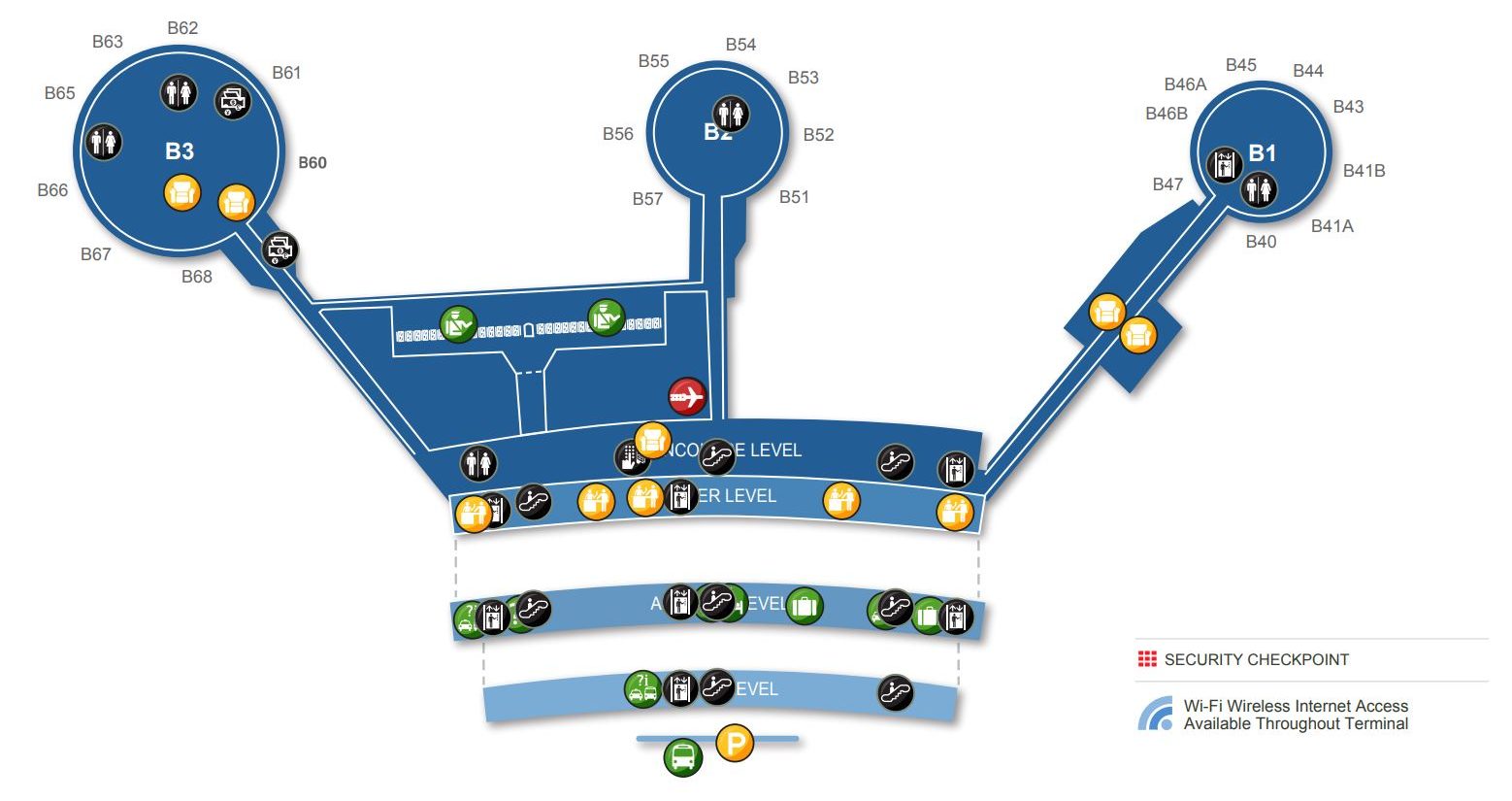
Terminal B is operating on borrowed time. When the facility opened five decades ago, widebody aircraft like the Boeing 747 carried far fewer daily international arrivals and departures than the continuous flow of twin-aisle jets landing today. The terminal's three distinct satellite pods, housing concourses B1, B2, and B3, routinely back up during the 4:00 PM to 9:00 PM transatlantic rush, leaving passengers stacked in corridors waiting to enter immigration halls.
The $200 million measure does not replace the building. Instead, the Port Authority structured the spend to buy approximately seven to ten years of operational stability. Board meeting transcripts reveal that waiting for a brand-new "Terminal Two", projected to mirror the award-winning $2.7 billion Terminal A, would risk severe regulatory interventions from federal safety monitors and foreign flag carriers threatening to shift departures to JFK.
Inside the Upgrades: Customs, Ticketing, and Concourse Modernization
The bulk of the capital focuses on three acute failure points: border control intake, terminal baggage screening, and gate holding zones. In the lower-level international arrivals facility, U.S. Customs and Border Protection will receive modernized queuing lanes and 40 new automated passport control kiosks alongside expanded Global Entry lanes to clear inbound surges faster.
On the upper departure tiers, concourse modernization plans require tearing out legacy concession kiosks to reclaim floor space for passengers waiting to board widebody aircraft. The Port Authority is also upgrading the mechanical sorting equipment on the baggage claim level. Modern widebody luggage loads frequently overwhelm the 1980s carousel motors, leading to ground-crew delays and luggage piled along the curb.
TSA security wait times remain another core priority. The Port Authority plans to consolidate disparate security checkpoints on the mezzanine into wider, checkpoint-standard lanes equipped with computed tomography (CT) scanners, allowing passengers to keep electronics and liquids inside their bags.
Terminal Renovation Timeline and Operational Phases
Engineers have structured the project into sequential phases to keep international flights operating without widespread cancellations. Work is being coordinated around overnight hours and mid-day lulls, but gate closures and temporary screening walls will be a constant reality.
| Phase | Target Dates | Operational Impacts |
|---|---|---|
| Phase 1: CBP & Arrivals | Mid-2026, Late 2026 | Immigration floor reconfigured; selective passport lane closures; baggage carousel maintenance. |
| Phase 2: TSA Consolidation | Late 2026, Early 2027 | Mezzanine screening walls shifted; temporary lanes set up; TSA wait times variable at Concourse B2/B3. |
| Phase 3: Concourse Interiors | Early 2027, Mid-2027 | Rolling 1-to-2 gate shutdowns per concourse; retail concessions replaced with expanded seating. |

Managing the AirTrain Disruption and Curb Congestion
The construction push coincides with a major operational complication on Newark's transit tracks. As maintenance crews execute a scheduled 100-day systemwide pause on segments of the existing monorail network, travelers attempting to connect between Terminals A, B, and C will face distinct headaches.
To offset the rail shutdown, the airport is relying on an intensive terminal transfer shuttle operation. Fleets of high-capacity buses are circulating the airport roadways continuously, but ground traffic during Friday and Sunday evening peaks has triggered severe bottlenecks along Terminal B's departure viaduct.
Passengers using public transit to reach EWR via NJ Transit or Amtrak at the Newark Airport Rail Link station must clear customs or check luggage early. Connecting from train platforms to the Terminal B check-in counter now requires taking a station replacement bus, adding an estimated 25 to 40 minutes to typical airport transit windows.
Navigating Peak Hours: What International Travelers Must Expect
Terminal B hosts an eclectic mix of international carriers, including Lufthansa, British Airways, SAS, TAP Air Portugal, Emirates, and Singapore Airlines, alongside select domestic flights from Delta and Spirit. The physical segregation of the terminal's three concourses means that once passengers clear security into their assigned pod, they cannot walk to another pier without exiting back to landside and clearing security a second time.
During the overhaul, lounge space will be heavily squeezed. Several carrier lounges located post-security are operating with reduced footprints or temporary capacity caps as structural HVAC upgrades are completed above ceiling plenums. Travelers holding business class tickets or elite status are frequently being turned away during the peak 5:00 PM bank due to overcrowding.
Airlines are urging ticket holders to arrive at least 3.5 hours before departure for international itineraries. The combination of rolling counter shifts in the check-in lobby and lane closures at central security checkpoints has produced localized queues that spill directly across passenger walkways.
Frequently Asked Questions (FAQ)
Which airlines operate out of Newark Terminal B?
Terminal B handles the vast majority of non-United international airlines at EWR, including Star Alliance, SkyTeam, and oneworld international partners like Lufthansa, British Airways, Air France, and Virgin Atlantic. Delta Air Lines, Spirit Airlines, and Allegiant also operate select domestic departures from its concourses.
Will any international flights be cancelled due to the $200 million renovation?
Airlines do not plan outright schedule reductions. However, flight departures may experience gate holds during arrival peak banks, and specific flights could be temporarily shifted to vacant gates in Terminal A or C when widebody gates in Concourse B2 undergo jet bridge replacements.
How can passengers transfer between Terminal B and other terminals during the AirTrain disruption?
Passengers must use the dedicated Port Authority terminal transfer shuttle buses, marked by curbside signage on the ground arrivals level. Shuttles run every 5 to 10 minutes, but travelers should budget a minimum of 30 minutes exclusively for inter-terminal transfers.
What Lies Ahead for Newark's International Gateway
The $200 million investment package is ultimately triage. Port Authority executives have made clear that no amount of cosmetic restructuring, upgraded floor tiles, or repositioned security scanners can fully fix the terminal's 1970s structural limitations. With ceiling clearances that cannot easily accommodate modern baggage automation and gate spacings that struggle with next-generation widebody wingspans, Terminal B will eventually be decommissioned.
For now, the project represents a necessary maintenance sprint. Air travelers navigating Newark's international hub between now and 2027 must contend with temporary drywalls, rerouted boarding queues, and shuttle-bus transfers. Surviving the gateway requires active planning: checking flight gate assignments before clearing security, arriving well ahead of customary deadlines, and planning for delays across every level of the airfield.


