Remember the Titans Fact Check: Separating Sunshine’s Myth from Fact
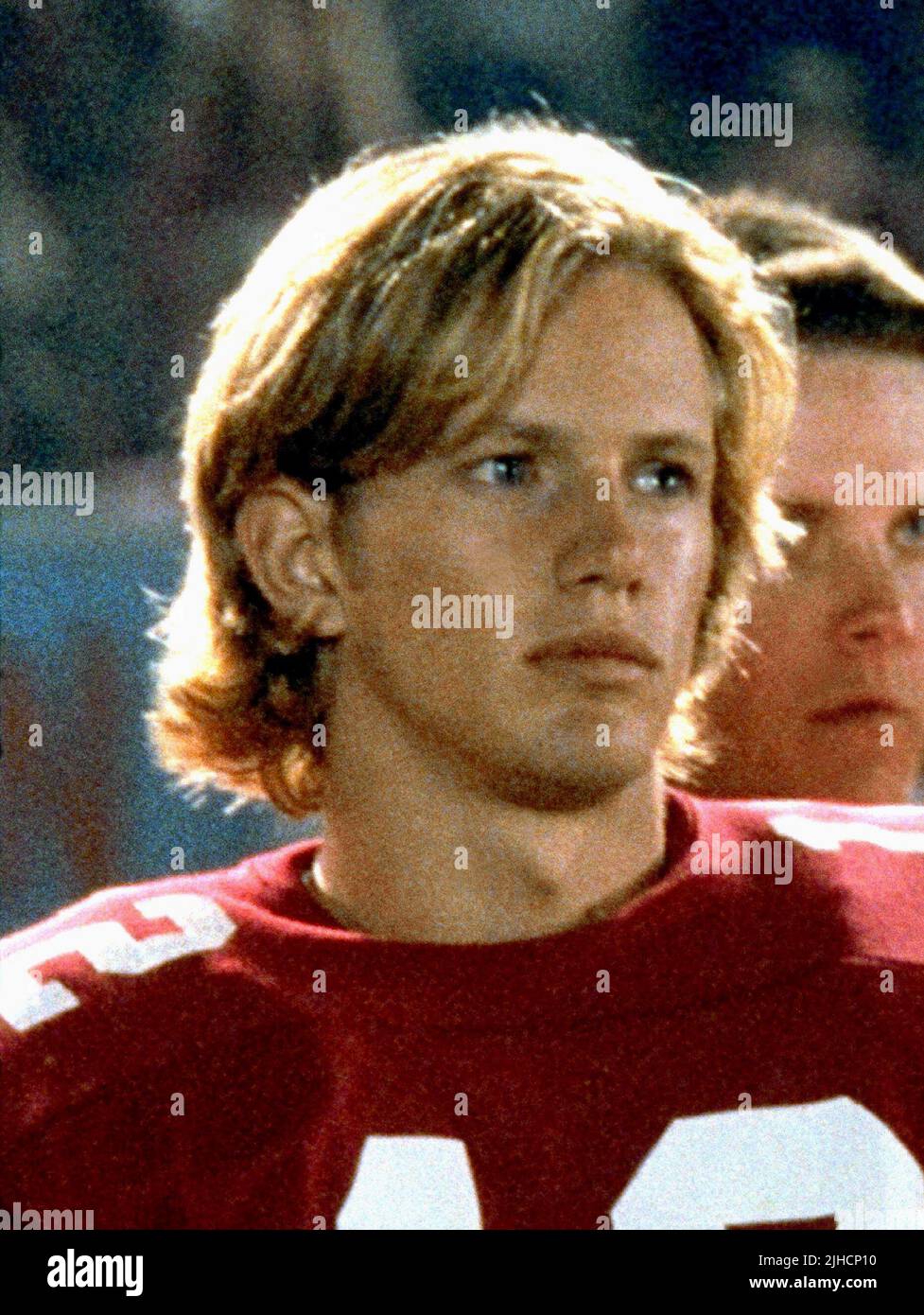
When actor Kip Pardue stepped out of a convertible in Disney's classic 2000 sports drama, hair blowing in the wind, a generation of moviegoers bought into the myth of the groovy West Coast outsider who unified a segregated Virginia locker room. The silver screen introduced Ronnie "Sunshine" Bass as a free-spirited, long-haired Californian whose arrival brought laid-back charm and unexpected grit to a tense high school football squad. Yet, as detailed in an extensive looper.com report on the true story, Hollywood's portrayal took massive liberties with both the person and the timeline of the legendary 1971 season.
Decades after the film's theatrical release, sports fans and film buffs continue to re-examine the true story vs movie dynamics of the 1971 T.C. Williams High School Titans. Did Ronnie Sunshine Bass actually transfer from California in the middle of a racial integration crisis? Did he really plant an impromptu kiss on team captain Gerry Bertier to break locker room tension? Reassessing the historical archives, contemporary Virginia reporting, and firsthand player accounts reveals a stark contrast between Hollywood drama and historical reality.
📌 Key Takeaways:
- The California Myth: Ronnie Bass did not transfer from California in 1971; he arrived in Alexandria, Virginia from California years earlier as an elementary school student before transferring internally from another local school.
- The Fabricated Rivalry: The dramatic hostility between Bass and starting quarterback Jerry Harris was entirely invented by Hollywood scriptwriters to heighten narrative stakes.
- Championship Reality: While the film depicts Bass leading a nail-biting, fourth-quarter comeback in the 1971 state championship, the real Titans crushed their final opponent 27-0 in a complete blowout.
Did Ronnie Sunshine Bass Really Transfer from California?
Disney painted an unforgettable picture of Bass's sudden entrance: a sun-drenched transplant dropped directly into the sweltering racial tensions of suburban Virginia. The cinematic narrative hinged on his perceived cultural alienation. In the movie, head coach Herman Boone and defensive coordinator Bill Yoast view him as an oddity from a different world.
The historical reality is far more conventional. Bass's father had indeed served in the military and lived on the West Coast, but the family did not relocate across the country on the eve of the 1971 football season. Bass had been living in Alexandria, Virginia since the mid-1960s, attending local public schools long before the city consolidated its upper grades.
His transfer to T.C. Williams High School was not an interstate migration. It was the direct result of a district-wide desegregation plan implemented by the Alexandria School Board. In 1971, the city merged three existing high schools, George Washington, Francis C. Hammond, and T.C. Williams, into a single consolidated system for juniors and seniors. Bass arrived at T.C. Williams simply because he had attended Hammond as an underclassman. He was not a cultural shockwave from the Pacific Coast; he was an Alexandria kid walking into a reorganized local school.
Hollywood Inventions: Locker Room Clashes and the Famous Kiss
Screenwriter Gregory Allen Howard crafted several comedic and dramatic beats around the "Sunshine" moniker to illustrate the team's messy integration. The most infamous cinematic moment occurs when Pardue's character kisses linebacker Gerry Bertier on the lips to taunt Bertier's traditional masculinity. It provoked an immediate brawl, forcing coaches Boone and Yoast to intervene.
That scene never happened off-camera. In multiple retrospective interviews, Bass expressed amusement and slight bewilderment at the addition, confirming that the locker room kiss was entirely fictitious. Bertier and Bass had a professional, brotherly relationship built entirely around football, completely devoid of deliberate locker room psych-outs.
The film also engineered an antagonistic rivalry between Bass and starting quarterback Jerry Harris. On screen, Harris acts resentful, while Bass struggles with complex playbook calls before stepping up as an unexpected savior. In historical truth, Harris and Bass were close friends who collaborated closely on the depth chart. The real high school football history records that the team operated as a cohesive unit far earlier in the fall than the movie suggests, partly because the student-athletes had known and competed against one another across Alexandria youth leagues for years.
Historical Record: Real 1971 Titans vs. Hollywood Mythology
Disney structured the 1971 campaign as an underdog saga where every Friday night pushed the Titans to the brink of disaster. The true 1971 state championship run was an absolute juggernaut. Under Herman Boone's disciplined conditioning and Bill Yoast's suffocating defense, T.C. Williams swept through the season practically uncontested.
| Narrative Element | Disney Movie Depiction (2000) | Historical Fact (1971 Season) |
|---|---|---|
| Bass's Origin | Fresh transfer from California during senior camp | Alexandria resident; transferred locally from Hammond High |
| Quarterback Status | Reluctant hippie thrown into the starting job | Reliable backup quarterback and key rotational starter |
| Locker Room Kiss | Kisses Gerry Bertier to defuse tension and provoke a fight | Completely fabricated; never occurred |
| Championship Game | Last-second trick play wins a nail-biter, 26, 23 | Defensive shutout; T.C. Williams beat Andrew Lewis 27, 0 |
| Gerry Bertier's Crash | Occurs right before the championship game | Occurred after the championship game during celebration week |
The state championship game against Andrew Lewis High School contained none of the nail-biting suspense shown on screen. The film depicted a desperate, goal-line defensive stand and a trick play executed by Bass to secure victory by three points. In reality, the Titans suffocated their opponents, allowing minus-five total yards of offense in a runaway 27-0 rout. Bass played solidly throughout the postseason, but he was never tasked with rescuing a collapsing squad at the final whistle.
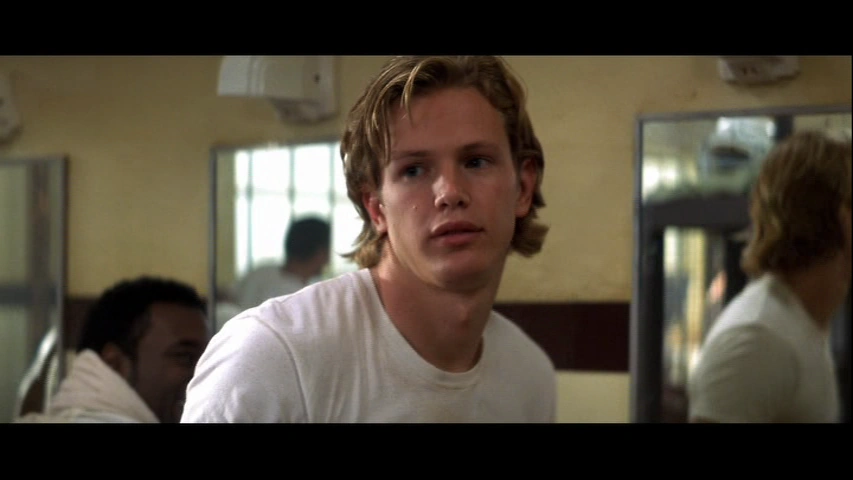
The Real Ronnie Bass After the 1971 Season
Disney wraps up the Titans' story immediately after their state title victory, showing the boys reuniting ten years later at Bertier's funeral. This cinematic framing obscured the substantial athletic achievements Ronnie Bass logged after the 1971 consolidation.
Bass was not a senior during the 1971 championship season. He was a junior. Following the departure of the older class, Bass took over as the primary starting quarterback in 1972, leading the Titans through another competitive campaign. His play caught the attention of major collegiate programs, eventually earning him an athletic scholarship to the University of South Carolina.
In Columbia, Bass proved his high school pedigree was no accident. Playing for the South Carolina Gamecocks from 1973 through 1977, he started at quarterback under head coach Jim Carlen. In 1977, Bass led South Carolina in total offense, completing his college career with notable victories against major regional rivals. He walked away from competitive athletics with real bona fides, working for decades in sports broadcasting and municipal recreation rather than drifting away into counterculture folklore.
Why Disney Altered the True Story
Simplifying complex local integration into high-stakes cinema is standard operating procedure for major Hollywood studios. Gregory Allen Howard and director Boaz Yakin needed clear emotional shorthand to explain racial integration to mainstream moviegoers. Condensing three high schools into a single team was easy, but communicating the cultural estrangement of the era required sharp, visible archetypes.
The fictionalized version of Sunshine served that precise structural need. By turning Bass into a laid-back Californian, the script created a neutral party who stood outside Virginia's historic racial binaries. He acted as an accessible audience surrogate: an easygoing figure untainted by Southern segregation who could build bridges across both racial factions.
While the dramatization stripped away historical accuracy, former players, including Bass himself, have publicly acknowledged the movie's positive broader cultural resonance. The film captured the emotional essence of integration and teamwork, even while completely rewriting the logistics of how that harmony was forged.
Frequently Asked Questions (FAQ)
Q1: Did Ronnie Bass actually have long hair when playing for T.C. Williams?
A1: Yes. Bass did have longer, blonde hair compared to many of his teammates, which originally earned him the nickname "Sunshine" during summer training camp. However, his style reflected broad 1970s teenage fashion rather than a specialized West Coast subculture.
Q2: Did Gerry Bertier's car accident happen before the championship game?
A2: No. The tragic car crash that paralyzed All-American linebacker Gerry Bertier occurred after the 1971 season ended, following a banquet honoring the team's undefeated state championship run. Disney moved the timeline forward to increase dramatic tension for the final game.
Q3: Was Herman Boone really fired or replaced by Bill Yoast?
A3: No. Boone served as head coach throughout the 1971 season while Yoast willingly accepted the defensive coordinator role. Yoast was never threatened with losing his Hall of Fame nomination over referee conspiracies, another subplot invented specifically for the film.
Separating Legend from Reality
Disney's sports catalog rarely aims for documentary precision. The fictionalized Sunshine created an endearing cinematic folk hero whose charm helped solidify Remember the Titans as one of the most beloved football movies ever made. Yet the actual legacy of the 1971 T.C. Williams team is arguably far more impressive than Hollywood's revisionism.
The real Ronnie Bass was not an imported savior or a comic-relief Californian. He was a focused local athlete who navigated the complex realities of systemic school integration, did his job as a reliable backup and secondary starter, and went on to forge a legitimate Division I collegiate career. Appreciating the unvarnished history of the 1971 Alexandria consolidation does not diminish the film's nostalgic glow; it simply restores due credit to the young men who lived the real, hard-fought triumph.


