Romantic Affection or Red Flag? Fact-Checking TikTok’s Lavender Soap Theory
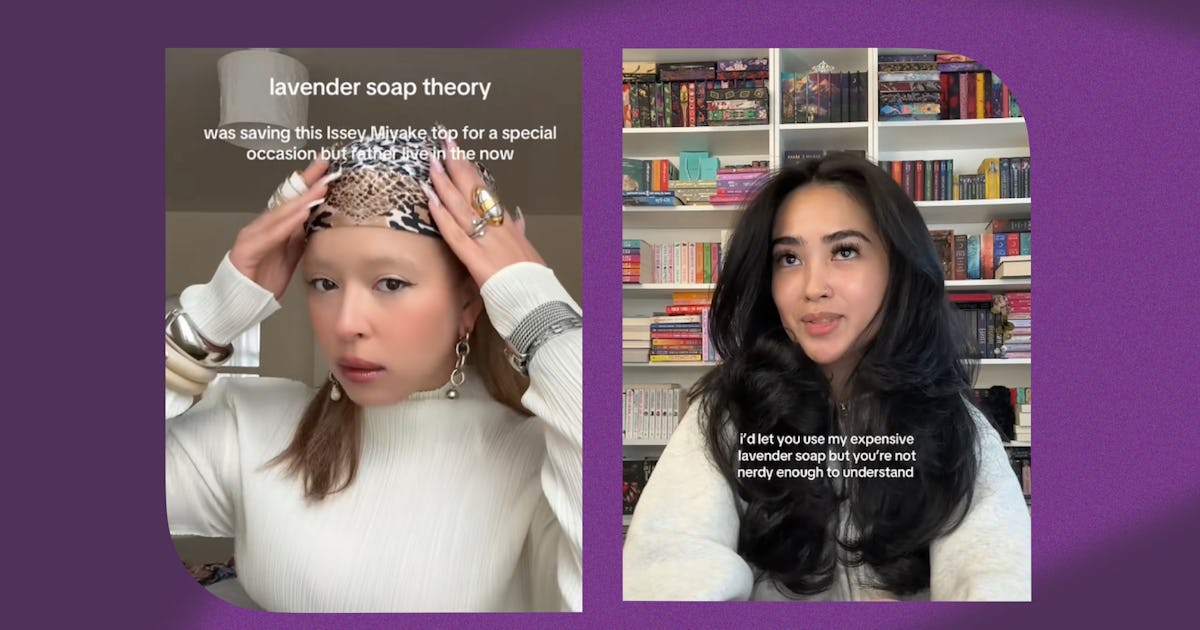
Every household maintains an unspoken museum of deferred joy: the hand-poured candle kept in its embossed box, the heirloom china collecting dust behind glass cabinets, or the $28 bar of milled French soap perched untouched beside the bathroom sink. In late 2025, that preservation instinct collided with fantasy fandom to spawn the latest viral obsession. According to an investigative Bustle Report tracking the intersection of reading subcultures and algorithm-driven romance, the phenomenon traces directly back to Sarah J. Maas’s high-fantasy universe before mutating across lifestyle feeds into a contentious litmus test for modern romance.
The premise splits cleanly across domestic battle lines. In one camp, romantic partners gently insist on lathering up the good toiletries because existing beside you today constitutes the real celebration. In the other, frustrated partners report coming home to find an irreplaceable artisanal gift carelessly melted down the drain by someone who grabbed whatever was nearby to scrub off garden grime. Between these two poles sits a larger cultural conversation about scarcity, respect for boundaries, and the internet’s endless desire to diagnose relationship health through grocery items.
📌 Key Takeaways:
- The Origin: The concept emerged out of BookTok lore surrounding Sarah J. Maas’s Throne of Glass series, where luxury goods symbolize trauma recovery and self-worth.
- The Core Tension: Online discourse divides over whether opening saved goods represents selfless romantic affection or an entitled disregard for personal boundaries.
- The Behavioral Reality: Relationship researchers caution that turning mundane household rituals into viral dating theories often masks deeper deficits in direct communication.
From Maasverse Lore to Algorithmic Litmus Test
The digital trail begins with assassin Celaena Sardothien. Across the pages of Sarah J. Maas’s Throne of Glass, Sardothien hoards fine scented bath bars after surviving brutal enslavement in the salt mines of Endovier. The fragrant lather represents safety, agency, and an unapologetic claim to beauty in an otherwise violent world. Fantasy communities on TikTok spent years dissecting that specific sensory detail, turning the simple act of using luxury goods into an emotional shorthand for healing.
By December 2025, algorithmic curation sheared the reference of its swords and sorcery. Lifestyle creators adapted the bookish motif into a modern relational framework. The prompt asked a deceptively simple question: does your partner make you use the special things you save for someday, or do they dismiss those quiet treasures as wasteful fluff? Over 42 million views accumulated across the hashtag within weeks, turning an esoteric literary footnote into an inescapable relationship benchmark.
Internet trends rarely stay in their original lanes. As the audio went viral, the narrative splintered. While thousands shared videos showing boyfriends drawing hot baths with preserved bath salts, an equally vocal counter-movement shared horror stories of partners mistreating artisanal items under the guise of casual convenience.
The Scarcity Trap Behind Saving Nice Things
Hoarding high-end toiletries reveals more about personal psychology than bath aesthetics. Behavioral scientists long ago identified the special occasion mindset as an offshoot of scarcity bias. When people grow up under economic insecurity or emotional neglect, they learn to treat everyday luxury as something fragile that must be protected against catastrophe. Consuming the item feels dangerously close to depleting one's reserves.
A 2024 consumer behavior survey conducted by behavioral research firm Mintel indicated that 64% of millennial and Gen Z adults keep at least three luxury consumer products in their home that they have never used. Perfumes, designer bed linens, and specialty cleansers sit in perpetual suspension. People wait for a promotion, an anniversary, or an abstract moment when they feel "worthy" enough to break the seal.
When a loving partner breaks that pattern, the impact registers as profound emotional validation. The message is visceral: your regular Tuesday evening matters just as much as a five-star vacation. In this context, offering or sharing the lavender soap operates as an antidote to internalized unworthiness. It reclaims the present moment from an imaginary future that may never arrive.
Weaponized Incompetence Masks as Romantic Freedom
Not every broken seal represents tender care. A significant subset of the TikTok commentary highlights a darker edge where domestic disregard masquerades as playful informality. Stories surfaced across Reddit forums like r/relationships describing partners who burned limited-edition candles to light a room during video games or consumed prized single-origin ingredients to make midnight snacks.
That dynamic does not signal romantic freedom; it signals an empathy deficit. There is a distinct boundary between showing someone they deserve joy and pillaging someone else’s property because you cannot be bothered to reach for a standard bottle of liquid body wash. Neglecting the emotional or monetary investment a partner placed in an item borders on weaponized carelessness.
When one partner expresses dismay over an exhausted supply, the careless actor often retorts with mockery: "It's just soap, why are you being so crazy about it?" This reaction turns a domestic transgression into relational gaslighting. The offense never centered on the soap's chemical composition; it centered on the casual destruction of something meaningful without asking first.
How the Lavender Soap Theory Matches Up Against Viral Dating Tests
The lavender soap dynamic joins an extensive catalog of social media heuristics created to evaluate relationship viability without scheduling couples therapy. Each viral framework isolates an everyday interaction and turns it into a psychological diagnostic.
| Viral Concept | Core Behavioral Trigger | Constructive Outcome | Relational Blind Spot |
|---|---|---|---|
| Lavender Soap Theory | Consuming or sharing saved luxury goods | Dismantles scarcity mindset; elevates daily living | Can override explicit personal boundaries and consent |
| Orange Peel Theory | Performing tedious tasks unprompted | Demonstrates proactive care and low-stakes service | Encourages calculated micro-tests instead of spoken needs |
| The Bird Test | Responding to mundane bids for attention | Measures emotional attunement and curiosity | Penalizes normal moments of distraction or sensory overload |
| Ketchup Bottle Challenge | Cleaning simulated kitchen messes | Exposes genuine domestic weaponized incompetence | Manufactures hostile traps designed for public humiliation |
The Perils of Living Inside Algorithmic Audits
Evaluating an entire romantic partnership through short-form video tropes creates fragile expectations. When couples substitute TikTok psychology trends for genuine connection, they transform their living spaces into staging grounds for pop-quiz evaluations. A partner cannot simply rinse their hands; they must navigate a silent minefield of symbolic significance.
These viral metrics generate false dilemmas. A partner who saves a $30 soap might not suffer from crippling self-esteem issues; they may simply appreciate the visual balance of their countertop decor. A partner who uses generic drugstore cleanser may not harbor cold indifference; they might just view soap as surfactant rather than poetry. Projecting massive character assessments onto standard household chores creates unnecessary friction where simple clarification would suffice.
Healthy partnerships rely on predictable communication, not covert observational trials. When you want to be treated like royalty on a Tuesday, ask for a backrub or open the champagne yourself. Expecting your partner to intuitively divine that using an herbal bar constitutes a therapeutic breakthrough sets both people up for disappointment.
Frequently Asked Questions (FAQ)
Q1: What is the original BookTok origin of the lavender soap theory?
The concept originates from Sarah J. Maas’s fantasy series Throne of Glass. The protagonist, Celaena Sardothien, buys fine lavender soap after escaping brutal conditions, using luxury toiletries as an anchor for her dignity and personal recovery. BookTok creators later transformed this plot point into a broader metaphor for allowing oneself to enjoy fine things.
Q2: How can I tell if using my things is an affectionate gesture or a boundary violation?
Context and permission make all the difference. An affectionate gesture involves honoring your worth: your partner might run a warm bath for you, bring you your nice perfume, or encourage you to enjoy the items you bought for yourself. A boundary violation occurs when your partner uses, ruins, or throws away your prized items without asking, then dismisses your frustration when confronted.
Q3: Why do so many people struggle with saving items for special occasions?
This tendency stems from scarcity mindset psychology. Individuals raised in resource-limited environments or households with perfectionist standards frequently attach guilt to daily self-care. They unconsciously delay gratification, viewing normal days as unworthy of high-value consumption until an external authority or milestone grants permission.
Redefining Worth Beyond the Medicine Cabinet
The enduring popularity of the lavender soap discourse says less about retail products and far more about a generation starved for emotional permission. In an economic environment marked by inflation and delayed traditional adulthood milestones, small luxuries serve as accessible anchors of control. Denying ourselves the use of those items only reinforces a subconscious belief that comfort belongs exclusively to some distant, optimized future version of our lives.
Your worth is not contingent on an algorithm’s validation, nor does it require a romantic partner to unlock your medicine cabinet for you. The most radical application of the trend does not involve testing a boyfriend's attentiveness. It means walking into your own bathroom on an unremarkable evening, breaking the paper wrapper on the fancy bar, and lathering up without asking anyone for permission.


