
Stars of Red Dawn: Where the 1984 Brat Pack Guerrillas and 2012 Remake Leads Are Today

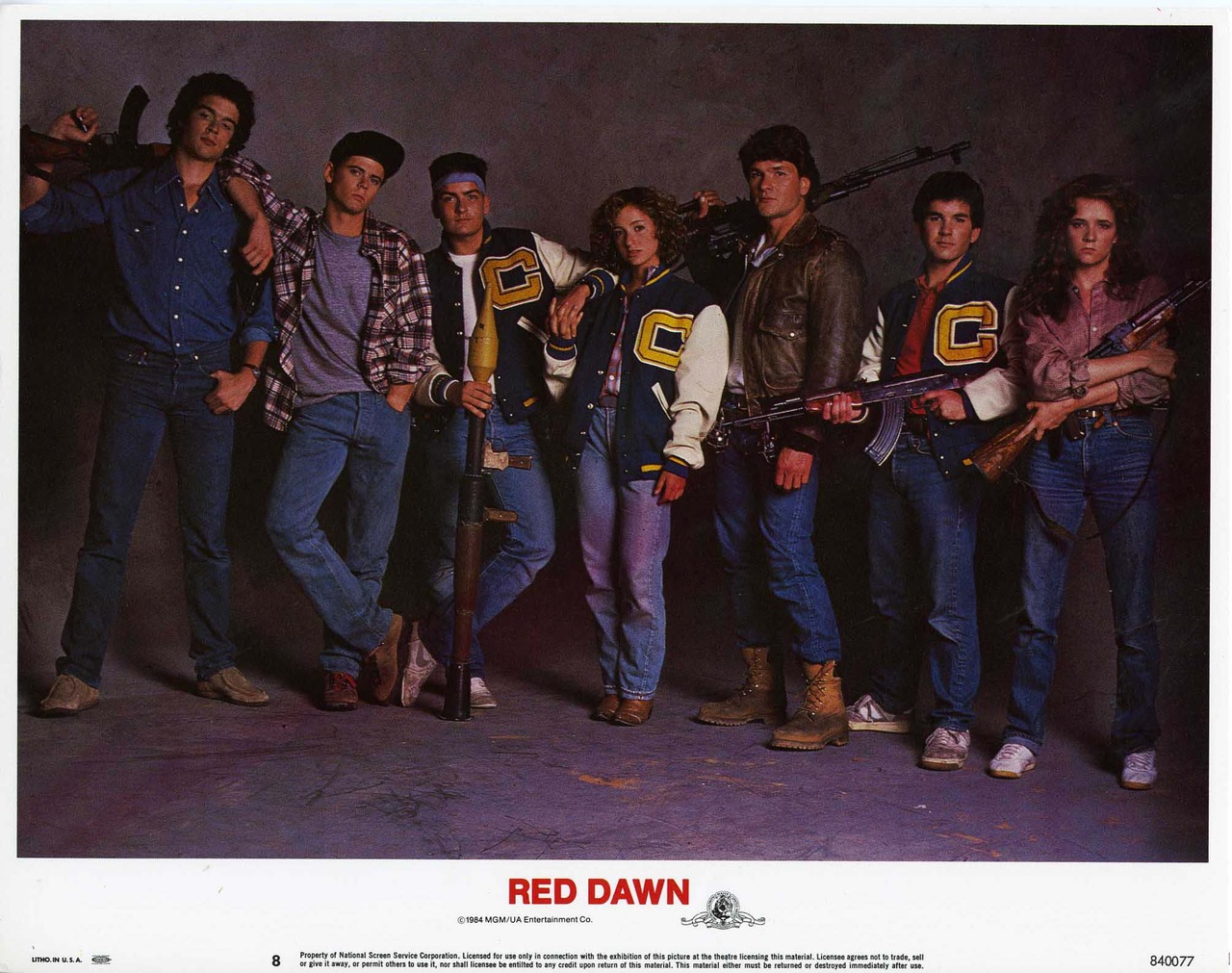
When director John Milius unleashed Red Dawn into theaters on August 10, 1984, it carved an immediate furrow into American Cold War cinema. The premise was blunt: Soviet, Cuban, and Nicaraguan paratroopers drop out of an alpine sky into Calumet, Colorado, leaving high school students to mount an armed insurgency from the Rockies. Beyond making history as the first film released with an MPAA PG-13 rating, it functioned as an aggressive proving ground for young talent. The production pushed an untested cast through brutal mountain conditioning, turning young performers into credible guerrilla fighters and launching several into iconic careers.
Decades later, the cultural footprint of the Wolverines remains remarkably intact. Retrospective looks at 1980s screen history, such as a recent people.com Report charting the enduring legacy of Patrick Swayze and Jennifer Grey, highlight how this partisan thriller established bonds that reshaped decade-defining cinema. Tracing the trajectories of both the 1984 original ensemble and the cast of the embattled 2012 remake reveals dramatic shifts across Hollywood, marked by box office triumphs, tragic losses, and unlikely reinventions.
📌 Key Takeaways:
- The 1984 Roster: Patrick Swayze, Charlie Sheen, Lea Thompson, and C. Thomas Howell translated extreme physical preparation in northern New Mexico into multi-decade careers across blockbuster franchises, television, and directing.
- The 2012 Shift: The delayed remake served as a hidden launching pad for Chris Hemsworth, filmed just prior to his casting as Marvel's Thor, while surviving an unprecedented post-production digital overhaul.
- Modern Resonance: Decades after the Cold War ended, the film's partisan guerrilla archetype continues to influence independent action projects and military cinema discussions in 2026.
The 1984 Crucible: How John Milius Forged the Wolverines
Production for the original film took place outside Las Vegas, New Mexico, where altitude sickness and biting cold mirrored the script’s bleak mountain survival. Milius, an outspoken libertarian and gun-rights advocate, mandated an intensive two-week tactical boot camp conducted by former military personnel. The actors learned weapons handling, trench digging, stealth maneuvers, and survival tactics before cameras rolled.
The experience cemented an authentic, weary camaraderie among the young cast. Patrick Swayze, playing the de facto unit commander Jed Eckert, assumed an older-brother mantle off-camera, demanding discipline from his peers. Charlie Sheen, making his theatrical feature debut as Matt Eckert at just 18, absorbed trade craft directly from Swayze and character veteran Ben Johnson.
Audiences responded to the visceral stakes. Produced on a budget of $17 million, Red Dawn returned $38.4 million at the domestic box office. It drew sharp critical rebukes for perceived right-wing paranoia, but secured an instant, dedicated following among youth audiences who saw high school archetypes stripped of suburban comfort and placed under existential pressure.
Patrick Swayze and Charlie Sheen: Divergent Paths After Calumet
The dynamic between the Eckert brothers drove the emotional core of the film, and it sparked two of the most scrutinized careers in modern entertainment.
Patrick Swayze carried his commanding screen presence directly into global superstardom. Pairing again with Jennifer Grey three years later in Dirty Dancing (1987), Swayze bypassed action-star typecasting to become an international romantic lead. He followed with iconic action roles in Road House (1989) and Point Break (1991), alongside his Oscar-nominated vehicle Ghost (1990). Swayze continued working steadily in high-intensity roles until his diagnosis with stage IV pancreatic cancer in early 2008. He completed shooting the A&E television series The Beast while undergoing chemotherapy, displaying the same iron endurance he exhibited in the Rockies, before passing away in September 2009 at age 57.
Charlie Sheen leveraged Red Dawn to show casting directors his dramatic weight. Director Oliver Stone cast him as Chris Taylor in the Oscar-winning Vietnam epic Platoon (1986), followed immediately by Wall Street (1987). Sheen’s pivot into parody with Hot Shots! (1991) eventually paved the way for his multi-million-dollar tenure on CBS’s Two and a Half Men. Public disputes, substance recovery, and tabloid scrutiny sidelined his momentum in the 2010s. By 2026, Sheen has largely stepped away from grueling set schedules, maintaining selective public appearances and focusing on memoir writing and long-term health advocacy.
Lea Thompson and Jennifer Grey: Breaking the 1980s Teen Mold
Lea Thompson and Jennifer Grey played Erica Mason and Toni Mason, sisters who transition from traumatized survivors to hardened partisan fighters. Both actors used the film to disrupt traditional female roles in 1980s action cinema.
Lea Thompson shot Red Dawn immediately before securing her signature role as Lorraine Baines in Back to the Future (1985). She maintained steady studio prominence throughout the decade in films like Some Kind of Wonderful (1987), then transitioned smoothly into network comedy with Caroline in the City (1995, 1999). Over the past fifteen years, Thompson redirected her focus behind the camera, directing episodes for hit television series including Star Trek: Picard and critically acclaimed indie projects. She remains a working force in the industry, frequently mentoring emerging female filmmakers.
Jennifer Grey’s post-Red Dawn ascent happened rapidly. Her reunion with Swayze in Dirty Dancing earned her a Golden Globe nomination and cemented her place in cinematic history. Following a severe car crash in Ireland in 1987 and a highly publicized rhinoplasty in the early 1990s that altered her recognizable look, Grey stepped back from studio tentpoles. She later claimed victory on Dancing with the Stars in 2010 and released her candid 2022 memoir Out of the Corner. In recent years, Grey has worked on developing legacy projects, including an officially sanctioned return to the Dirty Dancing continuity.
| Cast Member | Character & Film | Major Post-Release Milestone | Current Status (2026) |
|---|---|---|---|
| Patrick Swayze | Jed Eckert (1984) | Dirty Dancing, Ghost, Point Break | Deceased (1952, 2009); enduring cultural icon |
| Charlie Sheen | Matt Eckert (1984) | Platoon, Wall Street, Two and a Half Men | Semi-retired, author, health advocate |
| Lea Thompson | Erica Mason (1984) | Back to the Future trilogy, Switched at Birth | Active television director and character actor |
| C. Thomas Howell | Robert Morris (1984) | The Hitcher, Southland, The Walking Dead | Active character actor and Americana musician |
| Chris Hemsworth | Jed Eckert (2012) | The Marvel Cinematic Universe (Thor), Extraction | A-list action lead and production company head |
| Adrianne Palicki | Toni Walsh (2012) | Agents of S.H.I.E.L.D., John Wick, The Orville | Working television lead and voice artist |
The 2012 Remake Experiment: How Chris Hemsworth Survived a Shelved Release
In 2008, Metro-Goldwyn-Mayer greenlit a high-concept remake directed by visual effects coordinator Dan Bradley. Filmed across Michigan in late 2009, the production cast a pre-stardom Chris Hemsworth as Jed Eckert, alongside Josh Peck, Josh Hutcherson, and Adrianne Palicki.
The production ran headfirst into financial catastrophe. MGM filed for Chapter 11 bankruptcy protection in 2010, placing the completed movie in distribution limbo for over two years. During this hiatus, geopolitical concerns sparked another crisis. The script originally positioned the People's Liberation Army of China as the invading force. Fearing total alienation from the surging Chinese theatrical box office, distributor FilmDistrict spent an estimated $1 million digitally erasing Chinese flags and insignia, retroactively altering dialogue and audio dubs to substitute North Korea as the aggressor.
By the time the film finally surfaced in November 2012, Hemsworth was no longer an unknown Australian working actor; he had starred in Thor (2011) and The Avengers (2012). The remake stumbled critically and gathered a modest $50.9 million worldwide haul, but it barely grazed Hemsworth's ascent. He moved unimpeded into tentpole franchises like Netflix’s Extraction series and high-profile prestige action projects. Co-stars Josh Hutcherson vaulted into The Hunger Games phenomenon, while Adrianne Palicki established herself as a reliable genre lead across John Wick and The Orville.
C. Thomas Howell and the Enduring Cult of the Wolverines
Of all the original Wolverines, C. Thomas Howell underwent the sharpest psychological arc on screen. His character, Robert Morris, begins as an introverted storekeeper's son and steadily devolves into a cold executioner who drinks the blood of a mountain deer and executes captured enemies without flinching.
Howell had already broken through as Ponyboy Curtis in Francis Ford Coppola's The Outsiders (1983). Following Red Dawn, he leaned directly into intense, unvarnished roles, most notably fighting Rutger Hauer in the horror thriller The Hitcher (1986). Rather than chasing studio leading-man vehicles throughout the 2000s, Howell built a massive filmography as a versatile character actor, taking memorable recurring roles in Southland, Criminal Minds, Ray Donovan, and The Walking Dead.
In recent years, Howell expanded into touring as an Americana singer-songwriter while maintaining steady screen appearances. Online communities and tactical film enthusiasts regularly celebrate his turn as Robert, pointing to his descent into feral survivalism as the most authentic depiction of wartime trauma in the film. That gritty tonal blueprint continues to reverberate, inspiring contemporary productions across action cinema to bypass sterile CGI in favor of practical wilderness filming.
Frequently Asked Questions (FAQ)
Q1: Why was the 1984 Red Dawn significant to film rating history?
A1: It was the very first movie to hit theaters carrying the PG-13 rating on August 10, 1984. The Motion Picture Association created the designation earlier that summer following parental outcries over intense violence in PG-rated films like *Indiana Jones and the Temple of Doom* and *Gremlins*.
Q2: Why was the villain changed in the 2012 Red Dawn remake?
A2: The film was shot in 2009 depicting an invasion by the Chinese military. While the film sat on the shelf during MGM's bankruptcy restructuring, studio executives realized that villainizing China would lead to retaliatory bans in the lucrative Chinese theatrical market. Producers paid roughly $1 million in digital alterations to change military insignia, uniform patches, and dialogue to North Korea before the 2012 release.
Q3: Did the cast actually live in the wilderness during production?
A3: While they slept in hotels during principal photography around Las Vegas, New Mexico, director John Milius forced the main cast through a mandatory two-week survival and paramilitary training camp in the high desert prior to shooting. The actors learned field tactics, spent hours handling live ammunition, and dug defensive bunkers to ensure their on-screen fatigue looked genuine.
The Enduring Cultural Echo of the Calumet Resistance
Four decades after its theatrical run, the legacy of Red Dawn functions as an unusual artifact of late Cold War pop culture. The film arrived during an era defined by geopolitical confrontation, yet its staying power owes less to political doctrine than to its visceral depiction of youth stripped of innocence. John Milius took an ensemble of rising Brat Pack faces and forced them through mud, freezing snow, and brutal emotional beats, establishing a standard for youth survival cinema that paved the way for modern franchises.
The diverging paths of its cast, from Patrick Swayze’s enduring status as an American romantic-action icon to Chris Hemsworth’s blockbuster dominion, demonstrate how effectively the project served as a career crucible. Whether revisited as 1980s Cold War paranoia or studied as a landmark moment in tactical action staging, the battle cry of the Wolverines remains one of the most recognizable rallying calls in modern movie history.


