The Complete Beginner's Guide: What Is TikTok, How Does It Work, and Why Does It Matter?
TikTok is a mobile-first short-form video platform built around personalized algorithmic discovery rather than a traditional follower network. Owned by Beijing-based parent company ByteDance, the platform hosts vertical video clips ranging from 3 seconds to 10 minutes in length. By replacing the social graph of older networks with an aggressive interest graph, the app delivers continuous video streams tailored to individual viewer habits in real time.
The app has expanded far beyond its dance-challenge origins into an integrated cultural and commercial utility. Users search for recipes, follow breaking news dispatches, learn technical skills, and buy household goods without leaving the interface. As documented in a recent Online Tech Tips Report on affiliate commerce, the platform has merged entertainment with native merchant checkouts, pulling millions of newcomers into an economy governed by immediate viewer engagement.
📌 Key Takeaways:
- Core Mechanism: TikTok curates content using an interest-based recommendation engine rather than relying on who you follow.
- Primary Driver: User engagement metrics, specifically video completion rate and watch loop duration, dictate distribution and viral reach.
- Commercial Integration: Built-in social commerce tools like TikTok Shop allow direct in-app purchasing and creator affiliate commissions.
The Architecture of ByteDance's Video Machine
Opening TikTok takes users directly to full-screen video playback with audio enabled by default. There is no empty home screen waiting for you to add friends. The user interface splits into two primary feeds at the top of the screen: the Following tab and the For You Page (FYP). The Following tab displays uploads strictly from accounts the user chooses to subscribe to. The FYP serves as the central hub of the app, feeding an endless cascade of media served up entirely by ByteDance's predictive algorithms.
Vertical navigation is immediate. Swiping up brings the next video into view; swiping down returns to the previous clip. A vertical rail of interaction icons lines the right side of the screen, providing access to creator profiles, likes, public comments, bookmarks, and sharing options. At the bottom, tapping the audio disc icon reveals the specific audio clip or music track driving the video, allowing users to browse thousands of other clips utilizing the exact same sound.
The app eliminates typical user friction. Because media auto-plays instantly, consumption begins the second the app launches. Content creators produce video natively or upload polished external edits, but the viewing experience remains uniform: tall vertical formatting (9:16 aspect ratio) designed specifically for one-handed mobile use.
How the TikTok Algorithm Decides What Goes Viral
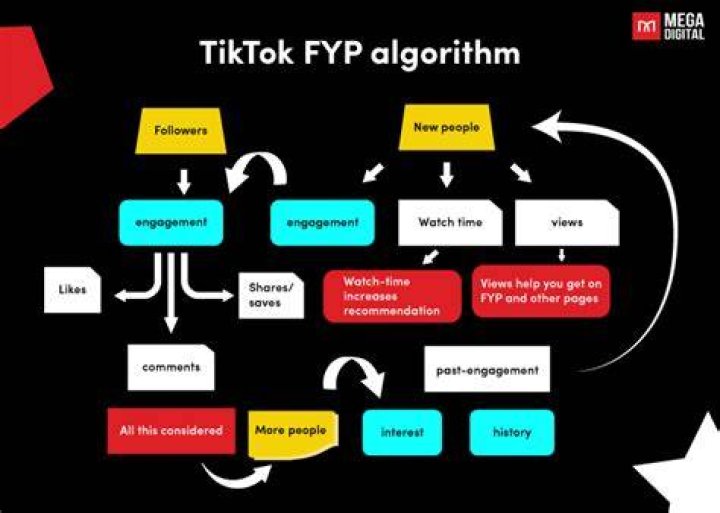
Traditional networks like early Facebook or Instagram relied on the social graph. If your friends shared a photo, you saw it. TikTok relies on an interest graph. The system tests every new upload against small sample pools of real viewers, evaluating raw engagement rather than the creator's follower tally. An account with 0 followers can publish a clip that reaches 2 million views within forty-eight hours if initial test audiences consume it completely.
The system evaluates incoming data points hierarchically. While likes, comments, and direct shares provide positive signals, retention rules above all else. The most important metric is the video completion rate, followed closely by repeat loops. If a fifteen-second video keeps seventy percent of viewers watching through to the final second, the distribution system pushes the post to a wider demographic tier.
Contextual signals complete the ranking equation. The system scans video captions, hashtags, automated transcript text, and detected on-screen objects. Trending sounds and audio play a heavy role. When an audio track spikes across the platform, clips attached to that track gain favorable algorithmic weight, giving agile content creators a vehicle to ride systemic cultural momentum.
The Evolution of TikTok: 2018 to 2026
The service originated from ByteDance's 2017 acquisition of Musical.ly, which merged into the international version of TikTok in August 2018. Over eight years of global expansion, the platform progressed from a musical teenage diversion into an economic and cultural heavyweight.
| Phase & Years | Primary Focus | Core Platform Shift | Dominant Monetization Channel |
|---|---|---|---|
| Launch Era(2018, 2020) | Lip-syncing, choreography, comedy skits | Merger of Musical.ly users; FYP rollout | Brand sponsorships, early TikTok Creator Fund |
| Expansion Era(2021, 2023) | Educational content, micro-vlogging, news reporting | Expansion to 3-minute and 10-minute uploads; search intent growth | Creator Rewards Program, LIVE virtual gifts |
| Commerce Era(2024, 2026) | Social commerce, direct shopping, affiliate reviews | TikTok Shop integration, native checkout, visual search | TikTok Shop affiliate commissions, merchant sales, influencer marketing |
This trajectory mirrors a deliberate push toward utility. Where the platform once served almost exclusively as ambient entertainment, users now employ it as an informative search directory. Queries for restaurant recommendations, software setups, travel itineraries, and fashion styling increasingly bypass standard web search engines, directing traffic through real-world user video demonstrations instead.
In-App Production: Native Video Editing Tools and Sounds
A central pillar of the app's widespread adoption is its internal creative suite. Users do not need professional post-production software to produce polished video. The built-in video editing tools allow anyone with a smartphone to capture, slice, speed up, or stitch media assets together directly within the app.
Key native creative capabilities include:
- Templates and Auto-Cut: Automated pacing tools that align imported video clips or still photographs to the tempo of selected music tracks.
- Green Screen and AR Filters: Augmented reality overlays that swap out backgrounds, track facial expressions, or place digital 3D models in physical settings.
- Duet and Stitch: Collaborative utilities enabling users to publish split-screen reactions alongside an existing clip (Duet) or trim up to five seconds of someone else's video to use as a conversation starter (Stitch).
- Voice Synthesis and Captions: Automatic speech-to-text generating real-time subtitles alongside pitch-shifting filters that mask natural voice audio for comedic or narrative effect.
The platform's vast commercial and royalty-free audio library removes the technical hurdles of music licensing. By clearing global rights for thousands of popular songs, ByteDance built an environment where everyday users create studio-grade pop-culture commentary in minutes.
The Economics of TikTok Shop and Creator Monetization
Social commerce has turned the platform into a digital retail powerhouse. The rollout of TikTok Shop permits brands and everyday creators to tag real items inside videos and live broadcasts. Viewers tap an on-screen product card, pick color or sizing variations, and complete payments without navigating to an external browser.
This ecosystem supports multiple paths to creator monetization:
The TikTok Shop affiliate program lets creators earn commissions between 5% and 20% on retail sales driven through their video reviews. Rather than chasing traditional corporate sponsorships, accounts with established followings tag verified inventory from merchant warehouses and receive cutbacks automatically upon delivery.
Beyond commerce, the Creator Rewards Program pays verified creators based on qualified views on videos longer than one minute. High retention, original filming, and search-driven traffic receive premium revenue rates per thousand views (RPM). Meanwhile, the platform's LIVE feature functions as a direct tip jar, where audiences purchase digital currency to send animated stickers that creators cash out into fiat currency.
Brand-side influencer marketing remains strong. Agencies hire creators for dedicated product integration, utilizing the platform's native Creator Marketplace to review audience demographics, conversion statistics, and historical engagement rates before signing contract agreements.
Navigating Safety, Screen Time, and Data Privacy
Widespread adoption has brought intense regulatory scrutiny. Governments around the world have examined ByteDance regarding data governance, algorithmic feed addiction, and geopolitical security. In response to Western legislative inquiries, the company spent billions of dollars on localized compliance frameworks, routing regional data through secure local server hubs operated by independent cloud infrastructure providers.
Content moderation enforces strict standards. Community guidelines prohibit explicit adult content, hate speech, dangerous stunts, and coordinated disinformation campaigns. Automated vision models flag questionable footage instantly, routing edge cases to human review queues. Creators whose content steps outside acceptable boundaries face reduced distribution or sudden profile bans.
For younger users, default security protections apply automatically. Accounts registered to teenagers under age sixteen default to private mode, with direct messaging toggled off. Built-in digital wellbeing tools prompt users to take breaks after sixty minutes of continuous night-time viewing, offering daily password limits designed to counteract compulsive scrolling patterns.
Frequently Asked Questions (FAQ)
Q1: Do I need to post videos to use TikTok?
No. A substantial percentage of registered accounts are purely passive consumers. You can browse the For You Page, follow specific creators, save favorites, and buy items without ever uploading a piece of media yourself.
Q2: How does TikTok differ from Instagram Reels and YouTube Shorts?
While all three feature vertical short-form video, TikTok prioritizes an open algorithmic feed over existing social friend connections. Its search capabilities, native audio culture, and frictionless shopping tools offer a more decentralized viral system than its competitors.
Q3: What are the basic requirements to earn money on the platform?
To join the native Creator Rewards Program, you must be at least 18 years old, possess a minimum of 10,000 authentic followers, and have accumulated at least 100,000 video views within the last 30 calendar days. The TikTok Shop affiliate program maintains separate eligibility thresholds depending on your operating country.
Strategic Takeaways for TikTok in 2026
TikTok has established itself as an essential pillar of the modern internet. It is not simply an app for viral entertainment, but a high-speed search directory, an incubator for global music trends, and a rapidly expanding retail hub. By decoupling content discovery from follower counts, it created an online environment where compelling ideas and practical demonstrations find immediate global audiences.
Navigating the app in 2026 requires understanding its underlying structural incentives. For everyday users, it remains an endlessly responsive entertainment and educational resource. For businesses, independent brands, and digital creators, it presents a hyper-efficient route to real-world visibility, provided they respect the metrics that keep audiences watching.


