The Dark Secrets Behind A Tale of Two Sisters: What Really Happened Inside the Closet?
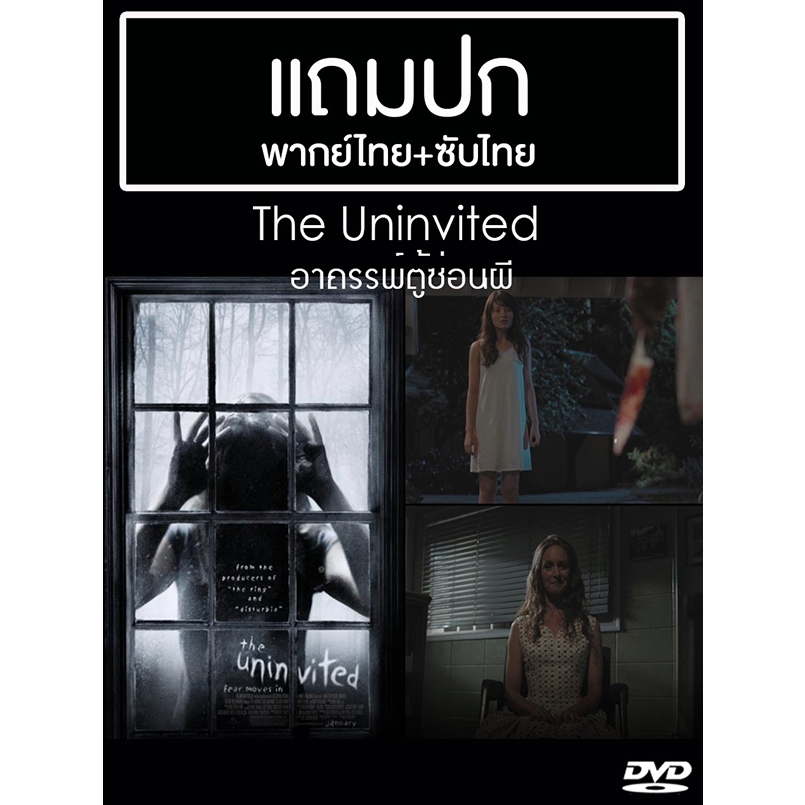
When director Kim Jee-woon released his landmark psychological piece in 2003, it fundamentally altered the vocabulary of Korean psychological horror. Known to Thai cinema audiences under the evocative localized title อาถรรพ์ ตู้ ซ่อน ผี (The Mystery of the Closet Hiding Ghosts), the film transformed domestic architecture into a harrowing landscape of mental collapse. Decades later, ongoing retrospectives and regional coverage, such as historical distribution archives documented in the RYT9 Report detailing Southeast Asia's enduring fascination with supernatural folklore and ghost cinema, highlight how deeply this specific film severed itself from standard jump scares.
The film rejects predictable haunted-house mechanics. Instead, it locks the viewer inside an unreliable mind navigating insurmountable loss. Central to this enduring fascination is the infamous wardrobe: a heavy, ornate piece of wooden furniture that anchors the household's deepest trauma. Unraveling the film requires peeling back layers of cultural myth, clinical grief, and a devastating narrative sleight of hand.
📌 Key Takeaways:
- The Core Narrative Reality: Su-yeon is dead before the opening credits roll; Su-mi's return home is an elaborate dissociative episode staged entirely inside her own fracturing psyche.
- The Origin of the Curse: The story adapts the Joseon-era folktale Janghwa Hongryeon jeon, stripping away the traditional moral triumph to focus on devastating survivor guilt.
- The Wardrobe Mechanism: The closet functions as both the literal site of physical suffocation and the metaphorical vault where the family locks away complicity, betrayal, and death.
The Folkloric Roots of Janghwa and Hongryeon
The foundation of the narrative rests on a classic Joseon-era folk tale, Janghwa Hongryeon jeon (The Story of Rose and Lotus). In the seventeenth-century oral tradition, two abused sisters face torment from a cruel stepmother, perish under unjust circumstances, and return as spectral apparitions demanding justice from the local magistrate. Korean literature preserved this tale as an allegory of filial piety, feminine suffering, and moral retribution.
Kim Jee-woon inverted this folk morality completely. In his cinematic retelling, no righteous magistrate arrives to restore order. The setting shifts from a Joseon village to an isolated, European-styled country manor wrapped in suffocating floral wallpaper. The traditional archetype of the wicked stepmother undergoes a psychological deconstruction. By stripping the folktale of its tidy karmic resolution, the narrative forces audiences to confront the ugly, unresolved reality of domestic collapse.
Deconstructing the Stepmother Revelation and Mental Fracture
The central shock of the film rests on a profound dissociative identity disorder plot twist. For roughly seventy minutes, the narrative leads the audience to believe that Su-mi (portrayed with brittle intensity by Im Soo-jung) is protecting her fragile younger sister, Su-yeon, from their abusive, erratic stepmother, Eun-joo (Yum Jung-ah). The tension escalates through venomous dining table exchanges, violent confrontations, and escalating domestic cruelty.
The entire illusion shatters when the father, Moo-hyun, finally intervenes during an escalating confrontation. Su-yeon is not in the house. She has been dead for months. Furthermore, the vindictive, pill-popping stepmother terrorizing the girls does not exist in that house either, the real Eun-joo has been living elsewhere with Moo-hyun. Su-mi has been living alone in the house with her emotionally paralyzed father, cycling furiously through three personalities: herself, her dead sister, and the despised stepmother she unconsciously mimics.
This structural subversion reshaped Asian horror cinema classics of the early 2000s. While contemporaneous masterpieces featured stars like Bae Doona confronting external urban alienation or technological decay, Kim Jee-woon turned the lens inward, proving that the human mind constructs far more vicious horrors than any vengeful ghoul.
The Fatal Wardrobe: Chronology of a Family Tragedy
The chronological truth of what transpired in the country house emerges only in the film's final fifteen minutes. It is a sequence of mundane domestic cruelty compounding into catastrophe. Understanding the tragedy requires mapping what Su-mi experienced against the objective reality established by the police and medical records.
| Narrative Sequence | Su-mi's Hallucinatory Perception | Factual Reality Inside the House |
|---|---|---|
| The Mother's Death | Illness claimed the mother, leaving the girls vulnerable to Eun-joo. | Terminally ill, the mother hanged herself inside Su-yeon's bedroom closet after learning of her husband's affair. |
| The Closet Collapse | A demonic entity resides inside the wardrobe, stalking the sisters. | Su-yeon found her mother's body and tried to pull her down, toppling the heavy wardrobe onto herself. |
| The Missed Rescue | Su-mi believes she consistently defended Su-yeon from outside harm. | Su-mi argued with Eun-joo and stormed out of the house, ignoring cries for help coming from the bedroom. |
| The Post-Asylum Return | Su-mi returns from treatment alongside her younger sister to protect her. | Su-mi relapses immediately upon arriving home, projecting Su-yeon's presence to escape guilt. |

Closet Scene Symbolism and Visual Architecture
The wardrobe functions as the spatial nexus of the tragedy. It is not merely an incidental prop; it is an altar of collective failure. Visually, the wardrobe is carved with intricate, heavy patterns that mimic the suffocating interior design of the house. In Korean domestic culture, traditional wooden wardrobes hold family heirlooms, bedding, and personal secrets. Here, it becomes a tomb.
When Su-yeon discovered her mother hanging inside the cabinet, her frantic struggle caused the massive structure to collapse on top of her. As she lay pinned beneath the heavy wood, slowly suffocating, Eun-joo entered the room. Eun-joo initially moved to help, but stopped. Paralyzed by malice and panic, she stepped backward into the hallway.
Moments later, Su-mi stormed through the corridor after an explosive argument with Eun-joo. Eun-joo issued a cryptic, venomous warning: "You might regret this moment." Proud, furious, and stubborn, Su-mi spat back that she would never regret leaving, turning her back on the house. In doing so, she walked away while her sister suffocated beneath the wood just a few yards away. The closet became the physical manifestation of Su-mi's fatal choice.
Guilt, Trauma, and the Ambiguity of the Supernatural
Many psychological thrillers erase the supernatural entirely once the clinical twist lands. Kim Jee-woon refuses this easy out. While Su-mi’s day-to-day interactions with her sister and stepmother are products of severe trauma, the house itself retains a malevolent, lingering presence.
During the film’s final sequence, the real Eun-joo returns to the house after Su-mi is taken back to the psychiatric ward. Standing alone in Su-yeon's darkened bedroom, Eun-joo hears the closet doors creak open. A grotesque, bloodied entity emerges from beneath the furniture, dragging itself toward her. This is not Su-mi’s hallucination, Su-mi is miles away in a clinical facility.
The sequence confirms that real paranormal residue exists within the home. Su-yeon’s spirit, or the localized manifestation of the mother and daughter’s agony, remains bound to the physical structure where they died. The psychological breakdown of the family did not negate the ghost; it summoned it. The film binds mental illness and supernatural dread so tightly that separating them becomes impossible.
Frequently Asked Questions (FAQ)
Q1: Why is the film called "อาถรรพ์ ตู้ ซ่อน ผี" in Thailand?
A1: Thai distributors frequently used descriptive, evocative titles for foreign horror acquisitions during the early 2000s boom. Because the fatal wardrobe and its hidden horrors form the narrative spine of the film, the title literally translates to "The Mystery/Curse of the Closet Hiding Ghosts," highlighting the wardrobe mystery as the key selling point for local horror enthusiasts.
Q2: Did Su-yeon ever actually appear in the house after the hospital release?
A2: No. Su-yeon died months prior to Su-mi’s release from the psychiatric hospital. Every scene featuring Su-yeon interacting with Su-mi, sleeping beside her, or cowering from Eun-joo is a complete projection generated by Su-mi's mind to cope with the reality of her sister's death.
Q3: Why didn't the father tell Su-mi the truth earlier in the film?
A3: Moo-hyun is depicted as emotionally paralyzed by grief, guilt, and exhaustion. Having lost his first wife and his youngest daughter while facilitating the affair that sparked the crisis, he walks through the home like a ghost himself. He attempts to humor Su-mi's delusions out of fear that confronting her with reality will completely shatter her fragile mental state, which inadvertently accelerates her breakdown.
The Legacy of Korea's Most Devastating Horror Masterpiece
More than two decades after its initial release, Kim Jee-woon's production remains a high-water mark for the genre. Hollywood attempted to replicate its commercial appeal with the 2009 remake The Uninvited, but the adaptation stripped away the visual poetry, regional nuance, and operatic sorrow that made the original devastating. The American version treated the plot as an intellectual puzzle box to solve; the Korean original treated it as an open wound.
The wardrobe in A Tale of Two Sisters endures because it represents something universal. It stands as a physical marker of the split second where compassion failed and pride took over. In the quiet hallways of that lakeside manor, the true horror was never the specter creeping across floorboards, it was the devastating burden of surviving when someone you loved needed you most.


