The Definitive Cajun Guide: Origins, Everyday Dishes, and Cultural Essentials
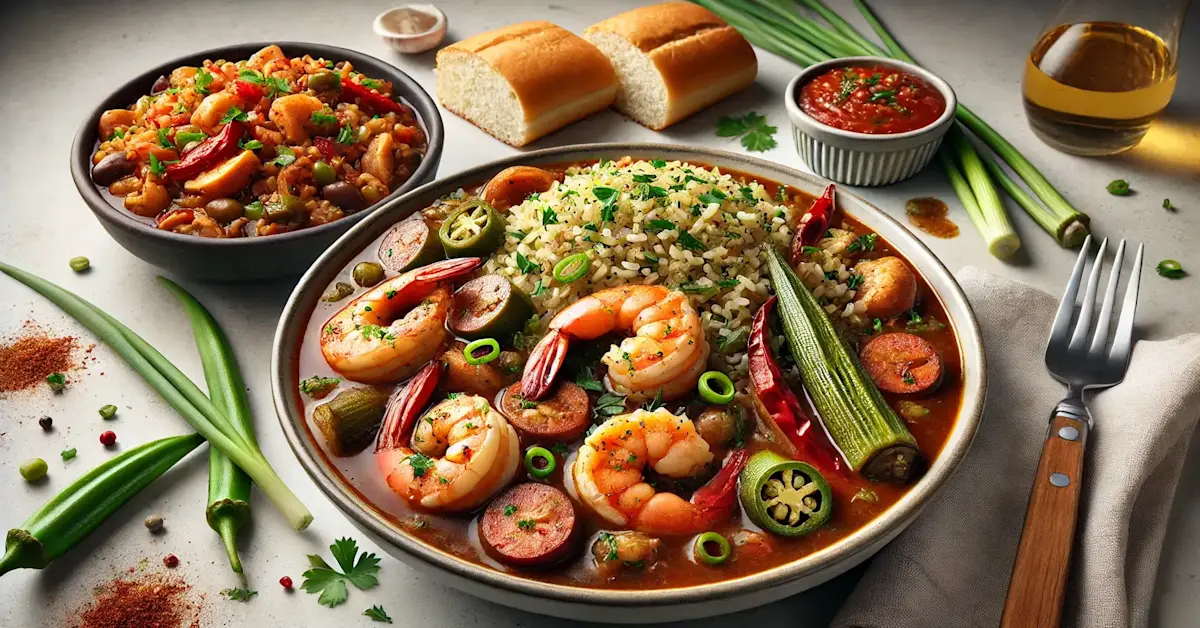
Every autumn across southwest Louisiana, the air turns crisp and the iron pots come out. Communities gather along the bayous for heritage milestones like Raceland’s La Fete Des Vieux Temps festival, while kitchen fires spark at local institutions like the newly opened Thibodeaux's in North Lafayette. Public events and broadcasts, highlighted in a recent KLFY.com Report on Cajun Nation gatherings, spotlight a reality often lost beneath commercial supermarket spice blends: Cajun is not a flavor profile or a marketing shorthand for cayenne pepper. It is a resilient ethnic identity forged through exile, isolation, and stubborn adaptation.
To ask what is Cajun requires traveling past commercialized fast-food menus into a 250-year-old journey across maritime Canada, the swamplands of the Atchafalaya Basin, and the prairies of Acadiana. Today, an estimated 500,000 people across Louisiana carry this cultural lineage. Their way of life combines an endangered French dialect, complex subsistence cooking, and communal folk rituals that resist homogenization.
📌 Key Takeaways:
- The Origin: Cajun stems from "Cadien," the French-speaking Acadians expelled by the British Crown from eastern Canada during the 1755, 1764 diaspora who settled in rural South Louisiana.
- The Essential Divide: Cajun culture grew in rural isolation with rustic, pork-and-game-heavy dishes cooked without tomatoes, distinct from urban, aristocratic, multi-ethnic New Orleans Creole culture.
- The Culinary Foundation: Traditional bayou cooking relies on a dark oil-and-flour roux, the Holy Trinity seasoning base (onion, celery, green bell pepper), and single-pot slow braises.
The Expulsion from Acadia to the Swamps of South Louisiana
The story of the Cajun people begins in Acadie, a seventeenth-century French colony located in what is now Nova Scotia, New Brunswick, and Prince Edward Island. For over a century, these French settlers built complex dyke systems to farm fertile coastal marshlands, maintaining neutrality amid continuous skirmishes between the French and British empires. That neutrality ended in 1755 with Le Grand Dérangement, the Great Upheaval.
British Lieutenant Governor Charles Lawrence ordered the systematic deportation of the Acadian population after they refused an unconditional oath of allegiance to the British Crown. British soldiers burned Acadian homesteads, separated families, confiscated cattle, and forced roughly 11,500 men, women, and children onto overcrowded cargo ships. Over 5,000 perished at sea from smallpox, typhus, and starvation. Survivors were scattered along the Atlantic seaboard, sent to England or France, or held in Caribbean ports.
Beginning in 1764, small flotillas of displaced Acadians began reaching the Spanish-controlled colony of Louisiana. Spanish authorities welcomed Catholic agriculturalists, directing them away from New Orleans into the western prairies, cypress bayous, and coastal marshes of the Atchafalaya River Basin. Isolated from mainstream Anglo-American society, the settlers adapted their northern farming practices to subtropical swamps. They learned to fish catfish, hunt wild game, gather native plants from Indigenous tribes, and embrace the local flora. Over generations, the word Acadien softened into Cadien, and eventually into the English designation: Cajun.
Cajun vs Creole: Drawing the True Line Between Prairie and City
Few cultural definitions are as frequently conflated as Cajun and Creole. While both share French roots, Roman Catholic traditions, and geographic proximity in Louisiana, their sociological roots and flavor foundations developed along separate tracks. The distinction remains sharp across Acadiana kitchens.
| Defining Dimension | Cajun Tradition | Creole Tradition |
|---|---|---|
| Historical Origin | Rural exile community descended from French Acadians (1755, 1785 arrivals) | Urban melting pot born in colonial New Orleans (French, Spanish, African, and Caribbean) |
| Geographic Core | The 22-parish Acadiana region and bayous (Lafayette, Houma, Opelousas) | Metropolitan New Orleans and River Road plantations |
| Fat Base for Roux | Pork lard or vegetable oil cooked to a dark chocolate hue | Butter-based blond or peanut butter-colored roux |
| Use of Tomatoes | Historically absent from brown gumbos, stews, and jambalayas | Prominent, providing acidity across Creole gumbos and sauces |
| Social Origin | Working-class agrarian and wetland survival cooking | Aristocratic, complex, multi-course culinary infrastructure |
Creole culture emerged in cosmopolitan New Orleans under early French and Spanish colonial administrations. It included European aristocrats, enslaved West Africans, and Free People of Color (gens de couleur libres). This urban environment had access to Caribbean spices, imported Spanish tomatoes, dairy cattle for butter, and professional kitchen staffs. Creole cuisine is refined, sauce-heavy, and red.
Cajun cooking, by contrast, evolved as frontier subsistence food. Acadians relied on iron cauldrons swung over open wood fires. If an ingredient could not be grown, trapped, shot, or cured with salt, it did not enter the pot. That explains why authentic Cajun gumbo never contains tomatoes. It relies instead on deeply browned flour, local meats, and wild game like duck, squirrel, or smoked pork sausage.
The Architecture of Bayou Cuisine: Holy Trinity to Cast Iron
Cajun cuisine centers on the Holy Trinity seasoning base: two parts yellow onion, one part celery, and one part green bell pepper. Substituting bell pepper for the carrot of traditional French mirepoix was a practical necessity. Carrots grew poorly in the saturated, clay-heavy soils of South Louisiana, whereas bell peppers thrived in the heat. Garlic, scallions, and flat-leaf parsley form the sacred "pope" additions that round out the aromatic core.
Everything builds upon the roux. Flour and oil cook in heavy cast iron, whisked continuously over medium-low heat for 30 to 45 minutes until the mixture shifts from pale cream to the color of dark baker's chocolate. This dark roux loses its thickening power as the starches break down under high heat, but it gains a deep, nutty, roasted undertone that defines a proper bayou gumbo. Cajun spices do not aim to overwhelm the palate with blistering capsaicin heat. Real Cajun spice blends rely on balanced ratios of black pepper, white pepper, cayenne, kosher salt, garlic powder, onion powder, and dried thyme.
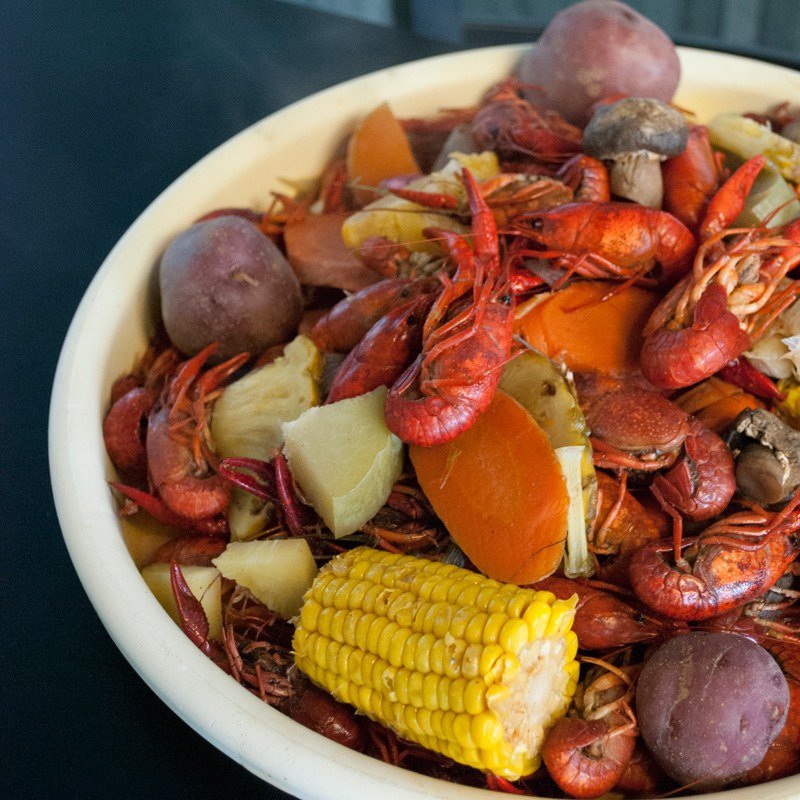
Bayou food culture centers on communal rituals. In the spring months, the crawfish boil draws neighborhoods together. Sacks of live freshwater mudbugs (Procambarus clarkii) are purged, seasoned heavily with citrus, cayenne, cloves, and bay leaf, then boiled alongside ears of sweet corn, new potatoes, whole garlic heads, and smoked andouille sausage. The entire batch is dumped across newspaper-lined outdoor tables, eaten standing up without plates or silverware.
In winter, farmsteads historically held a boucherie, a communal hog-slaughtering event that preserved every ounce of meat before warm weather returned. From the boucherie came boudin sausage, an unctuous blend of pork liver, shoulder, cooked white rice, green onions, and spices cased in natural casings. From the scrap fat came cracklins (grattons), deep-fried pieces of pork skin and meat with exceptional crunch. jambalaya and gumbo emerged as efficient masterstrokes: dishes designed to feed twelve people from a handful of rice, wild fowl, and rich stocks simmered down across hours.
Mapping Acadiana: Community Rhythms, Language, and Modern Renewal
The cultural heart of the Cajun world is Acadiana, a federally recognized 22-parish region established by the Louisiana legislature in 1971. Anchored by the city of Lafayette, Louisiana, Acadiana runs from the undulating cattle prairies of Eunice and Opelousas through the bayou corridors of Terrebonne, Lafourche, and St. Martin parishes down to the Gulf of Mexico.
Within this territory, Cajun folk traditions thrive on music and language. Saturday mornings still bring acoustic Cajun jams at local venues like the Savoy Music Center in Eunice. Traditional Cajun music pairs the diatonic accordion, introduced by German immigrants in the mid-19th century, with fiddles, acoustic guitars, and the 'tit fer (a handheld steel triangle). Songs are sung in Cajun French, an archaic, highly descriptive 17th-century regional dialect shaped by maritime terminology, Indigenous names, and West African loanwords.
The Cajun French language nearly vanished in the twentieth century. In 1921, the Louisiana State Constitution banned French instruction in public schools, punishing children physically for speaking their mother tongue on school grounds. By the 1960s, younger generations had shifted heavily toward English. In response, activists founded the Council for the Development of French in Louisiana (CODOFIL) in 1968, creating French immersion schools that helped spark a linguistic resurgence. While older native speakers dwindle, younger Cajuns are deliberately reclaiming their native tongue, writing songs, hosting radio segments, and keeping idioms like Laissez les bons temps rouler ("Let the good times roll") alive as everyday expressions.
Authentic Bayous at Home: Core Ratios, Seasoning, and Common Pitfalls
Cooking genuine Cajun food outside South Louisiana requires ditching heavy store-bought spice jars and mastering temperature control and kitchen balance. Commercial "Cajun seasonings" usually rely on excess salt and cayenne to fake depth. True bayou flavor comes from prolonged caramelization, rich stocks, and steady braising.
When building a genuine chicken and andouille gumbo, focus on patience over rapid boil shortcuts:
- Roux Ratio: Equal parts by weight of high-smoke-point vegetable or peanut oil and all-purpose flour (for instance, 1/2 cup oil to 1/2 cup flour). Whisk without stopping in an enameled or seasoned cast-iron pot until it achieves a deep penny or chocolate shade.
- Thermal Shocking: The exact moment your roux hits its target dark color, dump in your diced Holy Trinity (2 cups onion, 1 cup celery, 1 cup bell pepper). The moisture in the vegetables halts the flour from scorching and caramelizes the aromatics in hot fat.
- Stock Quality: Never dilute a dark roux with plain tap water. Use rich, homemade roasted poultry or seafood stock added gradually while whisking to avoid clumping.
- Meat Selection: Smoked andouille pork sausage is essential. Its coarse grind, heavy hickory smoke, and garlic profile bleed seasoning through the broth as it simmers.
Avoid three pervasive culinary errors: never add file powder (ground sassafras leaves) to a boiling pot, as it turns stringy and bitter; add it only at the very end off the heat, or let diners sprinkle it at the table. Never put okra into a gumbo that already uses a heavy dark roux; okra serves as a mucilaginous thickener for light seafood gumbos, not dense winter meats. And never put tomatoes in a dark Cajun jambalaya or chicken gumbo. If the sauce turns red, you have crossed the parish line into New Orleans Creole.
Frequently Asked Questions (FAQ)
Q1: Are Cajun and Creole people the same?
A1: No. While they share centuries of geographic overlap and French influences in Louisiana, Cajuns are direct descendants of the French Acadians expelled from Canada who built an agrarian, bayou-based subculture. Creoles trace their lineage to colonial New Orleans, blending French, Spanish, African, and Caribbean heritages into a cosmopolitan, urban social fabric.
Q2: Is authentic Cajun food always burning spicy?
A2: No. Authentic Cajun food prioritizes aromatic depth over heat. Dishes rely heavily on onion, bell pepper, celery, garlic, bay leaves, thyme, and pork fat. Cayenne and black pepper are applied to impart warmth and balance, not to overwhelm the underlying ingredients.
Q3: Where does the word "Cajun" originate?
A3: The word is an English corruption of the French word Acadien. Over generations of resettlement in South Louisiana, local pronunciations evolved from Acadien to Cadien, which English speakers transcribed phonetically as "Cajun."
Q4: What is the single most important ingredient in Cajun cooking?
A4: The Holy Trinity: a mixture of two parts yellow onion, one part celery, and one part green bell pepper. Nearly every foundational dish, from crawfish étouffée to jambalaya and sauce piquant, begins by sweating this aromatic base in rendered fat or roux.
Preserving the Acadian Identity in a Fast-Paced Century
Cajun culture has entered a period of deliberate self-reflection. Generational shifts, coastal land loss across the Gulf of Mexico, and digital mass media continue to challenge traditional bayou life. Yet the culture’s foundational resilience remains evident in everyday customs.
From rural courir de Mardi Gras horseback runs across prairie fields to communal crawfish boils in town backyards, South Louisiana preserves a lifestyle that prioritizes community over convenience. The Cajun identity was born from displacement, but it survives through gatherings where food, story, and song are shared openly. Understanding Cajun culture means seeing beyond the spice rack to a community that turned exile into an enduring, vibrant home.


