The Definitive Grail Showcase: Visualizing the Most Expensive One Piece Cards on the Market
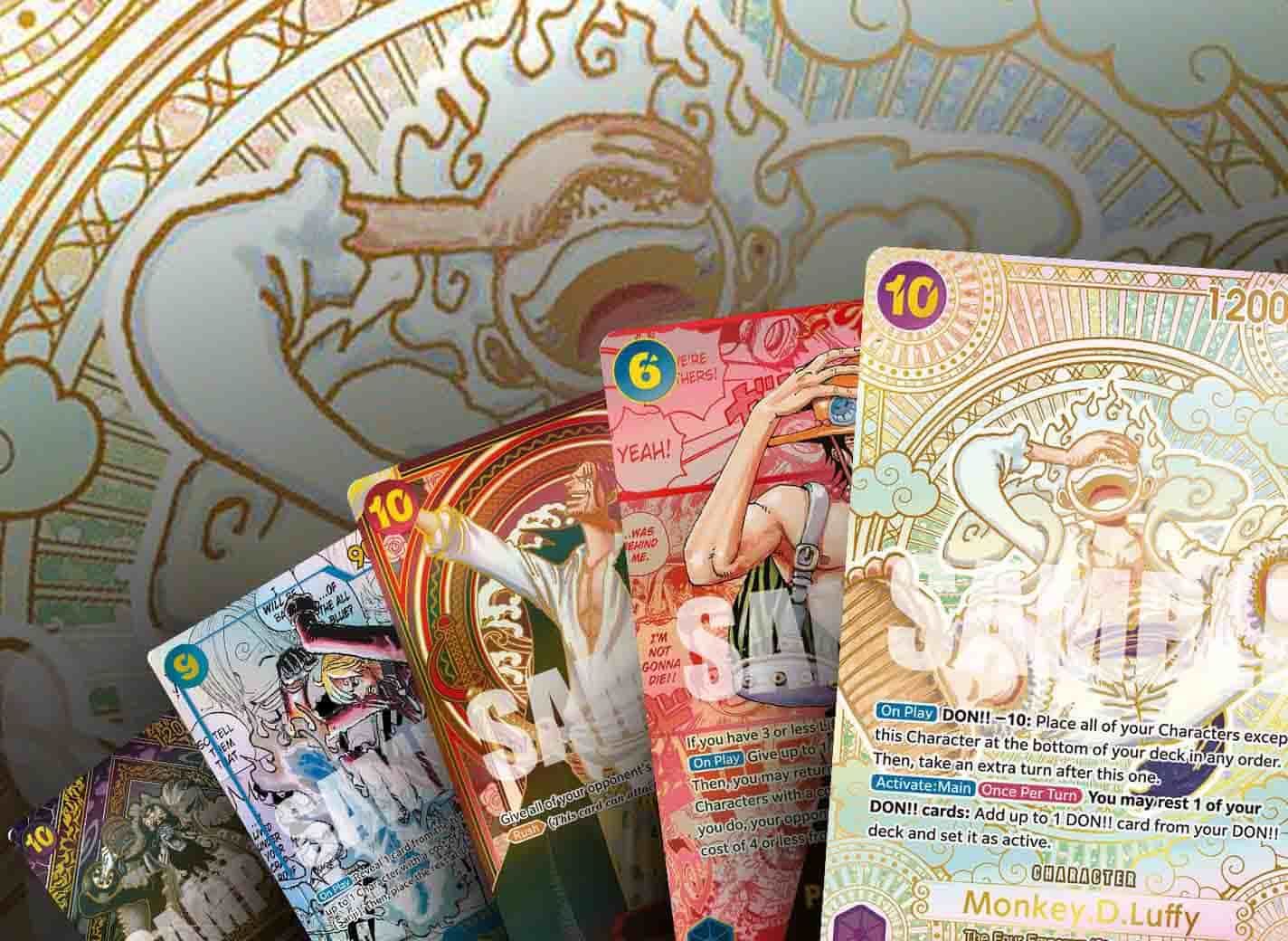
Modern trading card speculation found an unexpected titan when Bandai launched the Bandai ONE PIECE Card Game. What began in late 2022 as an anime-adjacent tabletop release rapidly morphed into a cutthroat secondary market where top-tier chase cards routinely command five-figure sums. Collectors and high-net-worth investors now trade tournament prizing and pristine Alternate Art Secret Rare prints with the same ferocity once reserved exclusively for vintage Pokémon and vintage sports memorabilia.
Recent market tracking highlights just how volatile and lucrative this ecosystem has become. As cataloged in a recent snkrdunk.com Report examining elite Shanks cards, dedicated buyers are aggressively targeting verified, low-population grails. The ceiling keeps moving upward as pristine grading reports collide with extreme scarcity.
📌 Key Takeaways:
- The Top Grail: Serial Numbered Luffy cards and Championship tournament trophies stand as the absolute peak valuations, routinely clearing $10,000 to $25,000+ at public auctions.
- The Signature Factor: The Romance Dawn OP-01 Manga Rare Shanks established modern modern chase aesthetics, while the Eiichiro Oda signature card from later expansions cemented author-endorsed prestige.
- Grading Arbitrage: A BGS 10 Black Label designation carries an exponential 300% to 500% price premium over standard PSA 10 Gem Mint copies due to strict Bandai surface printing tolerances.
The Origin Spike: How Romance Dawn Shook Modern TCG Markets
When Bandai dropped Romance Dawn OP-01 into hobby shops, distribution struggled to match worldwide demand. Print runs were allocated heavily. Boxes vanished from store shelves within minutes, only to resurface at three times MSRP on online exchanges. The engine driving that opening frenzy was a single aesthetic innovation: the Manga Background Alternate Art.
Instead of traditional foil patterns, Bandai layered classic Eiichiro Oda panels directly behind character line art. Leading that inaugural lineup was the Manga Rare Shanks (OP01-120). Pull rates were punitive, estimated by cracking syndicates at roughly one per three to four sealed cases (36 to 48 boxes).
Raw copies of the Red-Haired Emperor skyrocketed from initial presale figures near $400 to peaks above $1,800 within months. The card became the visual signature of the game's collectible legitimacy. It proved Western and Japanese collectors were willing to treat modern shonen prints as blue-chip alternative assets.
The Elusive Elite: Serial Numbers and Author Inscriptions
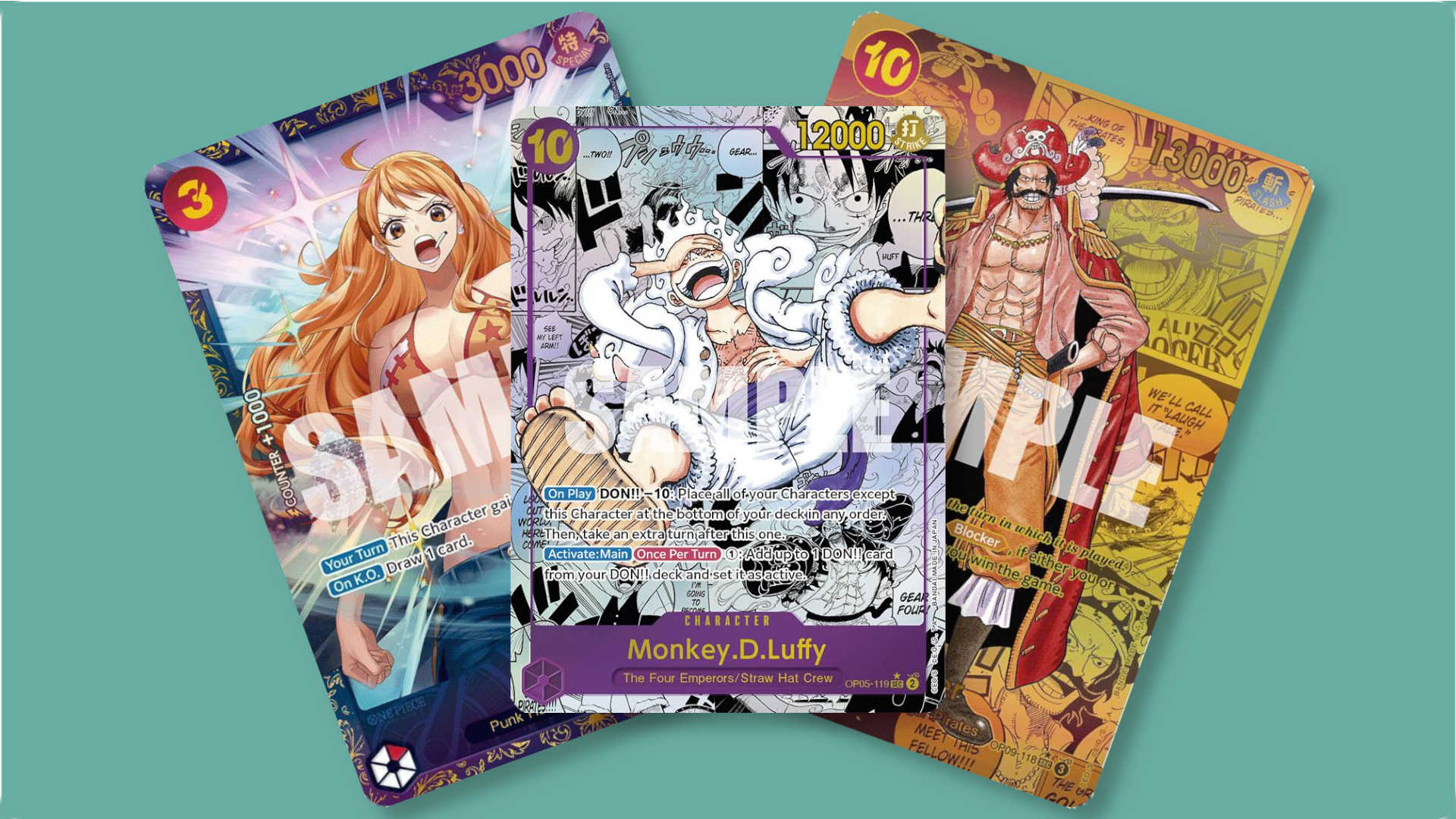
Booster pack hits generate headlines, but artificial scarcity commands the biggest checks. Bandai capitalized on this dynamic by issuing the Serial Numbered Luffy promo. Produced in strictly limited quantities, such as the Japanese run capped at 700 copies and even smaller regional allotments, these cards feature a stamped golden serial number in the lower card window.
Individual digits drive violent pricing swings. Single-digit stamps, matching numbers like #007, or lore-significant markers like #056 (a Japanese numerical pun on "Gomu") trigger frenzied private bidding wars. Verified sales of high-tier Serial Numbered Luffy cards in pristine condition have pushed past $15,000, with top-tier serials commanding even steeper bounties behind closed doors.
Then arrived the Eiichiro Oda signature card, printed for the special Memorial Collection and anniversary releases. Featuring Oda’s hand-drawn illustration style topped by a foiled facsimile signature, this card bridged mainstream literary manga appreciation with cardboard speculation. It bypassed traditional competitive viability entirely, existing solely as an untouchable display piece that trades above $3,500 raw.
Auction Records and Verified Valuations Across the Chase Spectrum
Secondary market card valuations in the Bandai ecosystem hinge on three main pillars: pull-rate scarcity, competitive trophy heritage, and grading population reports. The table below outlines verified sales data and high-water transaction benchmarks across premier grails.
| Card Name & Origin | Rarity Classification | PSA 10 Price Range | BGS 10 Black Label Record |
|---|---|---|---|
| Manga Rare Shanks (Romance Dawn OP-01) | Secret Rare Alternate Art | $1,100, $1,600 | $4,500, $6,000 |
| Serial Numbered Luffy (Flagship / Promo) | Limited Serial Foil | $8,500, $14,000 | $22,000+ |
| Eiichiro Oda Signature Luffy (ST-10 / Anniversary) | Special Illustration Rare | $3,200, $4,800 | $11,500 |
| Super Pre-Release Winner Luffy (SPR-01) | Tournament Winner Stamped | $2,400, $3,600 | $7,200 |
| Championship Promo Sakazuki / Kuzan | Championship Placement Foil | $4,000, $7,500 | $15,000+ |
The Grading Divide: PSA 10 Gem Mint Versus BGS 10 Black Label
Japanese card manufacturing generally maintains superior centering and corner cuts relative to Western factory lines. Because of this, hitting a PSA 10 Gem Mint on Bandai product is far more common than on English Pokémon or Magic: The Gathering equivalents. Collectors quickly realized that standard Gem Mint grades flooded population tallies, capping speculative upside.
That realization ignited the run on Beckett Grading Services (BGS).
A standard BGS 9.5 or even BGS 10 Pristine commands a reasonable market adjustment. But when all four sub-grades (Centering, Corners, Edges, Surface) evaluate at a flawless 10, Beckett issues the coveted BGS 10 Black Label. In the One Piece community, this label acts as a financial multiplier.
When a Manga Rare Shanks crosses Beckett’s desk and earns quad-tens, its liquid appraisal jumps from roughly $1,300 in a PSA slab to north of $5,000. High-rollers intentionally submit freshly opened case hits in bulk to Beckett, willing to accept dozens of 9.5 outcomes solely to fish for a single Black Label that can pay off entire cases of product.
Tournament Trophies: The Untouchable Flagship and Championship Promos
Pack-pulled grails offer mass accessibility, but tournament prizing controls the real high-end volume. Bandai runs structured competitive circuits spanning local Flagship Battle events, Regional qualifiers, and Continental Championships. Top placement does not yield generic trophies. Winners receive heavily protected Championship promo cards.
The earliest historical marker was the Super Pre-Release Winner Luffy, awarded to local game store victors during the game’s soft rollout in late 2022. Featuring a silver foil "WINNER" stamp across the illustration, these promos experienced instant absorption by attendees who refused to sell.
Higher up the ladder, Flagship Battle winner prizing, such as alternate art versions of Zoro, Perona, or Sakazuki, regularly trade between $1,500 and $5,000 raw. Because these cards cannot be pulled from retail booster boxes, their circulating volume is mathematically capped by event attendance records. As player registration counts swell into the thousands, the historical ratio of active players to early tournament winner promos continues to shrink, insulating their values against market downturns.
Frequently Asked Questions (FAQ)
Q1: Why is Manga Rare Shanks from Romance Dawn more expensive than later Manga Rares?
A1: Romance Dawn OP-01 was the pioneer set of the game and faced intense initial print allocations. Shanks was the very first Manga Rare ever printed, giving it historical first-mover status that subsequent Manga Rares from larger print runs cannot duplicate.
Q2: How do serial numbers affect the valuation of limited Luffy cards?
A2: Serial numbering creates individual card identity. While standard mid-tier serials trade around established baseline valuations, single digits (#001 through #009) and thematic numbers like #056 command private premiums often double or triple the average market rate.
Q3: Are English One Piece cards worth more than Japanese versions?
A3: In general, English tournament promos and Manga Rares hold higher secondary market price tags than their Japanese counterparts. English booster print runs are distributed over a much wider global collector base, making English PSA 10 copies scarcer relative to worldwide buyer demand.
Navigating the One Piece Secondary Market
Card valuations inside the Bandai ecosystem are shedding their startup volatility and settling into established tiers. Blue-chip trophies like early Championship Winner stamps and Serial Numbered Luffy cards behave like scarce historical art prints. Meanwhile, standard Alternate Art cards follow typical supply cycles tied to Bandai's ongoing reprint waves.
Collectors prioritizing value retention look directly at low-population anomalies. Pristine sub-grades from Beckett and documented tournament pedigree separate permanent assets from short-term hype cycles. As the franchise barrels toward its broader narrative milestones, the physical relics of its trading card origins remain among the most aggressively traded modern collectibles in the world.


