The Definitive Survival Guide: How to Stop Crying When Mad and Speak with Authority
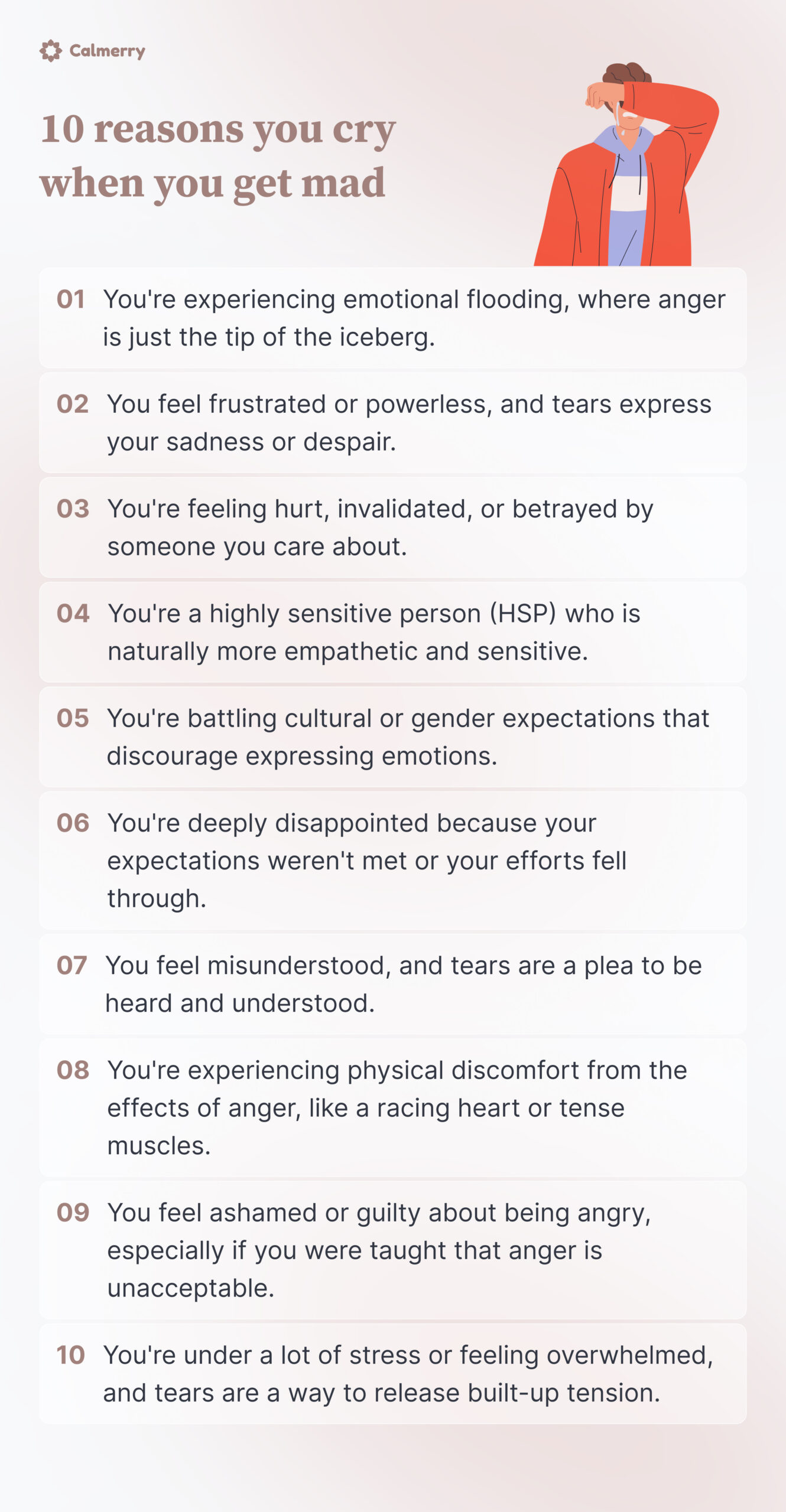
You stand in a contentious meeting, ready to defend a project or confront a colleague who undermined your work. Your pulse races, your jaw clenches, and your argument is bulletproof. Yet, the moment you open your mouth to push back, your throat tightens and tears spill down your cheeks. Nothing undermines professional authority or interpersonal boundaries quite like bursting into tears when you are genuinely incandescent with rage. The reaction feels like a betrayal by your own biology, signaling defeat or vulnerability when your actual internal state is pure hostility.
This involuntary physiological response, frequently termed frustration crying or angry tears, affects millions of people across professional and personal arenas. Rather than indicating sadness, these tears represent an acute autonomic overflow. As analyzed in an investigative Refinery29 Report on argument mechanics, weeping during a conflict often blindsides people who want nothing more than to stay composed. Clinical reporting published by IOL in early 2026 confirms that tear ducts act as pressure release valves during intense sympathetic arousal, discharging physical tension when anger overwhelms verbal processing channels.
📌 Key Takeaways:
- The Neurological Trigger: Angry crying occurs during an amygdala hijack, where a surge of adrenaline overwhelms your prefrontal cortex and activates the lacrimal glands.
- The Social Perception Problem: Observers routinely misinterpret angry tears as sadness, helplessness, or manipulation, which shifts conversational leverage away from the speaker.
- Tactical Somatic Intervention: You can arrest the tear cascade using rapid vagus nerve regulation, temperature shifts, and pre-scripted verbal boundary statements.
The Biology of Rage: Why Amygdala Hijack Triggers Lacrimal Ducts
Anger is an activating emotion designed to mobilize the body for combat. When your brain perceives an injustice, insult, or direct threat, the amygdala fires an alarm before your rational prefrontal cortex can evaluate the context. This triggers the sympathetic branch of the autonomic nervous system, initiating the classic fight-or-flight response. Your adrenal glands pump epinephrine, norepinephrine, and cortisol into your bloodstream within milliseconds. Your heart rate jumps, bronchial tubes dilate, and blood rushes to your major muscle groups.
Tears enter the equation because intense anger creates extreme emotional arousal. The autonomic nervous system struggles to differentiate between overwhelming terror, grief, or towering fury once physiological metrics cross a specific baseline threshold. When sympathetic arousal climbs too high, the hypothalamus signals the autonomic nervous system to counterbalance the surge before cardiovascular strain causes harm.
Activating the lacrimal system acts as a biological breaker switch. Emotional tears contain higher concentrations of adrenocorticotropic hormone (ACTH) and prolactin than lubricating basal tears. By weeping, the body physically evacuates chemical markers of stress while stimulating the parasympathetic nervous system to drop blood pressure. The weeping is not an admission of emotional defeat. It is a homeostatic safety reflex executed by an overstimulated nervous system.
The Double Burden of Frustration Crying in High-Stakes Conflicts
The core difficulty with angry tears is their social optics. Human culture treats crying as an expression of grief, submission, or distress. When you cry out of rage during a salary negotiation, a cross-examination, or a performance evaluation, the opposing party rarely thinks, "This person is dangerously furious." Instead, they conclude you are fragile, overwhelmed, or unable to withstand criticism.
This social coding shifts power dynamics instantly. In professional settings, managers often soften their tone, offer tissues, or suggest rescheduling the conversation. For the person crying out of anger, this reaction feels condescending and infuriating. The condescension drives arousal even higher, locking the speaker into an escalating loop of fury and increased tearing. Survey data from organizational psychology labs indicates that over 64% of professionals who experience frustration crying report feeling that their credibility was damaged during negotiations, despite having superior factual arguments.
Tears also interfere with vocal mechanics. As the sympathetic nervous system ramps up, the glottis, the opening between your vocal cords, dilates to take in more oxygen. Swallowing while the glottis remains open forces the throat muscles into opposing actions, producing the familiar "lump in the throat" sensation known clinically as globus pharyngeus. Trying to articulate structured, assertive points while fighting a restricted airway turns assertive speech into broken, breathless phrasing.
Physiological Mechanics: Contrasting Tears of Sorrow, Anger, and Stress
Understanding what occurs beneath your skin helps strip away the shame associated with angry weeping. The physiological signature of frustration crying differs markedly from standard depressive weeping or grief-induced sobs.
| Arousal Metric | Grief & Sorrow | Frustration & Fury | Sensory Overwhelm |
|---|---|---|---|
| Dominant Hormones | Prolactin, oxytocin, ACTH | Epinephrine, norepinephrine, cortisol | Cortisol, elevated glutamate |
| Autonomic State | Dorsal vagal withdrawal, low energy | Acute sympathetic fight activation | Sympathetic flight/freeze mix |
| Somatic Indicators | Slumped posture, shallow respiration, lethargy | Clenched fists, jaw tension, hot facial flush | Pupil dilation, dizziness, sensory avoidance |
| Lacrimal Trigger | Social signaling for bonding & care | Homeostatic pressure release from motor inhibition | Neurological circuit overload |
The crucial difference lies in motor inhibition. When you are furious, your entire mammalian apparatus prepares you to physically strike or verbally blast your opponent. However, civilized professional norms require you to sit still, maintain eye contact, and speak evenly. The tremendous kinetic energy mobilized by your endocrine system has nowhere to go. Unable to fight or flee, the body channels that trapped physical force inward, producing intense somatic tension that bursts through your tear ducts.

Real-Time Interventions: Vagus Nerve Regulation and Somatic Resets
You cannot talk yourself out of an autonomic reflex using willpower alone. Trying to stop tears by thinking "don't cry, don't cry" increases cognitive load, heightening your distress and ensuring the tears arrive faster. To interrupt the sequence, you must communicate directly with your autonomic nervous system using somatic mechanisms.
1. Execute the Physiological Sigh. Popularized by neurobiology researchers at Stanford University, the physiological sigh remains the fastest non-pharmacological tool to lower sympathetic tone. Take two deep, consecutive inhalations through your nose, one deep breath followed immediately by a sharp second top-up sniff, then release a long, slow exhalation through your mouth for 6 to 8 seconds. Doing this twice expands collapsed alveoli in the lungs and triggers vagal nerve signaling to immediately reduce heart rate.
2. Force Swallowing with Cold Water. The globus sensation tightens the pharynx, making speech nearly impossible. Keep a glass of ice water nearby in any planned confrontation. Taking three slow, deliberate swallows forces the glottis to close rhythmically, breaking the muscular spasm and lowering core facial temperature, which curbs the lacrimal reflex.
3. Use Counter-Pressure Isometric Anchoring. Rather than fighting the physical tension, ground it away from your face. Press your feet flat into the floor with maximum force, or push your tongue firmly against the roof of your mouth behind your front teeth. This redirects muscular tension downward and stimulates trigeminal nerve pathways, helping interrupt the lacrimal motor signal.
4. Deploy the Diver's Reflex Through Cold Exposure. If you have 30 seconds before an escalated conversation turns public, step into the restroom and run cold water over your wrists, or press a cold, wet paper towel firmly against the bridge of your nose and cheekbones. Rapid cooling of the ophthalmic and maxillary branches of the cranial nerves activates the mammalian dive reflex, dropping heart rate by 10% to 25% instantly.
Framing the Narrative: Assertive Scripts for When Tears Break Through
Even with physical interventions, biology sometimes wins. When tears escape, attempting to wipe them away frantically or apologizing signals embarrassment and hands emotional control of the room to your counterpart. The most effective tactical move is radical, matter-of-fact transparency.
Acknowledge the physical symptom while decoupling it from your intellectual clarity. Label the reaction plainly and redirect the focus to the actual dispute.
Consider using these field-tested conversational scripts:
- In a Corporate Dispute: "My eyes are watering because this situation is completely unacceptable to me. Ignore the tears; they are an adrenaline reflex. Listen to what I am saying about this timeline."
- During a Direct Confrontation: "Do not mistake my physical reaction for weakness or distress. I am extremely angry about this breach of process, and we are going to resolve it right now."
- When Voice Tremor Occurs: "My voice is unsteady due to an adrenaline spike, but my position on this issue is absolute. Give me five seconds to reset, and we will continue."
These responses reframe the narrative. They tell the other person that you are fully aware of your bodily functions, unashamed of them, and entirely focused on holding them accountable. By removing the mystery, you prevent the other party from adopting a patronizing tone or sidestepping the conflict.
Building Long-Term Distress Tolerance and Conflict Management Capacity
Preventing angry tears over the long haul requires expanding your distress tolerance window. Individuals prone to frustration crying frequently share common developmental or psychological profiles: high baseline empathy, perfectionism, or an upbringing where direct verbal expressions of rage were forbidden or punished.
If you grew up learning that outward anger was dangerous, your nervous system learned to suppress aggression. Suppression creates the exact pressure cooker conditions that make tears inevitable. Expanding your capacity for confrontation involves systematic behavioral training.
Begin by practicing micro-confrontations in low-stakes settings. Send back incorrect food orders at restaurants. Voice minor disagreements with colleagues on inconsequential topics rather than accommodating them. State your preferences clearly without softening modifiers like "I just think" or "Sorry, but."
These small actions build tolerance to interpersonal tension. They train your nervous system to understand that friction does not signal catastrophe. As your baseline comfort with conflict rises, your amygdala stops treating minor disputes like existential emergencies, reducing the adrenaline spikes that trigger your tear ducts in the first place.
Frequently Asked Questions (FAQ)
Q1: Why do women experience frustration crying more frequently than men?
A1: This difference stems from an intersection of biology and social conditioning. Biologically, adult women have significantly higher resting levels of prolactin, a hormone directly linked to emotional tearing, and possess smaller lacrimal canals, meaning tears spill over onto the cheeks much faster. Societally, women are often conditioned from childhood to suppress overt displays of raw rage, leading anger to manifest as frustration crying rather than direct physical or vocal aggression.
Q2: Does taking deep breaths during an argument actually stop the tears?
A2: Standard hyperventilating deep breaths often make the problem worse by blowing off too much carbon dioxide, causing lightheadedness and accelerating heart rate. Only breathing techniques with extended exhalations, such as the physiological sigh or a 4-second inhale followed by an 8-second exhale, stimulate the vagus nerve and slow the physiological stress response enough to stem the flow of tears.
Q3: Should I leave the room if I start crying out of anger during an important meeting?
A3: Leaving the room should be a calculated tactical choice, not an embarrassed escape. If you feel your throat closing so severely that speech is compromised, firmly take control of the break: "We have hit an impasse that needs addressing, but I need three minutes to review my notes. I will be right back." If you can still speak, staying seated and explicitly labeling the tears as an adrenaline response retains far more authority than running out.
Mastering Assertive Presence Under Autonomic Overload
Anger is clean, useful information. It signals that a boundary was crossed, a standard was broken, or an injustice requires correction. The physiological machinery that triggers tears alongside that fury is simply an evolutionary quirk, an autonomic mechanism attempting to manage a massive internal chemical surge.
Shame is what turns a manageable biological reaction into a career liability. When you stop treating your tears as a humiliating character flaw and recognize them as an adrenaline reflex, you strip them of their power to derail you. Anchor your feet to the floor, let your breath slow your heart rate, and articulate your boundary without apologizing for your body. The tears may well run down your face, but your authority will remain untouched.


