The Evolution of Mental Readiness: Tracking the Rise of Institutional Cognitive Training
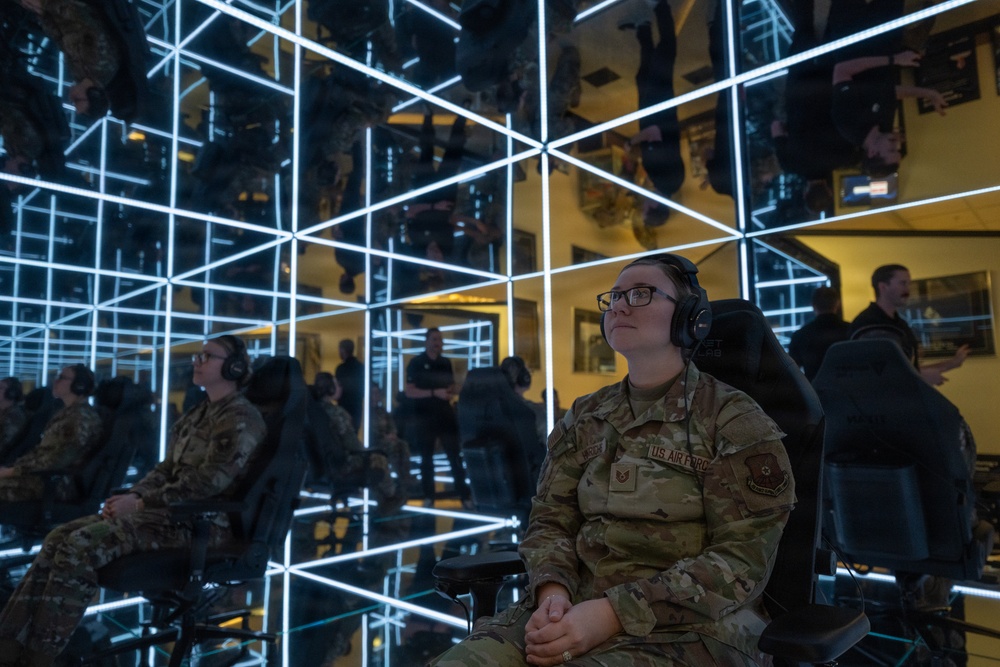
For decades, military doctrine treated mental toughness as a byproduct of physical exhaustion. If recruits could survive sleep deprivation, grueling obstacle courses, and relentless drill instructors, leaders assumed their nervous systems could handle the crucible of modern combat. That doctrine is quietly breaking apart. As detailed in an official DVIDSHub Report on the modernization of Air Force Global Strike Command (AFGSC), the Department of the Air Force has begun treating the human central nervous system as critical operational hardware. By integrating MindGym cognitive training into frontline units, AFGSC is institutionalizing a shift that began in corporate boardrooms and Olympic training centers: mental readiness is no longer an innate character trait, but a trainable physiological discipline.
The demands placed on operators in the mid-2020s are fundamentally cognitive. Crews managing long-range strike platforms, underground intercontinental ballistic missile capsules, and distributed drone fleets spend hours in static vigilance broken by seconds of catastrophic consequence. Muscle mass offers little protection against decision fatigue, sensory overload, or the executive degradation that occurs during 36-hour continuous combat missions. To secure the tactical edge enhancement demanded by modern operational doctrines, military leaders are systematically restructuring how service members condition their brains.
📌 Key Takeaways:
- The Operational Pivot: Air Force Global Strike Command has formally embedded structured cognitive conditioning to sustain peak mental focus across strategic nuclear and conventional strike personnel.
- Origins in Executive Coaching: Techniques once reserved for Fortune 500 boardrooms and high-stakes corporate negotiations have migrated directly into defense pipelines as human performance technology.
- Tactical Edge Preservation: Modern stress inoculation training targets working memory, attentional switching, and tactical decision-making rather than relying purely on physical attrition.
The Corporate Roots of Institutional Brain Training
The tools now deployed across defense networks did not originate in Pentagon research labs. During the early 2010s, global consulting houses and Wall Street trading desks realized their competitive advantage was eroding through burnout, fractured attention spans, and decision paralysis. Corporate entities poured hundreds of millions into behavioral psychology frameworks, seeking repeatable ways to sharpen executive function under market stress.
What emerged was an entire ecosystem of institutional brain training. Providers stripped away self-help mysticism, replacing it with bite-sized, empirically measured cognitive workouts. Instead of broad discussions about work-life balance, corporate programs like MindGym delivered micro-drills focused on attentional control, conversational framing, cognitive reframing, and emotional regulation under pressure. Executive suites treated these drills like high-intensity interval training for the prefrontal cortex.
Defense observers watched these corporate experiments closely. Special Operations Command (USSOCOM) was the first military subculture to borrow from the private sector, launching human performance initiatives that paired physical therapists with sports psychologists. By the time AFGSC operational readiness doctrines were updated for multi-domain conflict, conventional commands realized that executive management challenges, information triage, high-consequence risk analysis, sustained attention, mirrored modern command-and-control realities.
How AFGSC Reimagined Operational Readiness with MindGym
When Air Force Global Strike Command announced its adoption of MindGym cognitive training, the move signaled an overdue departure from industrial-era training regimes. AFGSC oversees the air- and ground-based legs of the United States nuclear triad, commanding fleets of B-52H Stratofortress bombers, stealth B-2 Spirits, and the incoming B-21 Raider alongside subterranean Minuteman III missile crews.
These operators face an uncommon psychological burden. Unlike kinetic infantry engagements driven by adrenaline and rapid movement, strategic deterrence demands perfect operational compliance under agonizing sensory monotony. An ICBM crew sitting a 24-hour alert deep underground must maintain readiness for an order that may never arrive, yet execute that order flawlessly within minutes if authorized.
By rolling out neuroperformance optimization programs across these units, command leadership targeted the specific neurological drain of strategic isolation. The training modules emphasize tactical decision-making through rapid cognitive conditioning exercises. Airmen are taught how cognitive biases settle into prolonged watches, how circadian disruption deteriorates threat assessment, and how structured micro-interventions can reset the nervous system without pharmaceuticals.
The Decadal Shift to Neuroperformance Optimization
The migration of cognitive conditioning from high-end corporate retreats to active-duty defense doctrine unfolded over more than a decade of trial, research, and organizational realignment.
| Phase & Era | Primary Operating Domain | Core Methodologies & Objectives |
|---|---|---|
| Phase I (2012, 2017) | Corporate Boardrooms & Olympic Athletics | Executive behavioral conditioning, micro-coaching, resilience workshops to reduce executive burnout and retain talent. |
| Phase II (2018, 2022) | Special Operations & Naval Aviation | Biometric monitoring, biofeedback immersion, neurofeedback setups, specialized mental resilience drills for elite operators. |
| Phase III (2023, 2026) | Conventional Commands (AFGSC, Fleet Forces) | Scaled military cognitive readiness programs, mobile modules, stress inoculation training integrated into baseline operational doctrine. |
This evolution reflects a transition from passive mental healthcare to proactive mental capacity building. Early programs focused on remediation, fixing cracked soldiers after traumatic deployments. Contemporary programs operate on the premise of prevention: armoring the baseline nervous system before cognitive stress cascades into performance degradation.

Stress Inoculation and the Mechanics of High-Stakes Focus
Modern military cognitive readiness rests heavily on stress inoculation training (SIT). Derived from behavioral science protocols first codified in clinical psychology, SIT systematically exposes operators to graded doses of cognitive and environmental stressors while requiring them to complete complex tasks.
In traditional boot camps, stress inoculation meant loud noises, physical exhaustion, and direct verbal confrontation. The modern version looks radically different. An Airman may sit in a high-fidelity synthetic trainer running multi-layer sensor feeds. While processing contested airspace data, instructors introduce unpredictable system corruptions, sensory disruptions, and ambiguous command inputs.
The goal is building physiological adaptability. When the brain detects a crisis, the sympathetic nervous system triggers peripheral vasoconstriction, tunnel vision, and a temporary shutdown of high-order executive reasoning. Tactical operators cannot afford tunnel vision. By practicing cognitive drills during controlled sympathetic arousal, service members learn to anchor peak mental focus, keeping working memory intact while their bodies experience acute stress responses.
Institutional Skepticism and the Cultural Hurdle
Despite official endorsements and backing from command leadership, rolling out institutional brain training across combat wings is not without friction. Traditional military subcultures retain deep skepticism toward programs that resemble corporate human resources seminars or civilian coaching fads.
On military discussion forums and inside base squadron lounges, service members frequently raise concerns about utility. Operators question whether 45-minute interactive workshops can prepare a crew for an electromagnetic-pulse scenario or a severed communication link during combat operations. Some mid-career non-commissioned officers view cognitive conditioning platforms as bureaucratic distractions that divert time from hands-on maintenance, weapon systems handling, and live flight hours.
There is also the unresolved challenge of metric tracking. While bench press maximums and physical fitness scores are easily verified, measuring neuroperformance optimization remains tricky. If a command cannot easily track whether an operator's executive processing improved by 12% or 18%, long-term budgetary survival for these programs becomes vulnerable during defense audit reviews. Commands are countering this resistance by tying cognitive performance data directly to synthetic training outcomes, demonstrating that crews who undergo mental resilience drills make fewer unforced errors during contested flight simulations.
Frequently Asked Questions (FAQ)
Q1: What separates institutional cognitive conditioning from standard military discipline?
A1: Traditional military discipline relies on repetition, adherence to routine, and external command structures to produce reliable behavior. Institutional cognitive conditioning focuses on intrinsic neurological mechanisms, training working memory, cognitive flexibility, stress regulation, and attentional control through structured behavioral science drills.
Q2: Why are conventional commands like AFGSC investing in commercial training platforms?
A2: Commercial platforms such as MindGym bring proven, scalable educational design built over decades in competitive private-sector environments. Leveraging mature behavioral frameworks allows commands to rapidly deploy human performance technology without spending years developing custom internal curricula from scratch.
Q3: How do operators measure the effectiveness of mental resilience drills?
A3: Effectiveness is monitored through secondary performance metrics, including simulator error rates during emergency procedures, reaction times under sensory load, sleep restoration data, and subjective operational readiness assessments logged during major command exercises.
The Future of Cognitive Command in Contested Arenas
The transition toward systemic brain conditioning marks an irreversible adjustment in defense posture. As automated systems, artificial intelligence copilots, and hyper-velocity weapon systems truncate operational decision windows, human latency becomes the ultimate vulnerability in the kill chain. A technician or pilot who loses executive control for 10 seconds can compromise an entire tactical network.
By folding corporate cognitive tools into baseline readiness frameworks, commands like AFGSC are acknowledging that modern weapon systems are only as resilient as the minds operating them. Physical strength and mechanical proficiency will remain necessary combat baselines. Yet in the distributed, high-speed battlespaces taking shape across the globe, operational dominance belongs to the forces capable of thinking clearly while their environment collapses around them.


