The Meaning of 'GSH' on the Chicago Bears Uniform and the Legend Behind It
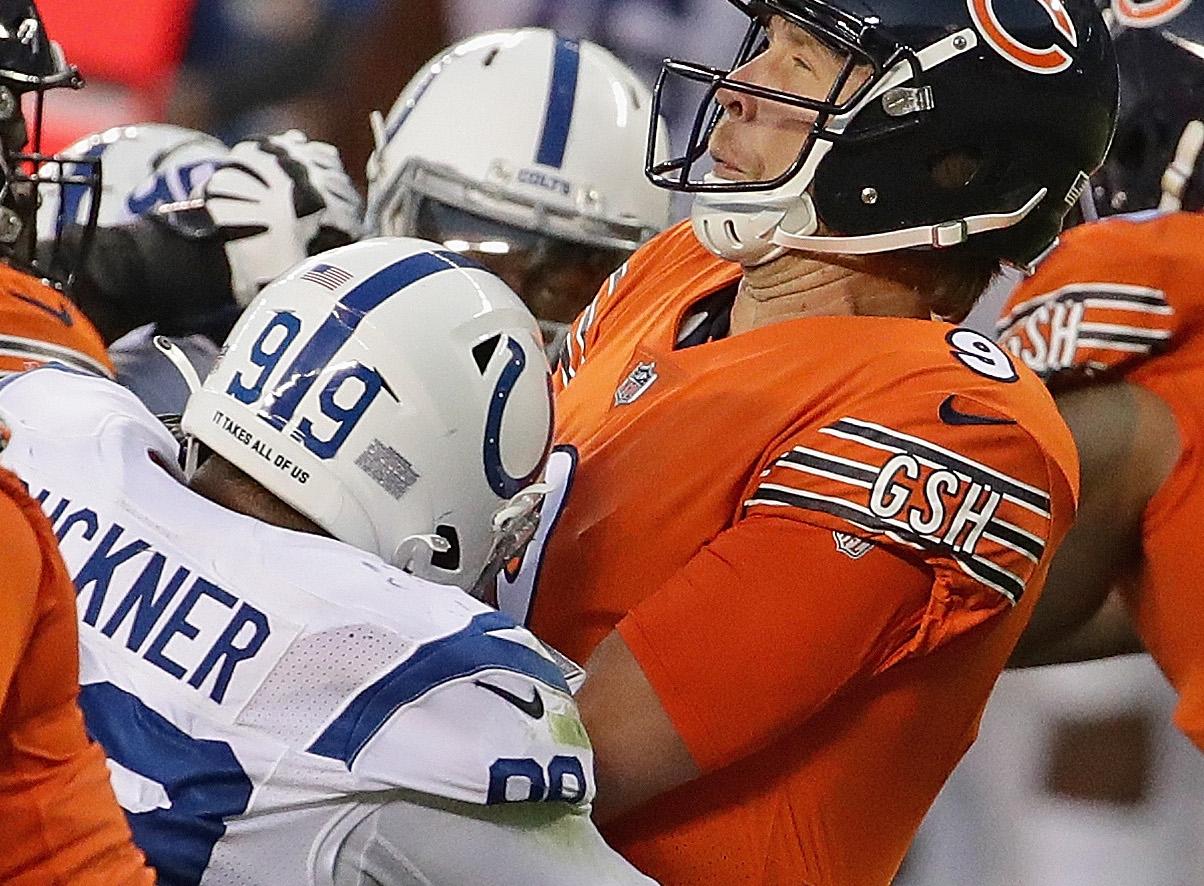
Every Sunday when the Chicago Bears step onto the turf, three white block letters stand stitched into the left sleeve of their navy and orange jerseys: GSH. For casual viewers tuning into a broadcast, the lettering easily gets mistaken for an obscure corporate sponsor or a league initiative. As highlighted in The News Journal Report detailing the history of the monogram, those three initials represent the literal foundation of both the Chicago Bears franchise and the National Football League itself.
The letters stand for George Stanley Halas, universally remembered as "Papa Bear." Halas was not simply an owner who signed checks from an executive suite. He co-founded the NFL in 1920, organized the Decatur Staleys, moved the franchise to Chicago, served as head coach across four separate decades, and ran the team until his death in 1983. The sleeve monogram is one of sports culture's most permanent homages, turning the fabric of every Bears jersey into a reminder of the man who created modern professional football.
📌 Key Takeaways:
- The Identity: "GSH" stands for George Stanley Halas, the primary architect of the Chicago Bears and co-founder of the NFL.
- The Debut: The initials first appeared on the left sleeve stripes in 1984, following Halas's death in October 1983.
- Family Succession: The Halas family legacy gained a second jersey honor in 2025 with the "VMH" chest patch, dedicated to George's daughter, Virginia Halas McCaskey.
- Permanent Status: Unlike temporary memorial patches that disappear after a single season, the GSH monogram is grandfathered into the Bears' permanent visual brand identity.
The Architect of Modern Football: Who Was George S. Halas?
George Halas was born in Chicago in 1895. An elite athlete, he lettered in football, basketball, and baseball at the University of Illinois before playing briefly for the New York Yankees in 1919. A hip injury ended his Major League Baseball ambitions, sending him back to Illinois to work for the A.E. Staley Manufacturing Company in Decatur. The starch manufacturer sponsored a company football team called the Decatur Staleys, and the company owner handed Halas control of the operation.
In September 1920, Halas drove to an automobile showroom in Canton, Ohio. Sitting on car running boards alongside figures like Ralph Hay and Jim Thorpe, Halas helped organize the American Professional Football Association, which was renamed the National Football League two years later. Halas relocated the Staleys to Chicago in 1921, playing home games at Cubs Park. In 1922, he renamed the roster the Chicago Bears, reasoning that football players were naturally bigger than baseball players.
Halas operated the organization with fierce economy and unmatched tactical curiosity. He drove the team bus, sold tickets, taped ankles, and played end. Across four separate stints as head coach, spanning 1920 through 1967, he secured 318 coaching victories and captured six NFL championships as coach, adding two more solely as owner. When the Pro Football Hall of Fame opened its doors in Canton in 1963, Halas entered as part of the charter class. His career wins record stood unbroken until Don Shula passed him three decades later in 1993.
Why the Initials Appeared in 1984 and Stayed Forever
Halas died of pancreatic cancer on October 31, 1983, at the age of 88. His passing shook the league he had helped shepherd from drafty Midwestern high school stadiums into prime-time national television. The Bears wore a simple black armband on their jerseys for the remainder of the 1983 campaign to mark his passing.
Ahead of the 1984 season, Bears management and head coach Mike Ditka, whom Halas had handpicked in 1982, sought a lasting memorial. Most NFL tributes of the era were temporary chest patches, designed to be worn for a single season and then stripped away. The Bears took a radically different path. Equipment staff embedded Halas's initials directly inside the white and orange sleeve stripes on the left arm of both the navy home jerseys and the white road uniforms.
The timing carried historic resonance. One year after the letters were stitched on the sleeve, the 1985 Bears assembled one of the most dominant single seasons in NFL history. As Buddy Ryan's "46 Defense" dismantled opponents on their way to victory in Super Bowl XX, the gleaming "GSH" letters were beamed into millions of homes. The visual instantly became inseparable from the franchise's identity.
| Uniform Element | Debut Season | Individual / Event Commemorated | Duration on Uniform |
|---|---|---|---|
| Black Armband | 1983 | Passing of George S. Halas | Half-season (Weeks 10, 16) |
| GSH Sleeve Initials | 1984 | Permanent tribute to George S. Halas | Permanent (1984, Present) |
| No. 34 Walter Payton Patch | 1999 | Passing of Hall of Fame running back Walter Payton | Single season |
| NFL Centennial Patch | 2019 | League-wide 100th season celebration | Single season |
| VMH Chest Patch | 2025 | Honorary tribute to Virginia Halas McCaskey | Commemorative season run |
From Decatur Staleys to Soldier Field: The Enduring Halas Family Legacy
When Papa Bear died in 1983, ownership of the team passed to his daughter, Virginia Halas McCaskey. Born in 1923, she spent over a century inside the organization, witnessing the team evolve from barnstorming road games to a multi-billion-dollar enterprise headquartered at Halas Hall in Lake Forest.
The continuity of the Halas-McCaskey line is unique in modern American sports. While rival franchises routinely trade hands between corporate private equity groups and out-of-town billionaires, the Bears remain an organic extension of their founding family. That lineage reached another visible milestone when the franchise introduced the VMH jersey patch to honor Virginia Halas McCaskey, placing the family's second generation directly onto the game-day uniform.
Soldier Field itself serves as the backdrop to this legacy. The Bears moved into the historic venue along Lake Michigan full-time in 1971 after departing Wrigley Field. Even as team leadership works through modern stadium developments and proposed suburban real estate projects in Arlington Heights, the visual footprint of the Halas era remains undisturbed on the uniform.

Common Misconceptions About the Bears' Sleeve Lettering
Despite appearing on television screens for more than four decades, the sleeve inscription continues to spark confusion among casual viewers and fantasy football fans alike. Several urban legends persist:
- The Corporate Sponsorship Myth: Some younger fans assume GSH is an abbreviation for a medical network, an insurance conglomerate, or an energy firm. It is entirely non-commercial. The NFL did not permit commercial jersey patches on practice uniforms until 2009, and game jerseys remain largely protected from sponsor logos.
- The Team Slogan Rumor: Online forums sometimes speculate that the letters represent a motivational phrase like "Great Sports Heritage" or "Grind, Sweat, Honor." No such slogan exists in the team's historical archives.
- Placement on Both Arms: The lettering appears solely on the left sleeve. The right sleeve retains the traditional, uninterrupted orange-and-white striping pattern, preserving the classic aesthetic that dates back to the mid-20th century.
Frequently Asked Questions (FAQ)
Q1: What does GSH stand for on the Chicago Bears uniform?
A1: GSH stands for George Stanley Halas, the founder, former head coach, long-time owner of the Chicago Bears, and co-founder of the NFL.
Q2: When did the Bears start wearing the GSH initials on their sleeves?
A2: The Bears officially added the initials to their left sleeves for the 1984 NFL season, roughly ten months after Halas passed away on October 31, 1983.
Q3: Will the Chicago Bears ever remove the GSH initials from their uniforms?
A3: There are no plans to remove the lettering. The GSH monogram is codified into the franchise's official uniform guidelines and represents the foundation of the team's century-old brand.
Q4: What is the VMH patch seen on Chicago Bears jerseys?
A4: The VMH patch honors Virginia Marie Halas McCaskey, the daughter of George Halas and the long-time principal owner of the team, introduced to commemorate her extraordinary century-long connection to the franchise.
The Living Monogram of Soldier Field
Professional sports aesthetics change at an exhausting rate. Franchises redesign logos to sell third-alternate merchandise, swap historic colors for neon trims, and auction off uniform real estate to tech conglomerates. Through all of that churn, the Chicago Bears' uniform has resisted alteration.
The three white letters on the left arm do not require explanation to the Chicago faithful. They tether a cold November afternoon at Soldier Field directly back to 1920, when a 25-year-old end gathered rivals in a Canton auto showroom to invent professional football. Long after the players who wore it in 1985 have left the field, the monogram remains: stitched into every shoulder, keeping George Halas on the sideline.


