The Tragic Fate of Chuck in The Maze Runner: Inside the Scene That Broke Fans' Hearts
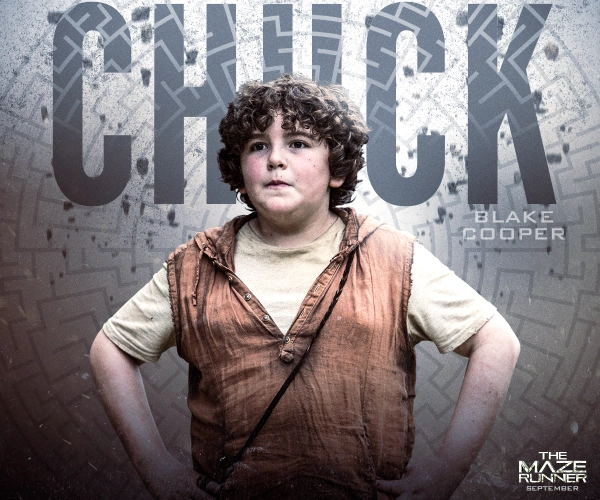
The Tragic Fate of Chuck in The Maze Runner: Inside the Scene That Broke Fans' Hearts
When director Wes Ball brought James Dashner's dystopian survival story to theaters in 2014, moviegoers braced for towering concrete walls, biomechanical monsters, and high-velocity chases. What caught millions off guard was how thoroughly an awkward, warmhearted kid became the emotional core of the entire saga. As chronicled in retrospective coverage of the series by outlets like MovieWeb, the dramatic weight of the original film hinges on Thomas's instinct to protect his companions, a drive forged through his bond with Chuck.
Chuck was never built for the physical demands of The Glade. He lacked the athletic stamina of Minho, the command presence of Alby, and the sharp pragmatism of Newt. Instead, his presence gave the surviving boys a window into the childhood they had forgotten. More than a decade after the initial theatrical release, his sudden death remains the franchise's most defining sequence, transforming a young-adult escape narrative into an indictment of adult manipulation.
📌 Key Takeaways:
- The Emotional Anchor: Chuck served as the moral compass of The Glade, giving Dylan O'Brien's Thomas a personal, human reason to fight beyond basic survival.
- Grassroots Casting: Blake Cooper secured an audition through a viral, fan-supported Twitter campaign directed at director Wes Ball.
- The Divergent Climax: The screen adaptation altered the mechanics of Chuck's sacrifice, shifting Gally's weapon from a thrown knife to a lab-side firearm.
How a Fan-Driven Twitter Campaign Cast Blake Cooper as Chuck
Hollywood casting for bestselling adaptations usually moves through established talent agencies behind closed doors. The casting of Chuck took a radically different path in 2013. When 20th Century Fox announced that Wes Ball would direct the adaptation of the James Dashner novel, fans on social media began lobbying for their favorite Gladers. Blake Cooper, then an unknown 12-year-old actor from Georgia, had read the book and saw an uncanny match between himself and Dashner's description of the curly-haired, chubby, loyal guide.
Cooper took a direct shot. He reached out to Ball on Twitter, writing that he was the right age, had the exact look, and wanted an opportunity to read for the role. Ball did not dismiss the tweet. He told Cooper to submit an audition tape through casting director Denise Chamian. When the production team watched the self-tape, Cooper blew away the competition. He did not play the character as comic relief. He captured Chuck's quiet loneliness and earnest innocence, earning the part outright and turning an open social media pitch into a rare, authentic casting success story.
The Heart of The Glade: The Bond Between Thomas and Chuck
From the moment Dylan O'Brien's Thomas arrives inside the screeching metal elevator known as The Box, disorientation threatens to consume him. He cannot remember his home, his past, or even his name. The older Gladers treat his panic with weary impatience. Chuck does the opposite. Assigned as Thomas's initial guide, Chuck offers water, explains the basics of their communal prison, and provides simple comfort without judgment.
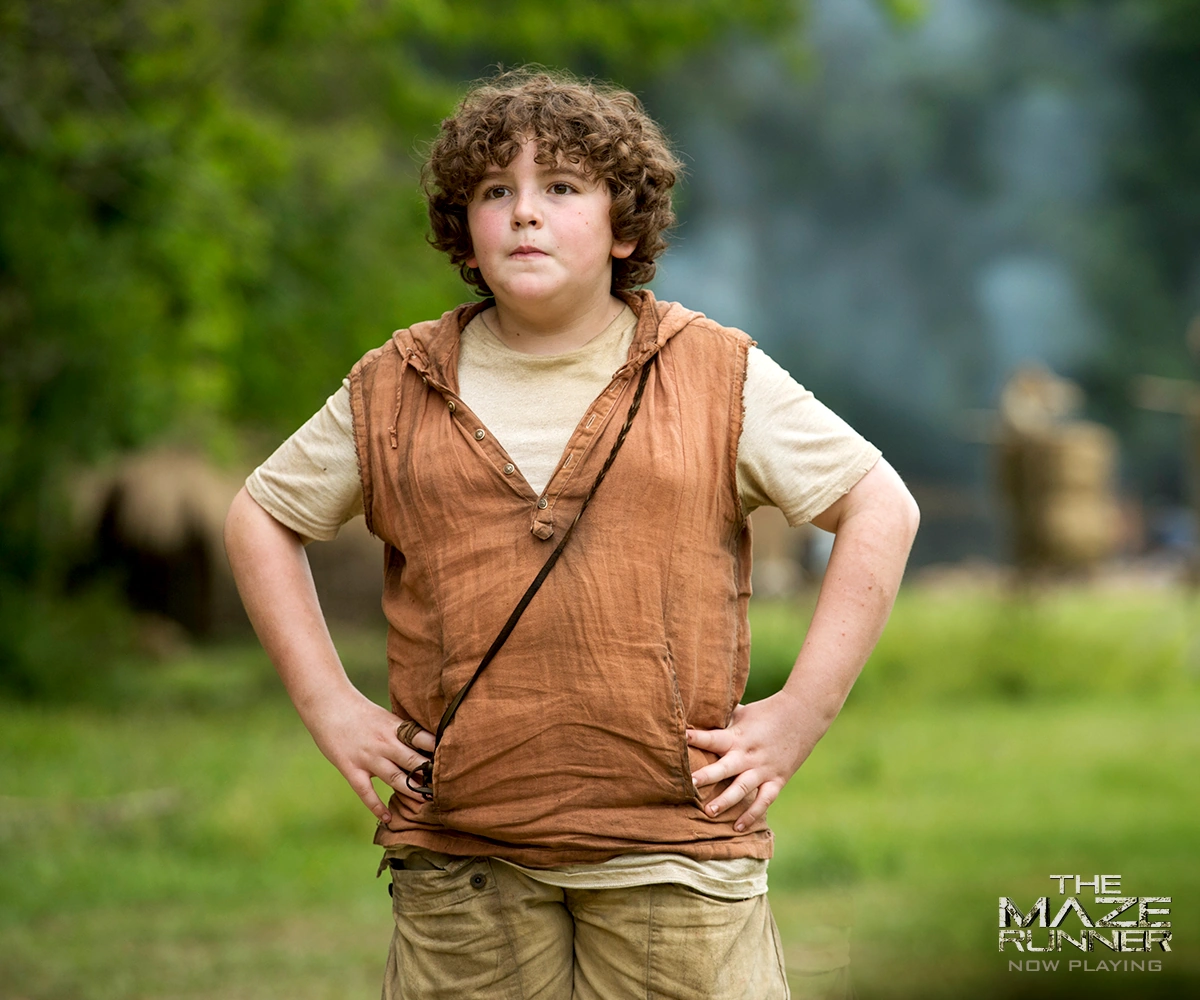
Thomas initially finds Chuck clumsy and overly chatty. That irritation dissolves as Thomas realizes Chuck is younger than the rest, having arrived only a month before him. Where older Gladers have developed hard shells to endure the daily terror of the Grievers, Chuck still yearns openly for home. The boy carves a small wooden figurine out of tree bark, explaining that he hopes to hand it to his parents if he ever gets out. Because Chuck cannot remember what his mother or father look like, he asks Thomas to take the keepsake and deliver it instead, believing Thomas is the one capable of breaking the perimeter.
That exchange transforms Thomas's mission. Escaping the maze stops being an abstract puzzle. It becomes an urgent duty to ensure that the youngest among them survives.
The Climax in the Lab: Analyzing the Death Scene
The final act of The Maze Runner delivers an exhausting gauntlet. Thomas, Teresa, Minho, Newt, Chuck, and a handful of survivors battle past the Grievers, bypass the mechanical doors, and punch in the sequence that unlocks the exit corridor. They stumble into the wreckage of the World In Catastrophe: Killzone Experiment Department (W.I.C.K.E.D.) control lab, surrounded by bloodied corpses and a prerecorded message from Ava Paige detailing an apocalyptic sun flare and a neural contagion known as the Flare.
Relief sets in for a fleeting moment. Then Gally emerges from the shadows. Delirious, stung by a Griever, and gripped by madness, Gally holds a firearm, determined to prevent the group from leaving what he considers the safety of The Glade. As Gally squeezes the trigger, Chuck leaps in front of Thomas. Minho's thrown spear impales Gally an instant too late. The bullet tears straight into Chuck's chest.
The sequence slows to a devastating hush. Chuck collapses into Thomas's arms, his breathing shallow and rapid. With trembling hands, the dying boy presses the wooden figurine into Thomas's palms, whispering a quiet "Thank you" before going limp. O'Brien's performance in this beat is raw, frantic, and shattering. Thomas does not deliver a cinematic monologue; he weeps hysterically, clutching the dead boy against his chest as masked commandos drag the survivors out into the sandstorm. The scene strips away any lingering sense of youthful adventure, driving home the brutal cost of the Wicked trials.
Book vs. Movie: How the Sacrifice Was Altered for the Screen
Readers of Dashner's 2009 novel experienced a sequence that was physically different yet emotionally aligned. The creative choices made during the film's production streamlined the action while elevating the visceral horror of the shooting.
| Narrative Element | James Dashner Novel (2009) | Wes Ball Feature Film (2014) |
|---|---|---|
| Gally's Weapon | Throws a heavy dagger straight at Thomas | Aims a semi-automatic handgun found inside the lab |
| Nature of Chuck's Death | Chuck dives horizontally to intercept the spinning blade | Chuck steps directly into the line of gunfire |
| Thomas's Reaction | Beats Gally into an unconscious pulp with bare fists | Drops instantly to the floor to attempt first aid on Chuck |
| The Figurine Motif | Chuck hands Thomas the carved token during an earlier Glade conversation | Chuck returns the token in his final seconds as a parting gift |
Replacing the thrown knife with a firearm caused initial friction among book purists, but director Wes Ball defended the shift as a necessary tonal bridge. Introducing modern ballistic weaponry inside the sterile WCKD observation facility signaled an abrupt transition from the agrarian, medieval survivalism of The Glade to the high-tech, authoritarian world outside. It visually confirmed that the boys had stepped out of the wilderness and straight into an industrial abattoir.
The Ripple Effect Across The Scorch Trials and The Death Cure
Chuck does not disappear when the first movie credits roll. His death operates as the emotional engine propelling Thomas through The Scorch Trials (2015) and The Death Cure (2018). In an industry where franchise sequels often discard secondary characters to introduce flashier set pieces, Chuck's absence lingers heavily.
Whenever Thomas confronts Ava Paige or Janson, his refusal to cooperate stems from Chuck's blood on the lab floor. When Teresa attempts to justify WCKD's utilitarian logic, arguing that sacrificing a few immune youths is acceptable if it yields an airborne cure for billions, Thomas holds up Chuck's memory as the counterweight. To Thomas, any civilization built on the engineered deaths of children like Chuck does not deserve to be saved.
The wooden figurine makes recurring visual cameos throughout the remaining films, kept tucked in Thomas's pocket like a talisman. When Gally unexpectedly reappears in the final film as part of the Right Arm resistance, having survived the spear wound, the ghost of Chuck stands directly between them, complicating their fragile alliance and forcing Gally to confront the atrocities he committed while under the influence of the grief serum.
Frequently Asked Questions (FAQ)
Q1: Why did Gally shoot Chuck instead of Thomas?
A1: Gally did not aim at Chuck. In both the book and the film, Gally fired or threw his weapon directly at Thomas, whom he blamed for destroying the order of The Glade. Chuck deliberately leapt into the trajectory to protect Thomas, paying for his friend's survival with his own life.
Q2: Did WCKD control Gally when he attacked the Gladers?
A2: Yes. In the source material, Dashner clarifies that WCKD scientists manipulated Gally through his neural brain implant to trigger the confrontation. In the film, while Gally is clearly suffering from the physical madness of a Griever sting, his sudden arrival inside the secured facility strongly hints at deliberate orchestration by Ava Paige to test the Gladers' psychological breaking points.
Q3: What happened to Blake Cooper after The Maze Runner?
A3: Following his breakout role as Chuck, Blake Cooper continued acting, appearing in the critically acclaimed drama The Late Bloomer (2016) and taking the lead role in the 2018 Western feature Measure of a Man alongside Donald Sutherland. He also pursued voice work and independent film production.
The Enduring Legacy of Chuck's Ultimate Sacrifice
Dystopian cinema often leans into grandiose stakes: fallen governments, ruined cities, and mass rebellion. Yet the moments that stick in collective memory are rarely the explosions. They are intimate tragedies that make the broader conflict personal.
Chuck's sacrifice worked because the story let him remain a normal, frightened kid. He was never an elite warrior, a master strategist, or a chosen savior. He was a boy who carved wood and missed a family he could not remember. When Thomas clutches that tiny carved token at the end of the maze, the narrative lays bare its central premise: the real horror of WCKD was never the monsters behind the stone walls, but the calculated cruelty of an adult world willing to discard its most vulnerable children.


