The Visual Proof: Tracing Every Major 'Bro' Meme Format Taking Over Your Feed
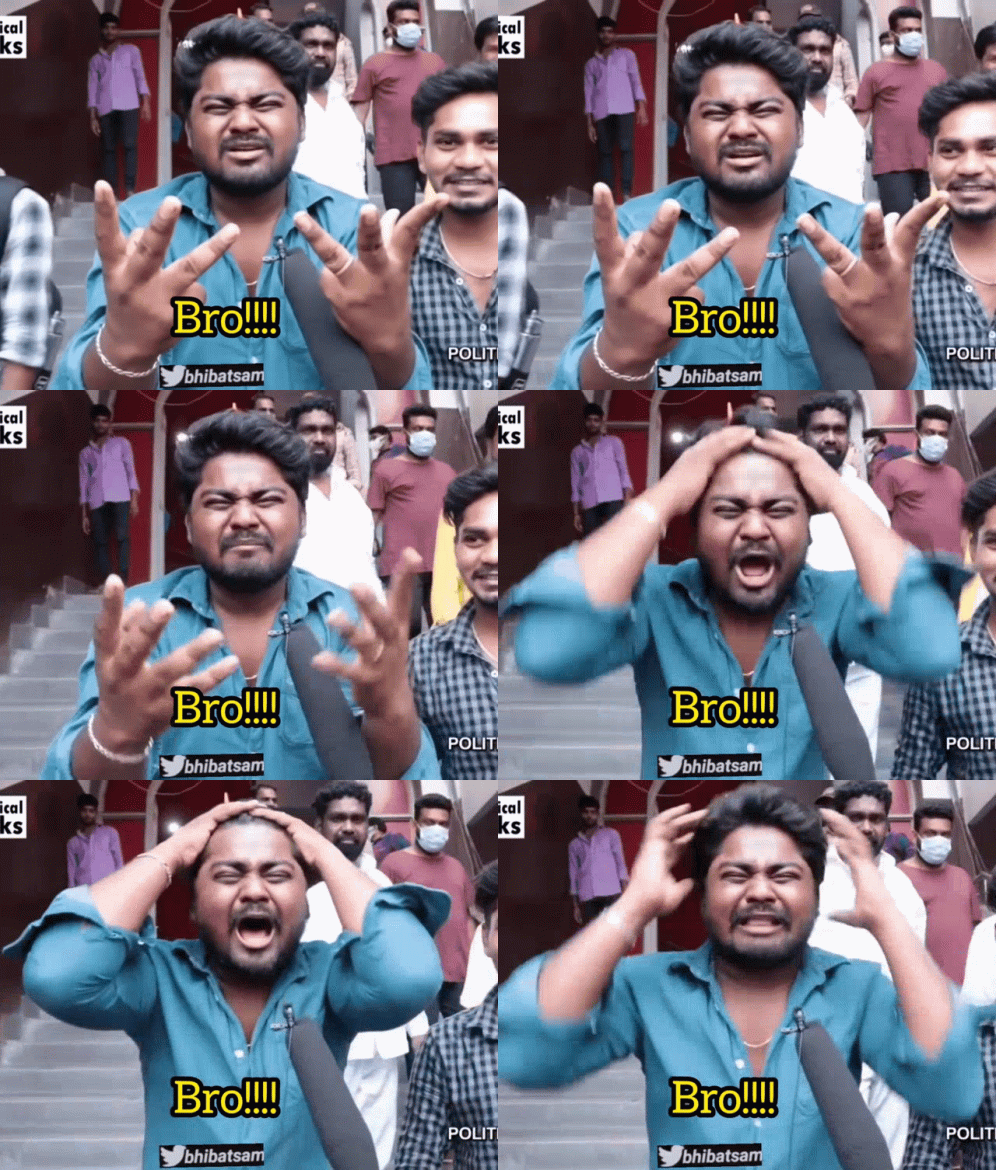
Scroll through any social video feed, and the word appears every few seconds. On TikTok, YouTube Shorts, and Twitch streams dominated by creators like IShowSpeed, viewers no longer address creators directly. Instead, millions post detached, third-person observations: "Bro really thought he could get away with that," or "Bro forgot how gravity works." Simultaneously, static reaction images depicting confused partygoers, animated slackers, and late-night television satirists flood feed replies under the umbrella label of "bro."
Yet behind these viral reaction image macros lie real people, specific production sets, and strange accidental moments captured on camera. Tracking down the real identity of bro meme figures reveals how casual snapshots turn into permanent fixtures of global slang. According to extensive archival work documented in a Know Your Meme Report, these viral artifacts span more than a decade of television sketches, Argentine nightlife candid shots, and Indian webcomic pages.
📌 Key Takeaways:
- The Linguistic Shift: The word "bro" transformed from casual greeting into universal third-person grammar, driven largely by livestreamer audiences and algorithmically pushed clip culture.
- The Unwitting Celebrities: Distinct real-world figures represent the archetype, ranging from Argentine student Franco Patrignani to comedian Eric Andre and classic webcomic illustrators.
- The Cultural Mechanism: Screengrab meme history demonstrates how context-free facial expressions survive platform turnover long after viewers forget the original recordings.
From Streamer Chats to Subtitles: How 'Bro' Became the Default Pronoun
Language on social media shifts rapidly, but few transformations match the syntactic takeover of "bro." During the early 2010s, users typed the word as direct address: "Hey bro, look at this." Over the past three years, driven by comment sections underneath creators like IShowSpeed and Kai Cenat, the word evolved into a universal, semi-mocking third-person pronoun.
Commenters write "Bro is flabbergasted" instead of "He looks shocked." The subject is neither the speaker nor the listener; "bro" is an omniscient placeholder. Streamer chat cultures run on high-velocity mockery, and calling someone "bro" in the third person establishes humorous emotional distance.
Video editors reinforce this habit by hardcoding bold yellow subtitles onto clips, emphasizing the pronoun whenever an on-screen subject stumbles, miscalculates, or makes a strange facial expression. What began as informal North American slang has solidified into a standardized linguistic framework for millions of digital natives.
The Screengrab That Started It All: The Real Faces of 'Bro Explaining'
Few visual templates capture overconfident monologuing quite like the "Bro Explaining" format. The classic image macro showcases a tense young man shouting directly into a woman's ear while she stares blankly into the middle distance, looking utterly exhausted by his presence.
The photo was snapped in February 2019 at an open-air nightclub in Claromecó, Argentina. The young man is Franco Patrignani, an Argentine student, and the woman beside him is his longtime acquaintance Denise Sanchez. Neither had any idea a bystander had taken the photograph until it exploded on Argentine Twitter, initially mocked as an illustration of unbearable mansplaining. By late 2020, English-speaking communities adapted the image to parody obsessive hobbies, crypto scams, and niche pop-culture lore. Sanchez later confirmed in interviews that Patrignani was not harassing her; he was simply shouting over deafening nightclub speakers about an ordinary local drama.
Another competing version emerged during the 2019 Major League Baseball World Series at Minute Maid Park in Houston. Cameras caught an Astros fan vigorously explaining pitch selection into his companion's ear. Both templates captured the exact same dynamic: an unyielding speaker oblivious to his listener's complete emotional detachment.
Chaotic Absurdity: The Eric Andre Roots of 'Cheers I'll Drink to That Bro'
Long before TikTok comment sections codified the vocabulary, Adult Swim served as a breeding ground for surrealist slang. The catchphrase and reaction screengrab "Cheers I'll Drink to That Bro" originates directly from The Eric Andre Show, which aired during Season 2 in late 2013.
In the recurring street-prank sketch, Eric Andre donned blonde dreadlocks, oversized sunglasses, backward visors, and rollerblades, parading as an unhinged caricature of 1990s extreme skater culture. He skated through New York intersections clutching bottles of salad dressing, yelling non-sequiturs at bewildered commuters: "Legalize ranch!" and "Cheers, I'll drink to that, bro!"
Reddit communities and imageboard boards revived the still frame in early 2020, stripping the sketch of its absurd context. Users transformed Andre’s raised cup into a reaction macro signalling reluctant agreement with bizarre, borderline-unhinged internet opinions. The screengrab meme history showcases how deliberate surrealist anti-comedy routinely gets flattened into an everyday digital stamp of approval.
Mapping the Evolution of Viral Bro Image Macros
The concept of "bro" inside visual internet lore spans multiple decades, shifting across forums, streaming platforms, and short-form algorithms. The table below outlines how key formats entered circulation and what distinct purpose they serve across modern feeds.
| Meme Format | Origin Year | Original Human Identity / Production Source | Primary Cultural Function |
|---|---|---|---|
| Bro Explaining | 2019, 2020 | Franco Patrignani & Denise Sanchez (Claromecó, Argentina) | Parodying unwanted lectures, overzealous fandoms, and unsolicited advice. |
| Cheers I'll Drink to That Bro | 2013, 2020 | Eric Andre (*The Eric Andre Show*, Season 2, Adult Swim) | Affirming questionable, chaotic, or absurdly relatable behavior. |
| Bro! Not Cool | 2018, 2019 | Oversimplified History YouTube sketches & web reactions | Expressing sudden betrayal or mild moral disapproval in discussions. |
| Cyber Sarcasm Bro ("Weed Bro") | 2015, 2018 | Anonymous illustration, popularized by Indian Facebook networks | Serving as a smug visual narrator for basic punchlines and riddle jokes. |
| Streamer Chat "Bro..." Reaction | 2022, 2026 | Live feeds of IShowSpeed, Kai Cenat, and viral short-form clips | Replacing conventional pronouns with third-person judgment. |
Animated Caricatures: The Mysterious Legacy of Cyber Sarcasm Bro
Before real-life screengrabs controlled mobile video feeds, an illustrated cartoon avatar laid claim to the name. Emerging around 2015, the character known as "Be Like Bro" or "Weed Bro" became one of the most widely shared graphics on Meta platforms across South Asia, North America, and Europe.
The image featured a crude, bearded line-drawing character sporting red, bloodshot eyes and a smoldering cigarette. Originating within sprawling meme hubs such as RVCJ Digital and "Cyber Sarcasm," the character delivered formulaic relationship jokes and cheesy riddle punchlines.
The original artist never stepped forward to claim intellectual property rights. Instead, hundreds of independent pages duplicated the avatar, creating an entire illustrated family that included "Bro's Dad," "Bro's Girlfriend," and "Armless Bro." While modern Gen-Z internet users view the drawing as a relic of early web humor, it established the framework of using "Bro" as an all-purpose narrative mascot.
Parodies, Reaction Loops, and the Modern Death of Anonymity
Viral recognition can be disorienting. When someone's face transforms into a visual metaphor, their real identity rarely matters to the millions reposting it. Franco Patrignani saw his private college night out analyzed by international news publications, while Denise Sanchez had to publicly clarify on Argentine television that she was completely comfortable during the photograph.
Streamers operate under the opposite condition: they court the visual chaos deliberately. Content creators like IShowSpeed exaggerate their expressions specifically so their audience captures reaction screenshots. A flabbergasted stare into a webcam becomes tomorrow's top-ranking Discord sticker.
The ecosystem sustains itself through cyclical mimicry. An organic screengrab surfaces online; audiences turn it into a shorthand emotional reaction; algorithms reward users for copying the expression; and professional entertainers manufacture those expressions on purpose. The line separating accidental internet fame from calculated algorithmic performance has vanished.
Frequently Asked Questions (FAQ)
Q1: Who is the actual person in the Bro Explaining meme?
A1: The most common version features Franco Patrignani shouting into the ear of Denise Sanchez. A stranger took the photograph in February 2019 at a nightclub in Claromecó, Argentina, before it spread across international message boards.
Q2: Where did the "Cheers I'll Drink to That Bro" quote come from?
A2: The phrase comes from comedian Eric Andre during Season 2 of *The Eric Andre Show* on Adult Swim, which first aired in 2013. Andre played an erratic rollerblading character yelling surreal catchphrases at passersby on New York streets.
Q3: Why do so many TikTok and YouTube comments start with "Bro really thought"?
A3: Livestream chat culture, popularized by communities watching creators like IShowSpeed and Kai Cenat, normalized using "bro" as an emotionally detached third-person pronoun. It functions as a rapid tool for mocking unusual actions in video clips.
Q4: Who created the bearded "Be Like Bro" cartoon character?
A4: The drawing originated anonymously across social network communities in the mid-2010s, particularly via Indian Facebook pages like Cyber Sarcasm and RVCJ. The original illustrator remains anonymous, and the caricature eventually became an open-source visual for simple text jokes.
The Shifting Grammar of Internet Lore in 2026
Visual communication online moves fast, shedding context while preserving humor. Whether tracing an unexpected photo taken in a seaside Argentine club, an unscripted Adult Swim television stunt, or millions of TikTok comments riffing on IShowSpeed, the "bro" meme reflects how contemporary culture speaks. It turns real people into universal symbols and transforms regional slang into the primary language of mobile screens.


