Then vs. Now: Tracking the Visual Evolution of Dancing with the Stars Since 2005

On the evening of June 1, 2005, ABC took an uncalculated gamble on a format American network executives openly doubted. Television was saturated with cynical reality programming, yet here were six B-list celebrities attempting international Latin and ballroom steps under unforgiving studio lights. The network viewed the project largely as cheap summer counterprogramming. Instead, the broadcast caught lightning in a bottle, drawing 13.5 million viewers on its opening night and immediately reshaping prime-time entertainment.
The series imported the structural DNA of the BBC hit Strictly Come Dancing, adapting British technical critique into an accessible Hollywood spectacle. As retrospective pop-culture investigations and recent retrospectives like this E! News Report underscore, early 2000s unscripted television routinely chewed through fleeting celebrity capital. Yet this modest summer filler evolved into a multi-decade broadcast institution, spanning more than thirty-five seasons, network bidding wars, and a high-stakes transition into the streaming era.
📌 Key Takeaways:
- Premiere Date: Dancing with the Stars premiered on ABC on June 1, 2005, as a six-episode summer experiment featuring just six celebrity-pro pairings.
- British Roots: The show was directly adapted from the BBC’s 2004 sensation Strictly Come Dancing, retaining British judges Len Goodman and Bruno Tonioli to maintain technical rigor.
- Evolutionary Leap: Across two decades and 35 seasons, the production graduated from standard-definition studio stages into a multi-platform Disney+ and ABC live-streaming powerhouse.
The Unlikely Genesis of an ABC Summer Gamble
The television landscape of early 2005 was dominated by survival games and singing auditions. Ballroom dance, by contrast, was perceived in Los Angeles pitch meetings as antiquated, formal, and inherently untelevised. When executive producer Conrad Green began assembling the American adaptation of the BBC format, skeptics expected the show to fold within weeks.
To anchor the broadcast, producers hired Tom Bergeron, whose deadpan wit and improvisational timing proved essential for live television chaos. Co-hosting alongside Bergeron for that first six-week run was Lisa Canning.
The initial lineup was tiny by modern standards. Only six celebrities signed contracts for Season 1:
- Soap opera actress Kelly Monaco
- Seinfeld star John O'Hurley
- New Kids on the Block singer Joey McIntyre
- Supermodel Rachel Hunter
- Original Bachelorette star Trista Sutter
- Heavyweight champion Evander Holyfield
The pacing was raw. Without the glossy LED floor panels, pyrotechnic rigs, or high-definition visual effects that characterize modern seasons, the production leaned strictly on live orchestration led by Harold Wheeler and authentic ballroom footwork. Viewers responded immediately to the visible vulnerability of athletes and soap stars tripping over quicksteps.
The Season 1 Finale Controversy That Built the Franchise
Season 1 was never designed to have a rematch. However, the unexpected cultural collision between General Hospital star Kelly Monaco and professional partner Alec Mazo against the polished, theatrical style of John O'Hurley and Charlotte Jørgensen created instant tabloid fodder.
During the opening week, Monaco suffered a wardrobe malfunction and earned brutal critiques from the judges. Yet across six short weeks, her rapid technical improvement captured the audience. When Monaco and Mazo hoisted the inaugural Mirrorball Trophy on July 6, 2005, the margin was razor-thin.
Fans inundated ABC phone lines and online forums with allegations of voting irregularities. Rather than letting the controversy fade, ABC leaned directly into the friction, staging a live 90-minute "Dance-Off" special in September 2005. O'Hurley won the rematch for charity, but the public debate permanently established Dancing with the Stars as interactive television.
The Original Judging Triumvirate and the Professional Dancer Boom
The instant authority of the broadcast rested on its judging panel: Len Goodman, Carrie Ann Inaba, and Bruno Tonioli.
Goodman, a legendary British dance adjudicator, held contestants to ruthless international ballroom standards, demanding strict posture, heel leads, and traditional frame holds. Tonioli supplied kinetic theatricality, frequently tumbling over the desk to emphasize musicality. Inaba balanced the two, focusing on lift violations, emotional resonance, and precise contemporary lines. Goodman's stern insistence on discipline gave the competition athletic credibility, transforming what could have been a campy novelty into a legitimate sporting showcase.
When Season 2 arrived in the winter of 2006, the show expanded its cast and unlocked its true secret weapon: the professional dancers. Cheryl Burke made her pro debut that season, pairing with 98 Degrees singer Drew Lachey. Burke’s choreography brought a contemporary commercial edge to the cha-cha and paso doble.
Burke made history by winning back-to-back titles in Season 2 and Season 3 (alongside NFL legend Emmitt Smith), demonstrating that the professional dancers were the real weekly stars carrying the franchise. The pros soon commanded dedicated fanbases equal to or greater than their celebrity partners.
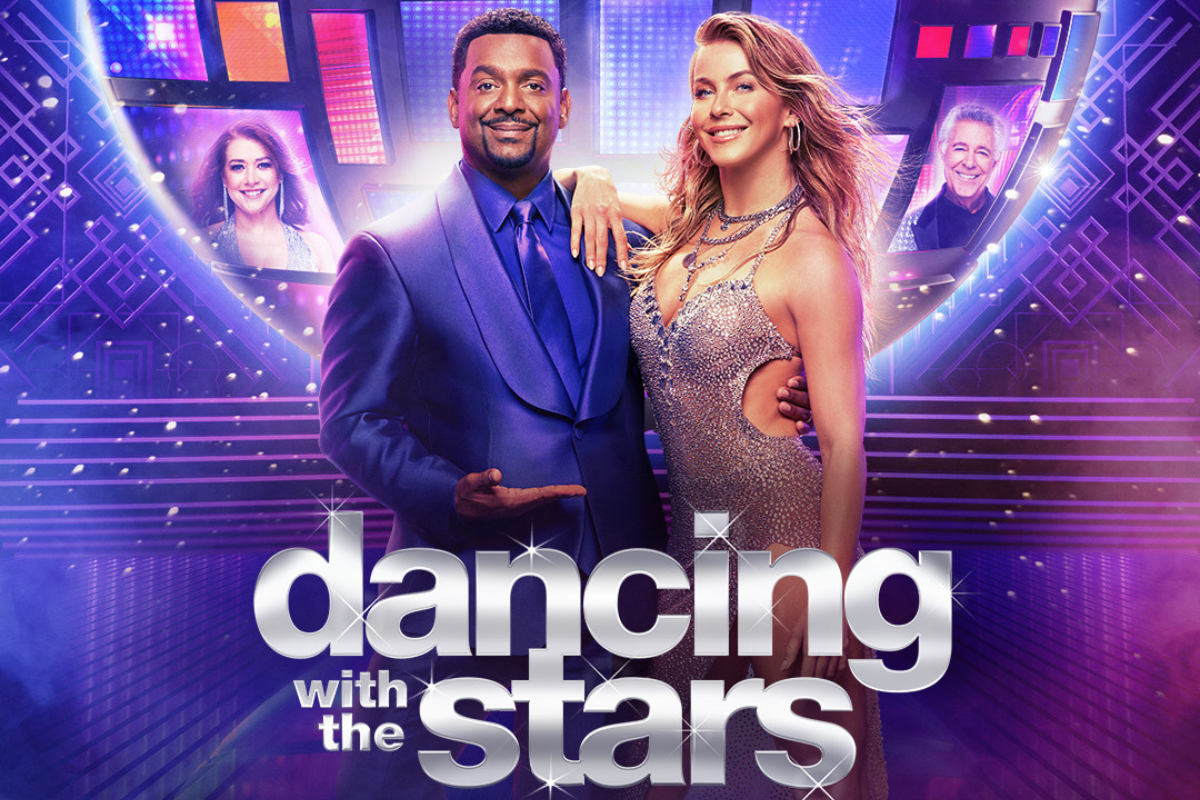
Two Decades of Ballroom Transformation
Over twenty years, the competition underwent massive visual, technical, and broadcast overhauls. The stage design expanded from an intimate studio setting into an arena-scale ballroom.
| Era | Broadcasting Format | Key Production Markers | Defining Stars & Milestones |
|---|---|---|---|
| The Foundational Years (2005, 2009) | ABC live broadcast; SD transition to HD; traditional landline/SMS voting | Strict ballroom rules; Harold Wheeler live 17-piece brass orchestra; minimal props | Kelly Monaco, Drew Lachey, Apolo Ohno; Cheryl Burke and Derek Hough rise to prominence |
| The Ratings Peak & Showmanship Era (2010, 2018) | Bi-annual fall/spring cycles; prime-time ABC dominance (20M+ weekly viewers) | Massive LED projection floors; contemporary and jazz styles introduced; complex aerial rigging | Derek Hough sets 6-win record; Meryl Davis, Alfonso Ribeiro; arrival of Ray Chew Live |
| The Streaming Migration & Modern Revival (2019, 2026) | Historic move to Disney+ (Season 31); pioneering hybrid ABC/Disney+ simulcast | Commercial-free real-time voting across all US time zones; Alfonso Ribeiro and Julianne Hough hosting | Charli D'Amelio, Xochitl Gomez; renaming trophy the 'Len Goodman Mirrorball Trophy' |
From Cheap Prop to Cultural Icon: The Mirrorball Trophy
When props masters assembled the first Mirrorball Trophy in May 2005, it was essentially a novelty disco ball purchased from a local theatrical supply outlet, glued to a simple wooden base. It stood as a self-aware, kitschy punchline.
Yet as elite athletes, Olympic gold medalists, and seasoned Broadway performers began suffering broken ribs, torn ligaments, and stress fractures chasing the title, the trophy's cultural value shifted. It ceased being a joke.
Following the retirement and passing of head judge Len Goodman in 2023, producers permanently redesigned the award, officially rechristening it the Len Goodman Mirrorball Trophy. The base was reconstructed with heavy polished wood, brass engraving plates, and reinforced internal rigging to survive exuberant post-finale celebrations.
The Streaming Gamble and the Hybrid Broadcast Model
By Season 30, legacy broadcast television faced severe structural decline. Linear ratings were dropping industry-wide. In April 2022, Disney made an unprecedented move: it pulled Dancing with the Stars off ABC entirely, shifting Season 31 exclusively to Disney+. It marked the first time a major live competition series attempted uninterrupted live streaming across North America.
The gamble brought operational challenges. Producers had to manage commercial-free pacing, calculate live fan votes simultaneously across four time zones, and maintain high-bandwidth visual fidelity during fast-moving dance numbers.
The streaming experiment succeeded with younger demographics. Recognizing that older viewers missed linear television while younger fans streamed exclusively, executives launched a hybrid model for Season 32. Broadcasting simultaneously on ABC and Disney+ while streaming on Hulu the next day stabilized total viewership, preserving a format that many analysts had prematurely declared dead.
Frequently Asked Questions (FAQ)
Q1: What exact date did Dancing with the Stars start in the United States?
A1: The show officially premiered on ABC on June 1, 2005, airing live at 8:00 PM Eastern.
Q2: Who won the very first season of Dancing with the Stars?
A2: Soap opera star Kelly Monaco and professional partner Alec Mazo won Season 1 on July 6, 2005, edging out John O'Hurley and Charlotte Jørgensen.
Q3: Why did the series shift to Disney+ in 2022?
A3: Disney utilized the show's loyal live audience as a flagship driver to test real-time live-streaming capabilities on Disney+ for Season 31 before expanding to a hybrid ABC/Disney+ simulcast model.
Q4: Who were the original judges and hosts in 2005?
A4: The original judging panel featured Len Goodman, Carrie Ann Inaba, and Bruno Tonioli. The series was initially hosted by Tom Bergeron and Lisa Canning.
The Staying Power of the American Ballroom
More than two decades after its summer trial run, the enduring success of Dancing with the Stars highlights a durable media reality: live, unscripted physical execution cannot be faked or easily replicated by digital trends.
What began in June 2005 as an awkward British import transformed into a multi-generational ritual. Celebrities still arrive in the rehearsal rooms with varying degrees of rhythm, only to discover that six weeks of grueling rumba technique strips away polished Hollywood public relations. The glitz and stage lighting have expanded into stadium proportions, but the show's core appeal remains identical to its premiere night: watching vulnerable people attempt difficult steps before an unforgiving live audience.


