TikTok Effect House Evolution: From Closed Beta to Mobile AR Creation
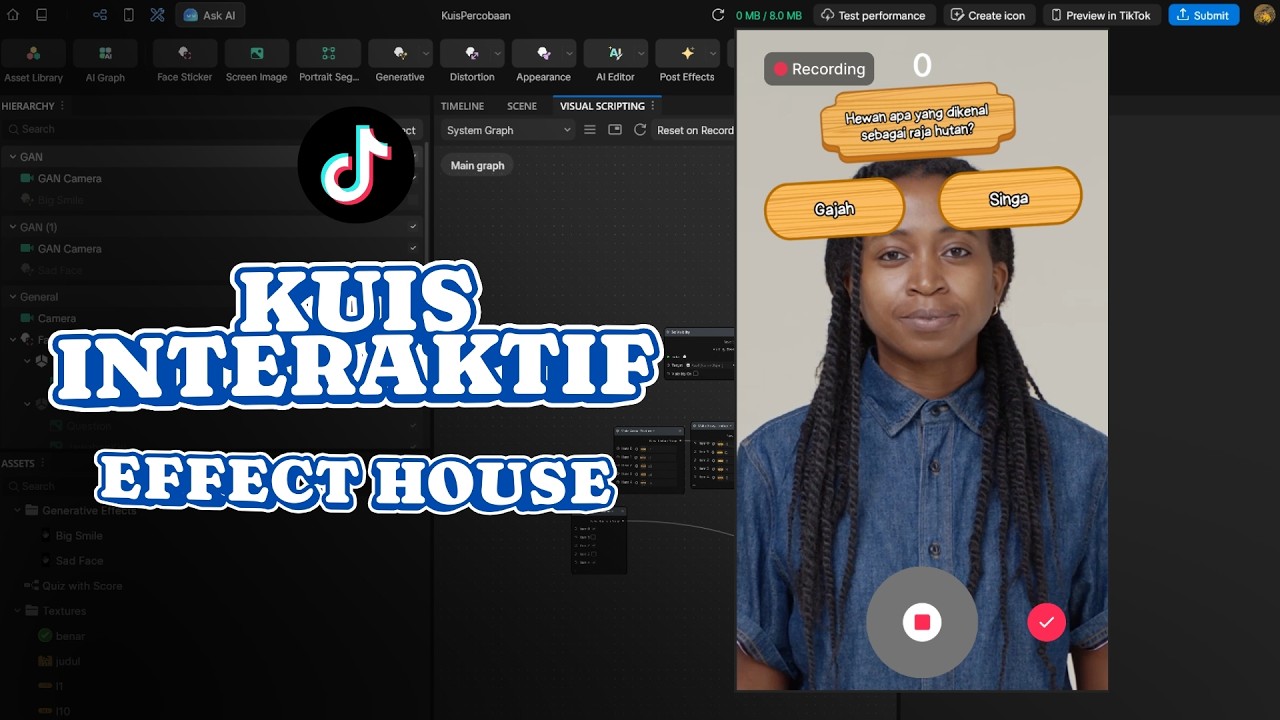
When TikTok opened closed beta testing for its standalone desktop software in early 2022, building an interactive face mask or real-time minigame demanded a dedicated Mac or Windows workstation, a working grasp of 3D rendering pipelines, and an appetite for complex visual scripting nodes. Within two years, ByteDance inverted that workflow completely. As confirmed in a milestone TikTok Newsroom Report, the company packaged its core augmented reality engine directly into the native mobile app, letting creators construct camera tracking experiences without touching a desktop terminal.
That transition restructured how augmented reality filters spread across the platform. What began as a defensive engineering effort against Snap's Lens Studio and Meta's Spark AR developed into an accessible, revenue-generating engine that feeds millions of daily short-form videos. The trajectory of TikTok Effect House reveals how democratizing software design transforms niche 3D artists into commercial powerhouses while shifting how audiences interact with real-time digital media.
📌 Key Takeaways:
- The Trajectory: Launched in closed beta in spring 2022, Effect House exited beta testing in August 2023 and added on-the-go mobile creation tools three months later.
- The Economic Shift: TikTok dismantled early participation barriers by lowering its creator monetization threshold from 500,000 video uses down to 200,000 (and later to selective 100,000 thresholds), funding payouts through its Effect Creator Rewards program.
- The Tooling Split: Desktop software remains essential for advanced visual scripting nodes and importing 3D modeling assets, while the mobile effect editor captures rapid-response cultural trends straight from mobile camera rolls.
The Desktop Sandbox: How the 2022 Beta Challenged Legacy AR Engines
Early augmented reality on short-form video relied almost entirely on in-house engineering teams. TikTok offered users a rigid palette of native green screens, basic beauty smoothing, and occasional corporate sponsored lenses. Platforms like Snapchat had long operated open ecosystems via Lens Studio, while Meta maintained Spark AR across Instagram and Facebook. In April 2022, ByteDance launched Effect House in closed beta to plug that competitive gap.
The initial software was distinctly pro-grade. Built for macOS and Windows, it offered granular control over face tracking and segmentation, body skeleton rigging, hand gesture triggers, and environment mapping. Independent artists imported custom 3D modeling assets created in Blender or Maya, anchoring textured meshes to real-time physical coordinates. As tech culture publications like WIRED noted during its broader rollout in September 2022, the software bypassed traditional programming syntax in favor of visual scripting nodes, letting designers chain math, physics, and logic blocks to dictate how an asset responds when a user blinks, smiles, or tilts their head.
This technical foundation triggered an explosion of organic engagement. Community creators rapidly assembled viral hits: nostalgic film emulators, interactive facial deformers, and miniature reflex arcade games played entirely through eyebrow twitches. By handing over its internal graphics pipeline to global developers, TikTok turned its filter catalog into an engine for community culture.
Slashing Friction: Exiting Beta and Launching the Mobile Effect Editor
By mid-2023, Effect House was no longer an experimental project. On August 31, 2023, TechCrunch reported that the AR development platform had officially shed its beta label. The stable release arrived alongside advanced algorithmic tracking, improved real-time physics simulators, and expanded audio reaction nodes. Yet desktop software still presented a barrier to mainstream video makers who had never opened a 3D workspace.
TikTok addressed that bottleneck in November 2023 by releasing a built-in mobile effect editor directly within the standard smartphone client. Instead of configuring visual scripting nodes on a monitor, mobile users could build interactive camera effects with touch-driven templates. A creator could clip photo assets from their gallery, apply instantaneous face-tracking stickers, configure basic tap triggers, and publish a functional filter in under five minutes.
This release produced a functional division across the developer ecosystem:
- Desktop Engineers: Continued using the standalone Effect House program to craft bespoke interactive camera effects, heavy 3D character rigs, interactive shaders, and custom physics logic.
- Mobile Trend Makers: Adopted the smartphone editor to capitalize immediately on trending audio clips, breaking memes, and reactive community humor that demanded instant turnaround.
Milestones in TikTok AR: The Platform Roadmap
The rapid shift from gatekept software to distributed mobile tools reorganized creator workflows across multiple stages:
| Phase & Date | Platform Milestone | Technical & Creator Impact |
|---|---|---|
| April 2022 | Closed Beta Launch | Desktop-only tool restricted to vetted developers; introduced face tracking and segmentation. |
| September 2022 | Open Beta Expansion | Global access opened; expanded visual scripting nodes and library for 3D modeling assets. |
| May, August 2023 | Monetization & Official Release | Launched Effect Creator Rewards ($6M fund); platform officially exited beta per TechCrunch reports. |
| October 2023 | Threshold Reductions | Lowered monetization gates from 500,000 to 200,000 video posts; expanded geographic pool. |
| November 2023 | Mobile Effect Editor | Integrated AR publishing tools directly into native smartphone app, bypassing desktop workstations. |
| 2024, 2026 | Ecosystem Scaling & Branded AR | Expanded enterprise sponsorships, streamlined licensing, and lowered regional payout gates to 100,000 uses. |
The Cash Pipeline: Lowering Thresholds in Effect Creator Rewards
High-end developers rarely dedicate hundreds of hours to mastering specialized engines without financial incentives. Meta learned this when early enthusiasm for Spark AR waned amid sparse creator payouts. TikTok countered in May 2023 by launching its Effect Creator Rewards program, backed by an initial $6 million fund that paid developers whose effects generated sustained organic video creation.
The program initially drew sharp criticism. To qualify for payouts, an effect had to be used in 500,000 unique videos within a 90-day window. For independent designers, hitting half a million video creations was an overwhelming target achieved only by astronomical hits. Acknowledging creator drop-off, TikTok amended its rules. As reported by Tubefilter in October 2023, the platform expanded the program to several dozen new countries while lowering the creator monetization threshold to 200,000 eligible videos, later instituting tiered reward mechanics where certain regions unlocked bonus payouts starting at 100,000 posts.
Commercial partnerships reinforced this economic ecosystem. Mainstream gaming studios and consumer brands sponsored viral community challenges that awarded cash prizes to top filter designers. In February 2023, HoYoverse ran an official TikTok Effect House campaign for Genshin Impact, challenging independent creators to build interactive game-themed filters. This established a repeatable blueprint: brands paid creators directly for branded AR effects, giving developers reliable enterprise income alongside TikTok's performance pool.
Navigating the Gatekeepers: The Effect House Review Process
Creating a high-performing filter is only half the battle. Every published creation must pass through the Effect House review process, a rigorous combination of automated machine vision scans and human moderation queues designed to enforce strict platform standards. Turnaround times typically range between 1 and 24 hours, though sudden traffic surges or ambiguous content can stall submissions for days.
Moderation teams scrutinize submissions for several core violations:
- Body Dysmorphia Triggers: Filters that dramatically warp facial structures, simulate extreme cosmetic procedures, or promote unrealistic body proportions face prompt algorithmic rejection.
- Copyright & Intellectual Property: Importing uncredited 3D modeling assets or trademarked logos without clear authorization triggers automatic copyright strikes.
- Interactive Safety & Shock Value: Effects that simulate severe medical emergencies, flash intense strobe sequences without seizure warnings, or incentivize dangerous physical movements are barred from publication.
- Technical Performance Caps: Submissions that cause app instability, exceed memory budgets, or spike frame drop rates on older smartphones are flagged during internal compilation checks.
Because rejected filters do not accrue engagement toward rewards, seasoned designers build rigorous testing habits. They preview assets using the desktop simulator, stress-test them on multiple physical devices over local Wi-Fi, and verify that asset textures fit well inside compressed file size limits.
Prototyping Without Code: Visual Scripting Meets High-End Assets
The operational core of the desktop engine remains its visual scripting interface. By replacing lines of C# or JavaScript with visual scripting nodes, the software bridges technical engineering and raw visual creativity. A creator links an "On Tap" trigger to a random integer generator, routes the output through a condition switch, and drives dynamic facial morphs or 3D character spawns without writing traditional syntax.
The software handles resource-intensive rendering processes behind the scenes. Developers load lightweight glTF or FBX files into the scene tree, attach dynamic lighting rigs, and configure face tracking and segmentation passes that isolate the foreground subject from room backgrounds. Built-in segmentation masks allow filters to replace the user's hair color, alter sky textures, or project floating 3D geometry behind the user's shoulders with minimal jitter.
This technical flexibility explains why the desktop build did not wither after the mobile effect editor launched. While the smartphone editor commands viral, single-day reactive trends, the desktop suite remains the sole foundation for deep interactive games, layered makeup simulations, and brand campaigns requiring precise visual polish.
Frequently Asked Questions (FAQ)
Q1: Do I need to know how to code to build effects in TikTok Effect House?
A1: No traditional programming experience is required. The desktop suite relies on visual scripting nodes where logic is constructed by connecting functional blocks. For basic concepts, the built-in mobile effect editor allows you to build and publish interactive filters entirely through touch templates on your phone.
Q2: How much money can creators make through the Effect Creator Rewards program?
A2: Payouts vary based on video volume, user regions, and current budget pools. Once your effect crosses the eligibility threshold, such as 200,000 qualified video uses within 90 days, payouts accrue per video generated. Top community creators have collected thousands of dollars on viral breakout hits, supplemented by branded AR effects commissioned privately by corporate sponsors.
Q3: Why was my submitted effect rejected during review?
A3: Rejections usually stem from policy flags or technical limits. Common culprits include unlicensed intellectual property, assets that alter body proportions in violation of appearance guidelines, extreme strobing effects without accessibility warnings, or file sizes that exceed platform limits and trigger device lag.
The Expanding Footprint of Mobile Augmented Reality
TikTok's multi-year investment in its AR ecosystem reflects a broader evolution in online media consumption. Camera lenses are no longer passive cosmetic layers designed simply to soften skin tones or brighten ambient lighting. They function as interactive narrative tools, community memes, and scalable promotional spaces that generate billions of organic impressions.
By pairing a high-end desktop workstation environment with a light, frictionless mobile editor, TikTok eliminated technical friction for aspiring digital designers. As hardware chipsets deliver greater local processing power to smartphones, the boundary between professional computer graphics pipelines and casual touch-screen creation continues to dissolve. Effect House established the operational blueprint: whoever makes creative tools easiest to deploy captures the modern cultural stream.