Visual Proof: Side-by-Side Comparison of Australian Possums and American Opossums
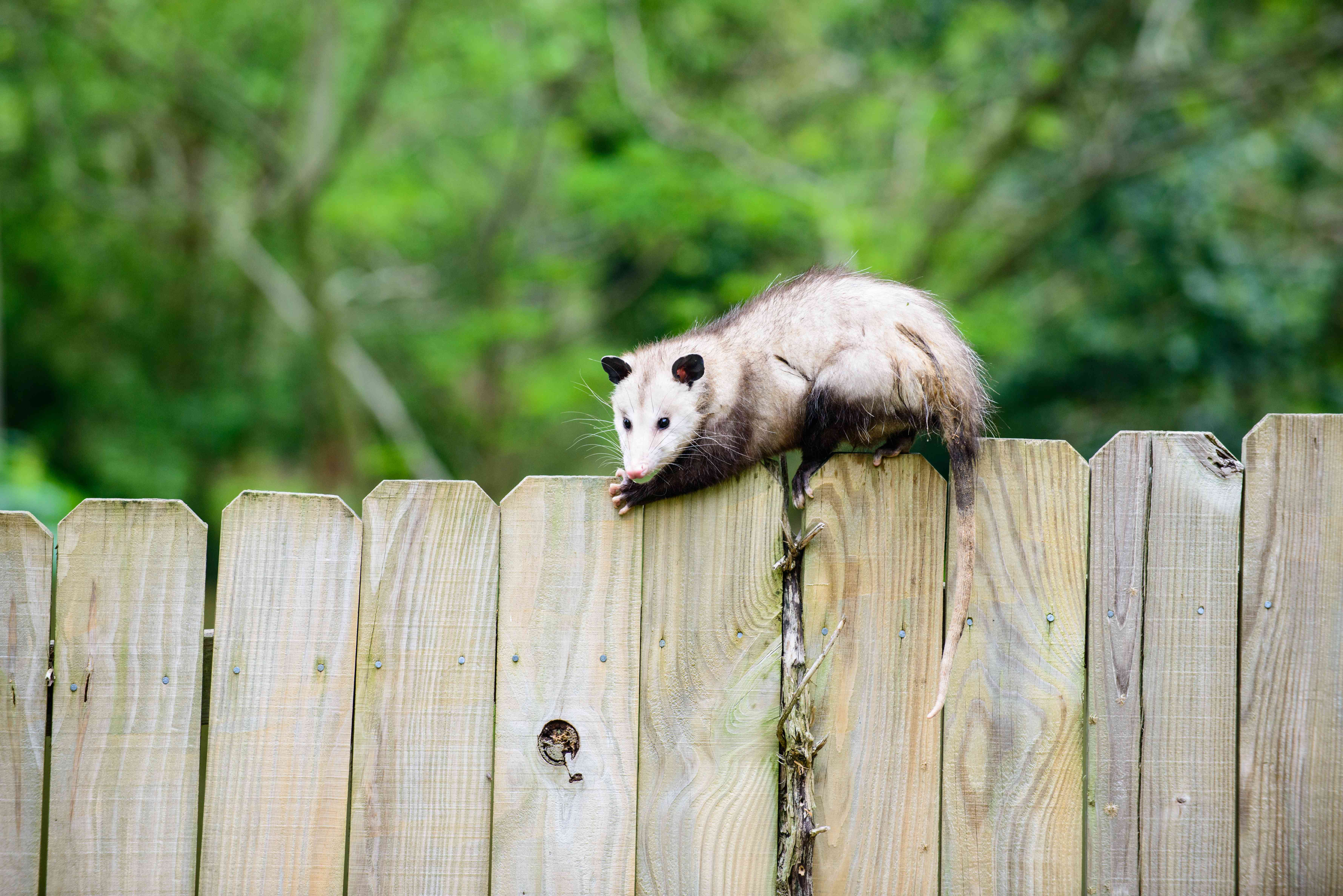
A midnight rustle along an urban fence line regularly sparks a familiar debate across North American and Australian backyards. A pair of glassy eyes reflects a flashlight beam, revealing either a coarse, white-faced scavenger or a plush, golden-eyed climber. While casual conversation treats the words as mere regional slang, evolutionary biology tells a completely different story. An analysis highlighted by an AOL Report underscores that these nocturnal creatures represent two separate branches of the marsupial family tree that diverged tens of millions of years ago.
The linguistic mix-up traces back to eighteenth-century colonization, when British botanist Sir Joseph Banks landed in Australia and saw a fuzzy tree-dweller that reminded him of the creature Captain John Smith had documented in Virginia a century earlier. Smith derived the name from the Powhatan word aposoum, meaning "white beast." Banks omitted the initial vowel when describing the Antipodean animal, setting off three centuries of international confusion.
📌 Key Takeaways:
- Taxonomic Reality: North American opossums belong to the order Didelphimorphia, while Australian possums belong to the suborder Phalangeriformes.
- Distinct Visuals: Opossums feature white, pointed faces, coarse grayish guard hairs, and pink, naked prehensile tails; Australian possums feature rounded faces, cat-like ears, and lush, fully furred coats.
- Defensive Disconnect: The involuntary catatonic faint known as "playing possum" is strictly an American opossum trait; Australian possums rely on arboreal flight, defensive vocalizations, and scent marking.
How Language Sparked a Cross-Continental Identity Crisis
Colonial records from the 1600s confirm that early English settlers struggled to categorize the unique fauna of the Americas. Captain John Smith's 1608 journals noted an animal with "an head like a Swine, and a Taile like a Rat, and of the bignes of a Cat." The indigenous Powhatan people called it aposoum. The word entered the English lexicon intact, including its initial vowel.
When Captain James Cook's expedition arrived along the eastern coast of Australia in 1770, naturalist Sir Joseph Banks encountered small, tree-climbing marsupials. Rather than inventing an entirely novel term, Banks noted their superficial pouch-bearing similarity to the American animal and informally dropped the "o." Natural history writers quickly solidified the shorthand.
Everyday American speech eroded the distinction. Colloquial Southern and Midwestern dialects dropped the unstressed "o" sound over decades of casual use. Songs, folklore, and rural idioms popularized "possum hunting" and "playing possum," even though every wild animal involved was taxonomically an opossum. Today, wildlife biologists treat the spelling as an immediate geographical marker: write opossum when tracking North American wildlife, and reserve possum for native Australian species.
Facial Features and Fur: Sharp Angling vs. Plush Velvet
Place the two animals under clean studio lighting, and their visual profiles could not be more divergent. The Virginia opossum (Didelphis virginiana) carries a sharp, triangular skull ending in a flesh-pink nose cone. Its white facial fur stands out in stark contrast to its dark, beady, pupil-less eyes, creating an unblinking, ghostly gaze. The ears are thin, leathery, and completely hairless, leaving them vulnerable to frostbite across northern United States winters.
The body of the American opossum is covered in a messy, dual-layered coat. A woolly, cream-colored underfur sits beneath stiff, wiry white guard hairs that trap dirt and deflect moisture. The overall coloration reads as grizzled gray or salted slate.
Australian possums look closer to miniature chinchillas or small domestic cats. The common brushtail possum (Trichosurus vulpecula) and the common ringtail possum (Pseudocheirus peregrinus) feature compact, rounded heads with short muzzles and large, luminous hazel or amber eyes designed for light gathering in eucalyptus canopies. Their ears are erect, rounded, and lined with soft fuzz. Their coats are uniform, dense, and soft to the touch, displaying copper-red, charcoal, and warm honey-brown tones without the bristly, unkempt texture of their American namesakes.
The Tail Divide: Naked Rat-Tail vs. Bushy Canopy Anchor
The most dramatic diagnostic marker sits at the rear. The Virginia opossum carries an entirely hairless, scaly tail that looks almost reptilian. This pinkish, cylindrical appendage is a genuine prehensile tool. Young opossums can momentarily suspend their full body weight from branches using this tail, though adults primarily rely on it as a stabilizing fifth limb while navigating narrow tree branches or gathering bundles of dry leaves for ground dens.
Australian possums display distinct variations in tail anatomy depending on their genus. The common brushtail sports a heavily furred, plume-like tail with a dark, brushy finish that accounts for nearly half its body length. Only the underside of the tip features a bare friction pad, allowing the animal to lock onto slick eucalyptus limbs without sacrificing thermal protection.
The common ringtail possum carries a slender tail that tapers into a snow-white tip. It rolls this tail into a tight inward coil when resting, creating an efficient prehensile loop capable of carrying nesting twigs through complex forest layers. Where the American opossum uses its tail as a gritty utility cord, the Australian possum uses it as a balanced rudder and insulating muffler during cold Southern Hemisphere nights.

Didelphimorphia Meets Phalangeriformes: Evolutionary Divergence
The biological distance separating these two creatures spans continents and more than 60 million years of continental drift. The Virginia opossum belongs to the order Didelphimorphia, the oldest surviving lineage of marsupials in the Western Hemisphere. Their ancestors walked the Americas when dinosaurs still roamed the Late Cretaceous landscape.
Australian possums belong to Phalangeriformes, a diverse suborder nested within Diprotodontia. They are more closely related to kangaroos, wombats, and koalas than they are to anything roaming the North American woods.
| Biological Trait | Virginia Opossum (North America) | Brushtail / Ringtail Possum (Australia) |
|---|---|---|
| Scientific Order | Didelphimorphia | Diprotodontia (Phalangeriformes) |
| Native Geographic Range | North and Central America (Costa Rica to Canada) | Australia, Tasmania, introduced to New Zealand |
| Average Adult Weight | 4, 12 lbs (1.8, 5.5 kg) | 1.8, 10 lbs (0.8, 4.5 kg) |
| Tail Structure | Naked, pinkish, scaly, fully prehensile | Bushy, furred, partial friction pad or white tip |
| Tooth Count | 50 teeth (highest of any North American land mammal) | 34, 36 teeth (fused lower front incisors) |
| Primary Defensive Tactic | Thanatosis (catatonic faint) and hissing | Tree ascent, screeching, musk secretions |
A close look at dental patterns highlights this split. The Virginia opossum carries 50 sharp teeth, including prominent canines suited for tearing through carrion, crushing beetle carapaces, and slicing through fallen fruit. Diprotodont marsupials in Australia have lower jaws dominated by two enlarged, forward-facing lower incisors designed for nipping leaves, harvesting eucalyptus shoots, and peeling tree bark.
Thanatosis vs. Arboreal Flight: Clash of Survival Tactics
Few wildlife behaviors are as widely misunderstood as "playing possum." The phrase references thanatosis, an involuntary physiological state unique to the Virginia opossum. When cornered by a coyote or an aggressive dog, an opossum does not make a calculated choice to trick its attacker. Instead, intense fear triggers a biological shutdown.
The animal falls on its side, stiffens its limbs, curls its toes, and opens its mouth in a grimace. Its heart rate drops by nearly half. It secretes a foul-smelling, green fluid from its anal glands that mimics the stench of decaying flesh. This catatonic state lasts from several minutes up to four hours. Most terrestrial predators avoid eating decaying meat, prompting them to leave the "corpse" behind.
Australian possums do not enter thanatosis. When threatened by a monitor lizard, python, or domestic pet, a brushtail possum opts for active confrontation. It sits back on its haunches, bares its teeth, and emits a series of guttural screeches, clicks, and guttural hisses. If intimidation fails, it sprints up the nearest vertical trunk using razor-sharp curved claws.
Dietary differences also reflect their distinct environments. The Virginia opossum operates as an ecological clean-up crew. It consumes ticks by the thousands through obsessive grooming, clears out roadkill, and eats copperheads and rattlesnakes thanks to an innate peptide immunity against pit viper venom. Australian brushtail and ringtail possums focus on high-canopy flora, using specialized gut bacteria to break down the toxic oils and fibrous compounds packed inside eucalyptus leaves.
Backyard Reality: Coexisting with Two Urban Marsupials
Both animals have adapted well to human encroachment, trading old-growth hollows for warm attics and garden beds. Yet their reception by suburban homeowners differs sharply depending on geography.
Across suburbs from Atlanta to Toronto, the Virginia opossum faces frequent vilification for its rat-like tail and defensive bared-teeth displays. In reality, it rarely carries disease. Its naturally low core body temperature (94°F to 97°F) makes it nearly impossible for the rabies virus to incubate. Suburban wildlife forums and rehabilitators now routinely champion the species as safe, non-aggressive pest control that should simply be left alone.
In suburban Sydney, Melbourne, and Brisbane, Australian brushtails present a noisier challenge. Because their natural forest hollows are cleared for development, brushtails frequently colonize ceiling crawlspaces. Their heavy thumping across plasterboard at 2:00 AM sounds like an adult human walking through the attic. Australian law strictly protects these native species under state conservation acts, meaning homeowners cannot poison or arbitrarily relocate them; licensed professionals must seal entry holes after ensuring the animal is humanely excluded.
Frequently Asked Questions (FAQ)
Q1: Is it grammatically incorrect to call an American opossum a "possum"?
A1: In formal scientific and natural history writing, yes. Scientifically, "opossum" refers exclusively to the American family Didelphidae. However, major English dictionaries recognize "possum" as an acceptable informal colloquialism in North America due to centuries of common usage.
Q2: Can either possums or opossums hang upside down by their tails while sleeping?
A2: No. While juvenile Virginia opossums and several Australian species can suspend themselves for a few seconds to regain footing, an adult's body weight is too heavy for the tail muscles to support long-term hanging. The popular cartoon trope of marsupials sleeping upside down is a complete biological myth.
Q3: Which animal poses a higher safety risk to suburban pets?
A3: Neither animal seeks conflict. The Virginia opossum bluffs by opening its 50-toothed jaw wide, hissing, or fainting dead away, rarely biting unless physically pinned down. Australian brushtails will fight back with sharp climbing claws if grabbed by a dog, but their first priority is always scrambling up the nearest post or tree.
Recognizing Two Distinct Worlds in One Shared Name
The confusion between possums and opossums highlights how easily common names obscure profound evolutionary truths. One is a bristly, ancient American survivor that outlasted the ice ages, thrives on roadkill and ticks, and feigns death to survive the suburban night. The other is a plush, canopy-climbing Australian herbivore that bounds across corrugated iron roofs and feeds among blooming gum blossoms.
Next time you spot a pair of luminous eyes reflecting from the top of a garden fence, remember the geography. If it has a pointed white face, a hairless tail, and the dramatic posture of a backyard ghost, you are meeting North America's Didelphimorphia. If it has soft amber eyes, a plush coat, and sprints effortlessly into the treetops, you are looking straight at Australia's native Phalangeriformes. Two distinct animals, separated by an ocean and 60 million years of history, linked by a single missing letter.


