What Does C.H.U.D. Stand For? The Complete Guide to the Movie, Memes, and Slang

If you stumbled across the word "chud" on a social feed or forum recently, you were likely looking at a sharp political insult rather than a vintage film critique. The term has evolved from an obscure midnight-movie monster into shorthand for reactionary internet trolls. As tracked in The Irish Times Report examining modern youth slang, teenagers and online commentators routinely throw the word around without knowing it originated four decades ago in the grimy steam tunnels beneath Manhattan.
The acronym holds two distinct definitions inside cinema history alongside a completely separate third life on the modern web. Understanding the word requires looking at low-budget 1980s creature features, municipal horror tropes, and the strange mechanics of online message boards.
📌 Key Takeaways:
- The Dual Film Meanings: In the original 1984 film, the monster acronym stands for Cannibalistic Humanoid Underground Dweller, while the corrupt government agency cover-up dubs the operation Contamination Hazard Urban Disposal.
- The 1984 Cult Classic: Directed by Douglas Cheek, the B-movie starred John Heard and Daniel Stern, addressing real-era anxieties over illegal toxic radioactive waste dumping in the New York City sewers.
- The Slang Mutation: Internet message boards, popularized by left-wing podcast listeners and 4chan image boards, turned lowercase "chud" into a dismissive insult for unappealing, reactionary political agitators.
Cannibalistic Humanoid Underground Dweller: The Movie Definition
The primary answer to what C.H.U.D. stands for is Cannibalistic Humanoid Underground Dweller. The term was coined for the 1984 sci-fi horror film directed by Douglas Cheek, written by Shepard Abbott, and developed on an estimated production budget of roughly $1.25 million.
The narrative introduces a grotesque species of mutated beings lurking beneath Manhattan. Homeless residents seeking shelter in subterranean utility corridors suffer horrific physical transformations after coming into direct contact with chemical barrels. Their skin turns scaly, their eyes glow with an eerie yellow luminescence, and their dietary needs pivot exclusively to human flesh.
The creature design, executed on a shoestring budget by makeup artist John Caglione Jr., emphasized distorted anatomy, wide mouths crammed with predatory fangs, and glowing optical fixtures. Instead of extraterrestrial invaders or ancient curses, these monsters were victims of municipal negligence and industrial greed.
The Bureaucratic Cover-Up: Contamination Hazard Urban Disposal
The film features a dark narrative twist that gives the acronym an entirely separate, bureaucratic meaning. When Manhattan photographer George Cooper (played by John Heard) and soup kitchen operator A.J. Shepherd (played by Daniel Stern) press city officials for answers about missing street people, they uncover a systemic conspiracy orchestrated by the Nuclear Regulatory Commission.
The authorities know about the subterranean mutation. To conceal illegal dumping practices, government bureaucrat Robert Bosch reveals the operational code name: Contamination Hazard Urban Disposal.
The double meaning elevates the film above standard grindhouse creature features. The government used the city's vast network of abandoned railway conduits and stormwater drains as a cut-rate depot for toxic radioactive waste. When the subterranean human population mutated, the state simply treated the resulting monstrosities as self-contained garbage disposal units, letting them consume evidence of the crime before planning to gas the tunnels.
From Grindhouse Horror to Internet Shorthand: The Timeline
Over the course of forty years, the term shifted from cinema marquees to home video shelves, finally drifting into political slang during the late 2010s. The table below traces how the acronym morphed from physical horror to digital insult across distinct eras.
| Era | Primary Context | Cultural Definition |
|---|---|---|
| 1984 | Theatrical Release (New World Pictures) | Cannibalistic Humanoid Underground Dweller / Contamination Hazard Urban Disposal in NYC sewers. |
| 1989 | Direct-to-Video Sequel | C.H.U.D. II: Bud the C.H.U.D. pivots to camp comedy; military experiment reanimation. |
| 1990, 2010 | Late-Night Cable & VHS/DVD Lore | A revered cult classic movie acronym referenced in The Simpsons and Kevin Smith films. |
| 2016, 2020 | Left-Wing Podcasting & Message Boards | Popularized by the Chapo Trap House podcast as shorthand for reactionary online figures. |
| 2021, 2026 | Mainstream Social Media & Memes | A generic **internet slang insult** paired with caricature memes like the "Chudjack." |
How Daniel Stern, John Heard, and Douglas Cheek Built a Cult Legacy
The film owes its durability to an unusually talented ensemble cast. Before John Heard appeared in Home Alone and The Sopranos, he brought genuine gravity to George Cooper, playing the shutterbug with exhausted, post-Watergate cynicism. Daniel Stern delivered a manic, deeply committed performance as the activist running the neighborhood shelter, treating the absurdity of flesh-eating ghouls with deadpan sincerity. The cast also included Christopher Curry as Captain Bosch, alongside memorable early-career cameos from John Goodman and Kim Greist.
Director Douglas Cheek worked under severe logistical constraints across genuine lower Manhattan locations, gritty Bowery streetscapes, and cramped industrial interiors. Shooting inside real drainage structures provided an authentic urban texture that glossy Hollywood productions lacked.
The franchise attempted to capitalize on this status with the 1989 direct-to-video release of C.H.U.D. II: Bud the C.H.U.D. Directed by David Irving, the sequel abandoned the claustrophobic dread and environmental paranoia of the original, leaning instead into broad teenage comedy and zombie satire. While purists dismissed the follow-up, the sheer silliness of the title cemented "C.H.U.D." as permanent pulp shorthand across video rental shops throughout North America.
Why the Internet Turned C.H.U.D. into an Online Slang Insult
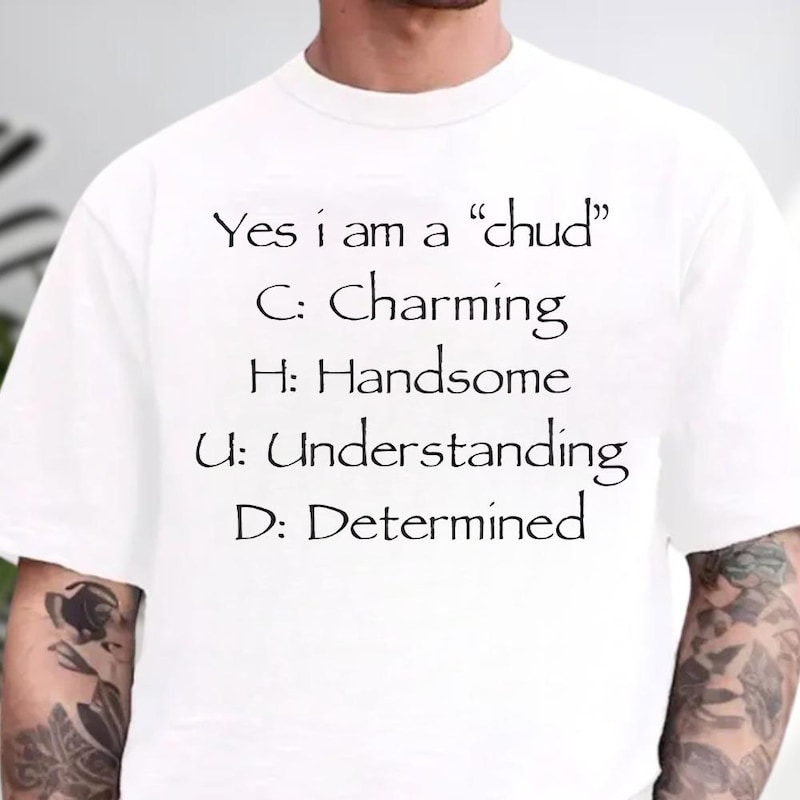
The transition from cinema lore to digital vitriol began around 2016. Listeners of left-leaning political podcasts, most notably Chapo Trap House, revived the term as a label for angry, grievance-driven internet users who championed far-right culture-war positions.
The metaphor fit neatly: basement dwellers harboring ugly grudges while subsisting in dark digital silos. Over several years, the uppercase acronym faded into a lowercase noun.
By the time the term entered Twitter, Reddit, and TikTok feeds, it detached almost completely from the 1984 movie. Graphic meme creators on image boards merged the concept with the widespread "Wojak" illustration craze, producing the Chudjack, a crudely drawn, bespectacled caricature of an aggrieved internet traditionalist muttering the catchphrase "Millions must die."
Today, online users deploy "chud" as a quick dismissive label for someone perceived as boorish, unwashed, reactionarily dogmatic, or terminally online.
Frequently Asked Questions (FAQ)
Q1: What does C.H.U.D. stand for in the original 1984 film?
A1: It carries two explicit meanings: the subterranean monsters are named Cannibalistic Humanoid Underground Dwellers, while the clandestine government waste-dumping initiative is designated Contamination Hazard Urban Disposal.
Q2: Why do people on the internet call someone a "chud"?
A2: The term is modern internet slang used as a pejorative for an unappealing, far-right or reactionary online poster. It implies the target is politically aggressive, socially isolated, and aesthetically unpleasant, evoking the underground sewer monster.
Q3: Where can you watch the original C.H.U.D. film today?
A3: The original 1984 film is widely accessible on specialty horror streaming services such as Shudder and Arrow Video, as well as ad-supported platforms like Tubi. High-definition physical restorations are available through boutique home-media labels like Arrow Films.
Q4: Is C.H.U.D. connected to the movie Us by Jordan Peele?
A4: While not a direct sequel or remake, Jordan Peele explicitly cited *C.H.U.D.* as a major visual and narrative influence for his 2019 horror film *Us*, even featuring a vintage VHS tape of the 1984 movie on a shelf in the opening sequence.
The Linguistic Endurance of Underground Monsters
Slang terms usually burn out within months, swallowed by shifting social media algorithms. The word "chud" survived because it taps into a visceral cultural visual: something grotesque lurking beneath the clean surfaces of civilization, produced by systemic decay and toxic refuse.
Whether analyzed through Douglas Cheek’s practical-effects horror or the snarky discourse of twenty-first-century message boards, the acronym captures the exact same paranoia. When society dumps its worst excesses out of sight, whatever festers in the dark eventually climbs back up through the manhole.


