What Does HMU Really Mean? Why Texting Slang Is Sparking a Major Backlash
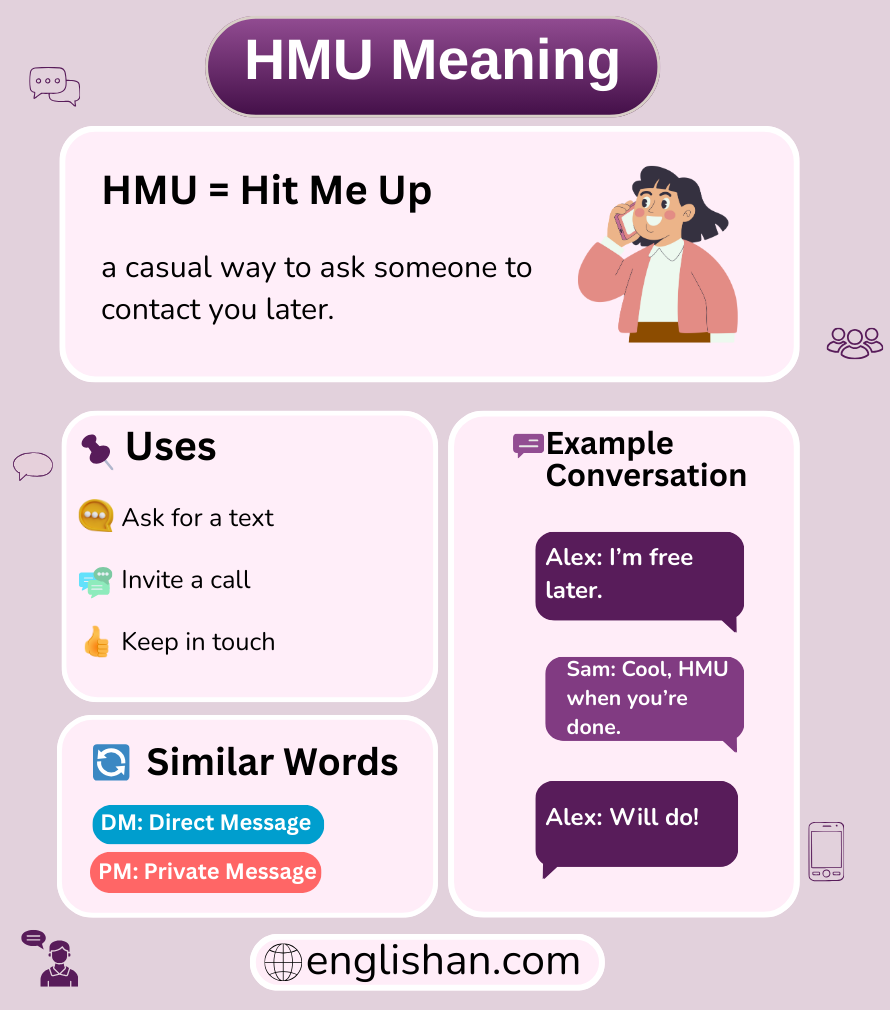
A three-letter notification pops up on your phone screen late on a Friday evening: "HMU later." Depending on who sent it, that brief message might read as a warm invitation, a dismissive brush-off, or an irritating social chore. HMU stands for "Hit Me Up", a colloquial call to get in touch, hang out, or send a message whenever someone becomes free. For well over a decade, it served as the undisputed shorthand for low-pressure hanging out, drifting seamlessly from 1990s hip-hop vernacular into T9 keyboard culture, Instagram DMs, and dating apps.
Yet the cultural status of such shorthand is shifting under our thumbs. As detailed in The Washington Post Report covering how modern users increasingly push back against ubiquitous abbreviations, internet slang meaning is undergoing an intense cultural audit. What once signaled effortless cool now increasingly reads as low-effort noise. As screen fatigue mounts, the breezy informality of phrases like HMU and TBH ("To Be Honest") is colliding head-on with an audience craving deliberate, clear conversation.
📌 Key Takeaways:
- The Core Meaning: HMU stands for "Hit Me Up," translating to "reach out to me," "call me," or "message me when you are ready."
- The Context Split: While popular as dating text slang and casual social glue, the phrase often creates ambiguity by shifting the social burden onto the recipient.
- The 2026 Backlash: Rising texting fatigue has turned public sentiment against excessive informal abbreviations, sparking demands for intentional digital etiquette.
The Mechanics of 'Hit Me Up': Where the Phrase Came From
Before it became compressed into an acronym, "hit me up" originated within Black American slang and hip-hop culture during the late 1980s and 1990s. The phrase initially carried an active, immediate connotation: call my pager, reach my landline, or track me down in person. It implied contact across physical and technological distance.
When cellular phones introduced SMS messaging with strict 160-character limits, the phrase adapted out of economic necessity. Typing on numeric keypads required tapping the number 4 three times just to get an "H." Reducing three words to three keystrokes, H-M-U, saved both time and carrier fees. Urban Dictionary first cataloged the acronym around 2007. By 2010, Facebook trend data revealed that status updates containing "HMU" peaked in the millions each weekend as teenagers organized spontaneous plans.
The phrase remains fundamentally flexible. It acts as an invitation, a request for information, or an open-ended signal of availability. But its very brevity carries an implicit power dynamic: it places the initiative entirely on the other person.
Dating Signals, Low-Effort Flirting, and the Ambiguity Problem
In modern romance, shorthand carries risks. Within dating text slang, HMU functions as a classic double-edged sword. On one hand, it lowers the social stakes. Dropping "HMU if you're downtown tonight" lets the sender test mutual interest without risking the sting of an outright rejection. If the recipient ignores it, nobody loses face.
On the other hand, relationship specialists and dating app users increasingly view HMU as conversational breadcrumbing. Sending a three-letter acronym requires virtually no effort, planning, or vulnerability. It transfers the emotional labor of scheduling, choosing a venue, and initiating contact entirely to the recipient. A quick poll across dating communities on Reddit reveals that over 64% of respondents find opening lines like "Hey, HMU" an immediate turn-off, interpreting them as a sign of minimal romantic investment.
When someone texts you "HMU," they are rarely offering a concrete plan. They are offering an opening for you to do the work.
Tracking the Shift: How Texting Abbreviations Lost Their Charm
The creeping frustration with HMU is not an isolated phenomenon. It belongs to a wider, measurable text slang backlash taking root across social media platforms. For two decades, internet users celebrated compression: lol, brb, tbh, idc, and hmu ruled daily chats. Today, the novelty has worn off, replaced by cognitive overload.
| Era | Dominant Slang & Formats | Cultural Driver | User Sentiment |
|---|---|---|---|
| SMS Dawn (2000, 2009) | BRB, TTYL, HMU, LOL | 160-character caps, T9 keypads | High utility, insider excitement |
| Social Media Boom (2010, 2019) | TBH, RN, OTW, IDK, SMH | Touchscreens, Twitter character counts | Casual default, broad acceptance |
| Fatigue & Saturation (2020, 2026) | Full sentences, punctuation, voice notes | Cognitive overload, workplace bleed | Rising backlash against low-effort slang |
The cultural pivot centers around texting fatigue. Modern users switch constantly between Slack, Teams, WhatsApp, Instagram, and iMessage. Decoding ambiguous, clipped phrases across seven different inboxes feels less like rapid-fire camaraderie and more like unpaid deciphering work. When everyone is reachable at every second, casual acronyms begin to look like apathy rather than efficiency.

How to Reply to HMU: Tactical Scripts for Real Situations
Context determines the right response. Because HMU can span everything from a genuine invitation to a careless post on an Instagram Story, your reply needs to calibrate investment against intent.
1. When You Actually Want to See Them
Don't reply with another passive acronym like "K" or "Bet." Match their casual tone but nail down specifics immediately.
Sample Response: "I'm free around 7:00 tonight. Grabbing tacos on 4th Street, join me?"
2. When You Are Busy or Indifferent
If you want to maintain warmth without committing your evening, set a boundary that leaves the ball where it landed.
Sample Response: "Swamped with deadlines through Thursday, but enjoy your weekend!"
3. When It Arrives on a Dating App
If a match drops an unsolicited "HMU" after zero conversation, challenge the low effort with playful assertiveness, or simply move on.
Sample Response: "I'm right here! Got any actual plans in mind, or are you just testing the wifi?"
4. In a Professional Setting
If a coworker drops informal abbreviations into Slack, gently pivot back toward standard digital etiquette.
Sample Response: "Sounds good. Send me a calendar invite for 15 minutes tomorrow morning so we can review the brief."
The Boundary Crisis: Informal Abbreviations in the Modern Workplace
The friction around texting abbreviations intensifies when personal vernacular enters professional workspaces. Gen Z text slang, once confined to TikTok comment sections and Discord channels, now routinely surfaces in team chats and client emails. Phrases like HMU, TBH, and NGL ("Not Gonna Lie") appear alongside quarterly performance spreadsheets.
This linguistic crossover generates severe generational friction. Senior managers often view acronyms as unprofessional or outright rude, signaling that an employee cannot be bothered to craft a complete sentence. Younger workers, conversely, interpret rigid grammar and full punctuation as cold, passive-aggressive, or needlessly bureaucratic. A period at the end of a one-word text message can look like an accusation to a 22-year-old, while an unprompted "HMU" sounds wildly inappropriate to a 55-year-old department lead.
This linguistic disconnect is precisely why social media communication is seeing a marked return to explicit clarity. Companies are rewriting style guides to prohibit ambiguous abbreviations in written correspondence. In an era dominated by asynchronous communication, clarity carries more professional weight than speed.
Frequently Asked Questions (FAQ)
Q1: Does HMU always carry a romantic or flirting connotation?
No. While frequently used on dating platforms as a casual opener, its original and primary purpose is purely social. Friends use HMU to coordinate weekend plans, ask for quick advice, or signal that they are free to talk on the phone.
Q2: What is the difference between HMU and HMB?
HMU means "Hit Me Up" (contact me at your convenience). HMB typically stands for "Hit Me Back" (reply to my previous question or call) or "Hold My Beer" (watch this risky stunt). HMU invites new contact, whereas HMB often demands a reply to an existing prompt.
Q3: Why are people pushing back against abbreviations like HMU and TBH?
Texting fatigue is the primary driver. With multiple messaging platforms demanding constant attention, receiving vague, hyper-abbreviated texts feels impersonal and shifts the conversational burden onto the reader. Audiences increasingly favor clear, intentional prose over clipped shortcuts.
The Growing Appetite for Sincerity in Text Messaging
Digital communication moves in cycles. The late 2000s rewarded radical compression because our screens and networks demanded it. Today, high-speed networks and predictive auto-complete keyboards make typing full thoughts instantaneous. Under those conditions, clinging to three-letter acronyms rarely saves real time. Instead, it signals a reluctance to commit mental energy to the person on the other end of the line.
The growing backlash against phrases like HMU is not a sign of linguistic purism or generational resentment. It is a natural correction against communicative apathy. When a text takes two seconds to write, spending five seconds to write an actual sentence feels like genuine consideration. In a digital world crowded with half-hearted pings and automated notifications, taking the time to say "Let's catch up tonight at eight" will always mean more than typing "HMU."


