What Is Dynamite? Why Decades-Old Stashes Turn Into Lethal Hidden Bombs
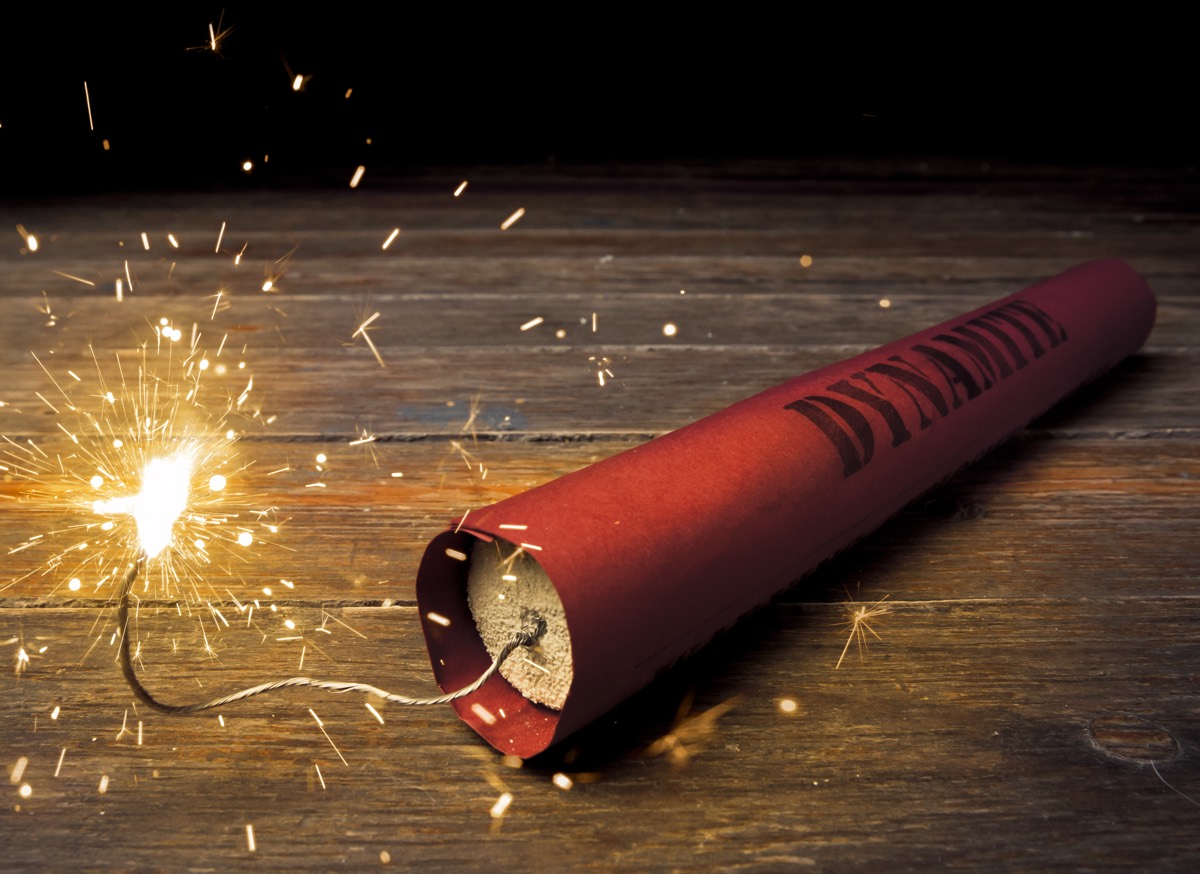
When an Arizona bomb disposal unit rolled out to detonate an antique refrigerator packed with decomposing explosives in late 2026, the operation highlighted a bizarre hazard lingering in rural outbuildings across North America. As covered in a recent FOX 10 Phoenix Report, technicians had to destroy the entire appliance on-site rather than risk transporting its volatile payload. Just months earlier in West Bountiful, Utah, police evacuated an entire neighborhood and arrested an 80-year-old resident after discovering a forgotten cache of decades-old industrial blasting sticks in a backyard shed.
These discoveries are not acts of modern terror. They are the decaying residue of mid-20th-century agriculture, excavation, and mining. Dynamite was engineered specifically to tame the wild volatility of liquid nitroglycerin, providing the industrial era with its first manageable heavy explosive. Yet age reverses that breakthrough. Given decades of heat cycles and neglect, the chemical binder gives up its grip, leaving behind an exposed contact explosive that can detonate from nothing more than a dropped flashlight or the friction of a cardboard box sliding across concrete.
📌 Key Takeaways:
- The Inversion of Safety: Dynamite was patented to make nitroglycerin chemically stable, but environmental degradation causes nitroglycerin exudation, creating a hair-trigger contact bomb.
- The Universal Rural Legacy: Hardware stores sold dynamite over the counter until the early 1970s for clearing tree stumps and digging irrigation trenches, leaving thousands of forgotten sticks hidden in barns and homesteads.
- Strict Zero-Movement Rules: Modern bomb squad disposal protocols and ATF explosive regulations mandate that sweating, crystallized dynamite must never be moved or handled by civilians; it must be neutralized or detonated in place.
How Nobel Tamed the World’s Most Volatile Liquid
Before dynamite entered the global economy in 1867, industrial blasting was a suicide gamble. Liquid nitroglycerin, synthesized by Italian chemist Ascanio Sobrero in 1847, offered staggering shattering power, but its liquid state made it terrifyingly unpredictable. Dropping a vial, leaving it in direct sunlight, or carrying it over a rough carriage road caused sudden, catastrophic detonations.
Swedish chemist Alfred Nobel cracked the problem after years of experiments that claimed the life of his younger brother Emil in an 1864 factory blast. Nobel’s breakthrough was mechanical absorption rather than chemical alteration. He soaked raw nitroglycerin into kieselguhr, a fine, porous diatomaceous earth collected from sediment beds. The inert chalky powder acted as a microscopic sponge, absorbing three times its weight in oily nitroglycerin.
The resulting paste could be pressed into cardboard cartridges, stacked, dropped, and transported without exploding from ordinary handling. To ignite this desensitized compound reliably, Nobel invented the separate copper blasting cap, a small capsule packed with mercury fulminate ignited by a safety fuse or an electrical lead. The shock sensitivity of the absorbent paste was low enough that fire would burn it like wax; only the sharp, supersonic shockwave from a blasting cap could trigger full detonation.
Modern variations later swapped out inert kieselguhr for active binders. Blasting gelatin and "straight dynamite" blended nitroglycerin with nitrocellulose and combustible wood pulps enriched with sodium or potassium nitrate, maximizing the gas volume released during detonation. For nearly a century, this formula cleared railroad tunnels through granite ridges, gouged open copper pits, and fueled the rapid expansion of twentieth-century infrastructure.
The Mechanism of Sweating: When Old Sticks Exude Pure Venom
Dynamite was never designed for indefinite shelf life. Manufacturers intended cartridges to be used within one to two years of rolling. When left in unconditioned sheds, root cellars, or humid barns, the organic pulps and chemical binders begin a slow physical breakdown driven by seasonal temperature swings and moisture absorption.
This breakdown causes nitroglycerin exudation, an industrial hazard known plainly on the field as "sweating dynamite danger." As the absorbent filler degrades, oily yellowish droplets push through the outer paraffin-waxed paper wrap. In prolonged storage, the exuded liquid evaporates partially, depositing microscopic, needle-like nitroglycerin crystals across the surface of the stick, the crate nails, and the storage shelving.
Those crystals represent a catastrophic failure of the safety envelope. While solid dynamite requires a high-velocity shockwave to detonate, crystalline and liquid nitroglycerin are vulnerable to pure mechanical friction. Turning an old wooden crate upside down, cutting through degraded paper with a pocketknife, or simply shifting an old tool against a sweating stick can exert enough localized friction to shatter the chemical bonds and trigger the entire mass.
The presence of white or amber crystallization on a dynamite cartridge is an active emergency. The explosive is no longer dynamite in any practical engineering sense. It has reverted into unbuffered liquid and crystallized nitroglycerin, stripped of Nobel's safety barrier and resting on a hair trigger.
Dynamite vs. TNT: Disentangling Hollywood’s Favorite Mix-Up
Popular media, cartoons, and action movies frequently treat dynamite and TNT as interchangeable synonyms for industrial explosives. Chemically, industrially, and historically, they share almost nothing in common.
Trinitrotoluene (TNT) is a specific, single chemical compound ($C7H5N3O6$), a yellow solid synthesized from toluene nitration. It was adopted universally by military forces because it is remarkably inert. You can shoot a rifle bullet through a solid block of military TNT, drop it from an airplane, or melt it in a double boiler at 178°F (81°C) to pour into artillery shells without initiating a blast. It requires an intense secondary booster charge to detonate.
Dynamite, by contrast, is a composite mixture containing liquid nitroglycerin absorbed inside a solid base. While TNT remains stable for decades in dry conditions without changing its mechanical state, commercial dynamite degrades continuously under atmospheric pressure and humidity.
| Property / Feature | Commercial Dynamite | Military TNT (Trinitrotoluene) | Modern Emulsion / ANFO |
|---|---|---|---|
| Base Chemical Formulation | Nitroglycerin absorbed in wood pulp, nitrates, or silica | Pure crystalline trinitrotoluene ($C_7H_5N_3O_6$) | Ammonium nitrate dissolved in water droplets inside fuel oil |
| Nominal Shelf Life | 1, 2 years before binder decomposition begins | 40, 60+ years under basic sealed storage | 6, 12 months before crystallization impairs blast efficiency |
| Aging Hazard Profile | Exudes pure nitroglycerin; becomes hyper-sensitive to shock and friction | Remains stable; slight discoloration or exudation of low-melting isomers | Fails to detonate entirely; desensitizes over time |
| Detonation Velocity | 4,000, 7,000 m/s (depending on grade and nitroglycerin percentage) | 6,900 m/s | 3,200, 5,500 m/s |
| Current Regulatory Stance | Phased out in favor of safer site-mixed emulsions | Strict defense/military use; restricted industrial application | Global standard for open-pit mining and controlled demolition |
The critical takeaway for any property owner or contractor is immediate: while old military TNT can often be moved safely by trained disposal teams, old commercial dynamite represents an unpredictable, immediate chemical hazard that tolerates zero handling error.
/dynamite-stick-isolated-on-wooden-table-873415588-5abd8c2f3de423003671f6c3.jpg)
Why Homesteads and Basements Are Still Littered With Explosives
To understand why public safety agencies encounter dozens of dynamite incidents every year, one must understand how casually high explosives were distributed throughout the early and mid-20th century.
Until the passage of the federal Organized Crime Control Act of 1970, which established modern Bureau of Alcohol, Tobacco, Firearms and Explosives (ATF) explosive regulations, a landowner could buy a case of 40% straight dynamite and a tin of blasting caps at local general stores or farm co-ops. Agricultural handbooks published by land-grant universities routinely instructed farmers on how to drill into old oak stumps, slide in two sticks of commercial mining explosives, tamp the hole with mud, and strike a match.
Surplus sticks were frequently tossed onto a shelf in the back of the tractor barn, buried under paint cans in a root cellar, or stored inside retired appliances to keep them away from rodents. When properties changed hands or original owners passed away, these cardboard boxes were forgotten under layers of sawdust, cobwebs, and scrap iron.
Decades later, the descendants or new buyers stumble upon brittle, grease-stained tubes resting in wooden crates labeled Hercules, Atlas, or DuPont. What was bought as an agricultural tool in 1961 is now an active, unregistered, and unstable explosive device capable of leveling a house.
What Bomb Squads and the ATF Do When Old Sticks Surface
When emergency dispatchers receive a call concerning suspected dynamite, standard hazmat and police responses are set aside in favor of specialized bomb technician protocols.
Federal ATF explosive regulations classify commercial dynamite as a high explosive, meaning its reaction front moves faster than the speed of sound, creating a devastating concussive shockwave. Moving an old stick across a room can cause immediate detonation if the crystalline nitroglycerin has pooled along the casing seam.
Modern bomb squad disposal protocols dictate a strict escalation ladder:
- Perimeter Evacuation: Technicians clear a minimum radius, typically 300 to 1,000 feet depending on the estimated mass, evacuating nearby homes and cutting local gas and electrical lines.
- Visual Assessment via Remote Robotics: Technicians rarely approach sweating dynamite directly. They deploy remote robotic cameras to inspect the physical condition of the cartridges, looking for paraffin discoloration, crystalline blooming, or sagging cartridges that indicate pooling liquid.
- In-Place Neutralization: Moving deteriorated dynamite into a transport vessel is considered a last resort. Whenever feasible, squads dig blast trenches, build sandbag barricades around the discovery site, and destroy the material where it sits using a remote counter-charge or controlled burn operation.
- Counter-Charge Detonation: If destruction in place is required, technicians place an electronic detonator connected to a modern, stable secondary explosive (such as C-4 or a water-gel charge) adjacent to the sweating material. The secondary charge ensures instantaneous, total consumption of all unreacted nitroglycerin, eliminating hazardous chemical scatter.
Chemical desensitizers, such as specialized alcoholic solutions that break down the nitrate ester bonds, exist in laboratory theory, but field operators avoid them. The friction or fluid disturbance of spraying a chemical onto sweating crystals can itself trigger the reaction. High-order, controlled detonation under protected, evacuated conditions remains the industry benchmark.
Frequently Asked Questions (FAQ)
Q1: Can old dynamite explode spontaneously without a spark or flame?
Yes. Severely deteriorated dynamite that has undergone extensive nitroglycerin exudation does not need an open flame or an electrical spark to detonate. Pure liquid or crystalline nitroglycerin can ignite from microscopic friction, mechanical shock, falling debris, sudden heat changes, or even the slight flex of a deteriorating cardboard carton.
Q2: Why do modern demolition crews avoid using dynamite today?
Contemporary controlled demolition contractors and commercial mining operations rely almost entirely on ammonium nitrate emulsions, ANFO (ammonium nitrate/fuel oil), and modern booster charges. These modern explosives are far cheaper to manufacture, do not give workers the severe vasodilation headaches caused by handling nitroglycerin vapors, and will not detonate without heavy, high-velocity boosters, eliminating accidental warehouse explosions.
Q3: What should you do if you discover what appears to be old dynamite on your property?
Do not touch, lift, or attempt to inspect the sticks. Do not attempt to transport them to a local police station or firehouse. Evacuate the immediate structure, keep other individuals away from the area, and call 911 immediately. Inform dispatch that you have discovered suspected commercial explosives so they can notify the regional bomb squad and certified ATF explosive specialists.
The Fading Footprint of Nitroglycerin in the Modern World
Dynamite changed the physical geography of the planet, carving the Panama Canal, tunneling through mountain ranges, and giving humanity unprecedented power over solid stone. Its invention brought Alfred Nobel the fortune that now funds the Nobel Prizes.
Today, nitroglycerin-based commercial explosives are obsolete relics of early industrial chemistry. Modern blasters achieve higher precision and far greater safety margins with non-nitroglycerin commercial emulsions that can be mixed directly inside a borehole truck.
Yet the century-long commercial reign of the red paper stick left an invisible footprint across millions of rural acres. As long as mid-century barns, abandoned mines, and aging homesteads stand undisturbed, bomb squads will continue to deploy robots, sandbags, and counter-charges to quietly erase the final, sweating remnants of Alfred Nobel’s most dangerous creation.


