When Being Petty Goes Viral: The Secret Psychology Behind Celebrity Feuds and Internet Snubs
A muted story, a cropped group photo, or a single sideways emoji left under a multimillion-dollar product launch can derail a career in minutes. Trivial disputes no longer stay buried in group chats or break rooms. Instead, they occupy center stage across digital culture, where audience metrics turn personal irritations into mass entertainment. As charted in a revealing jezebel.com report examining the rise of beauty guru James Charles, public appetite for interpersonal conflict transformed minor influencer feuds into high-stakes spectacles, establishing an economy where social score-settling yields instant attention.
What began as an uncomfortable character flaw has mutated into a recognized communication style. Audiences do not just observe these spats; they celebrate them, analyze their subtext, and emulate their tactics in daily exchanges.
📌 Key Takeaways:
- The Cultural Pivot: The slang meaning of petty has evolved from simple social rudeness into a self-aware, performative tool used to signal boundaries and exact low-stakes retribution.
- The Celebrity Blueprint: Public figures like Jameela Jamil have repurposed open irritation against industry norms, turning personal grievances into relatable public branding.
- The Psychological Divide: While subtle retaliations provide short-term emotional satisfaction, recurring spiteful actions often reveal underlying emotional immaturity rather than healthy conflict resolution.
From Dictionary Margins to Digital Currency
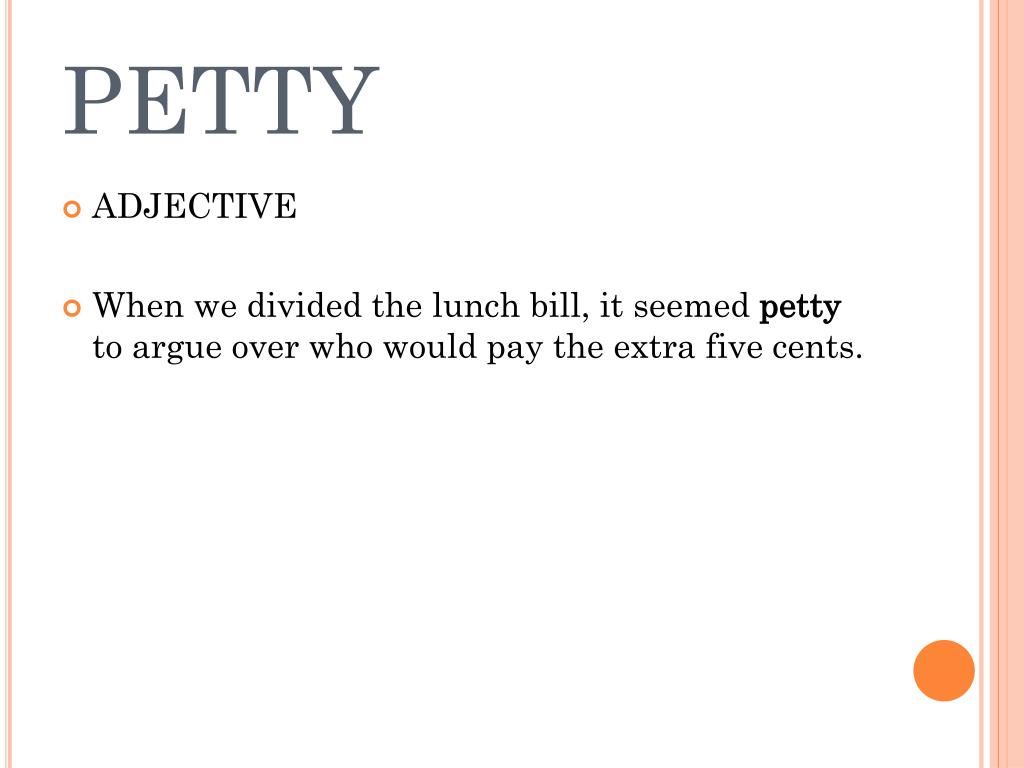
Understanding the baseline petty behavior definition requires looking back at its linguistic roots. Derived from the French petit, meaning small or minor, the term historically described individuals who fussed over insignificant details, nursed trivial grievances, or displayed narrow-minded spite. For generations, labeling someone petty was an unambiguous insult. It denoted someone small-minded enough to withhold assistance over a forgotten slight from three years prior.
That definition changed once online communication stripped conversations of body language and vocal tone. When people ask what petty means in contemporary language, the answer extends far beyond basic dictionary entries. The modern slang meaning of petty describes a conscious, often humorous willingness to escalate trivial disputes purely out of principle. It is an intentional overreaction to micro-slights: refusing to like a close friend's engagement post because they skipped your birthday dinner, or replying with a cold period at the end of a single-word text.
The internet did not invent this behavior, but it built an ecosystem where passive-aggressive behavior is visible to thousands at once. On platforms like TikTok, X, and Instagram, declaring oneself "petty" functions as an ironic shield. By claiming the label upfront, individuals excuse their spiteful actions as entertainment, blunting criticism before it starts.
How Celebrities Turn Micro-Slights Into Cultural Currency
Nowhere is this transformation more pronounced than among mainstream celebrities and digital creators. Traditional PR teams spent decades training talent to project unflappable grace, urging them to issue generic statements whenever public conflict arose. Today, audiences routinely reject sanitized apologies in favor of raw, combative authenticity.
Consider television host and activist Jameela Jamil, who built a massive following by directly confronting public figures over sponsored detox teas, excessive photo retouches, and celebrity beauty double standards. Jamil has frequently leaned into targeted social media callouts, acknowledging the sharp, combative edge of her approach while arguing that aggressive public pushback is necessary to dismantle harmful industry messaging. Rather than brushing off minor offenses, public figures now use their platforms to dissect small slights in full public view.
Influencer feuds demonstrate how holding grudges became an explicit content format. Influencers track who unfollowed whom, decode hidden references in podcast interviews, and dissect background details in vlog uploads. In these digital arenas, being petty is not an accident. It is an intentional posture that keeps audiences refreshing feeds for the next round of subtle retaliations.
The Escalation Scale: Everyday Irritations Versus Destructive Behavior
Because internet culture often lumps every minor dispute into the same bucket, differentiating harmless friction from damaging patterns is critical. The friction exists on a spectrum that ranges from mild social annoyance to systemic manipulation.
| Behavioral Category | Observable Action | Psychological Motive | Interpersonal Impact |
|---|---|---|---|
| Performative Pettiness | Deliberate unfollows, indirect status updates, subtle seating snubs at social events. | Signaling boundaries, regaining perceived control, comedic self-expression. | Temporary social tension; usually resolves without lasting psychological harm. |
| Passive-Aggressive Resistance | Deliberate procrastination, backhanded compliments, silent treatment in group chats. | Fear of direct confrontation paired with unresolved internal resentment. | Erosion of workplace morale and slow decay of personal trust. |
| Toxic Retaliation | Doxxing, reputation sabotage, persistent gaslighting, public smear campaigns. | Need for total dominance, vindictive control, intentional emotional destabilization. | Severe psychological distress, legal exposure, permanent relationship destruction. |
The Psychology of Pettiness and the Urge to Retaliate
Why does engaging in micro-retaliation feel deeply satisfying in the moment? Clinical psychologists link the psychology of pettiness directly to power dynamics and emotional regulation. When an individual feels dismissed, disrespected, or powerless in a relationship or workplace, confronting the offender directly carries significant risk. A junior employee cannot easily tell an executive that their dismissive comment in a morning meeting was rude.
Instead, the human brain seeks an immediate compensatory win. Withholding information, sending an email with a chilly "Regards" instead of "Thanks," or intentionally omitting an offender's name from an informal acknowledgment offers a tiny burst of agency. Researchers studying interpersonal aggression note that low-stakes retaliation activates the brain's reward centers. It functions as emotional self-medication, delivering a quick hit of perceived justice without requiring vulnerable, open conflict.
The trap lies in repetition. Habitually relying on subtle retaliations instead of clear communication preserves emotional immaturity. It locks social circles into endless guessing games, where grievances compound silently over months or years.
Toxic vs Petty: Knowing When Small Slights Cross the Line
Because online platforms normalize vindictive behavior as entertainment, the boundary between toxic and petty actions frequently blurs. Deciding whether an incident warrants an eye-roll or an immediate exit depends entirely on intent, scale, and power differentials.
Petty behavior focuses on trivialities and lacks systemic intent. If a friend leaves your group chat after losing a game night dispute, their reaction is childish, but it poses no danger to your safety or livelihood. Toxic behavior, by contrast, weaponizes small slights as justification for sustained cruelty. When a disagreement leads to coordinated social media drama, targeted workplace isolation, or ongoing manipulation, the encounter has migrated far outside the bounds of harmless pettiness.
Recognizing this boundary protects personal mental health. Engaging in an occasional spat over who borrowed a sweater without asking is an ordinary human experience. Permitting someone to use minor friction as an excuse to monitor your communications, undermine your self-worth, or damage your career is a structural risk that demands firm boundaries or complete disengagement.
Frequently Asked Questions (FAQ)
Q1: What does petty mean in modern slang?
In modern slang, being petty describes making a deliberate, exaggerated deal out of minor slights or seeking small-scale payback over trivial issues, often with a humorous or self-aware attitude.
Q2: Is petty behavior a sign of narcissism or emotional immaturity?
While frequent pettiness highlights poor conflict resolution skills and emotional immaturity, it is rarely diagnostic of narcissism on its own. True narcissism involves deep patterns of grandiosity and lack of empathy, whereas pettiness is usually just an everyday, small-scale reaction to feeling slighted.
Q3: How should I respond when a coworker is being petty toward me?
Address the underlying work task directly in writing, maintain neutral professional language, and avoid taking the bait with your own passive-aggressive replies. Documenting key interactions prevents minor workplace frictions from turning into distorted disputes.
Navigating the Culture of the Micro-Snub
Human interaction in digital spaces continues to magnify minor grievances into high-profile confrontations. As public figures and everyday internet users trade passive-aggressive barbs under the banner of entertainment, understanding the motives behind these exchanges becomes essential.
Distinguishing harmless, petty irritation from toxic manipulation allows individuals to participate in modern social spaces without succumbing to the constant friction that drives engagement algorithms. Small slights only hold as much power as the attention they receive. Learning when to ignore a micro-snub remains the most effective retaliation of all.


