Where Did the 'Lion Screaming at Monkey' Meme Come From? The Viral Ragebait Craze Explained

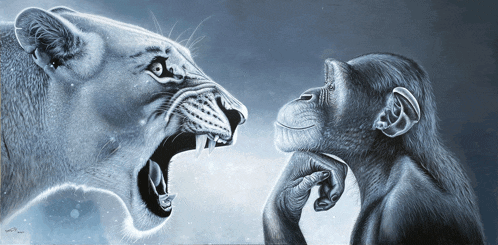
Every few months, internet culture crowns an absurd, hyper-specific animal video as its reigning reaction format. In early 2026, feeds across TikTok, Instagram Reels, and X filled with an encounter between an enraged apex predator and a bewildered primate. The footage depicts an open-mouthed male lion roaring directly into the face of a captive monkey, paired with the recurring caption: "How it feels to ragebait bro." As tracked in a recent Yahoo Report, the clip evolved overnight from obscure wildlife footage into a shorthand for intentional online agitation.
The visual dynamic hits an immediate psychological nerve. On one side sits explosive, unhinged fury; on the other, an unnerved creature bearing the brunt of unnecessary chaos. In a social ecosystem increasingly governed by engagement farming and manufactured conflict, the template captures how modern users interact with algorithms and one another.
📌 Key Takeaways:
- Origin Point: The template pairs archival wildlife park footage of an agitated lion confronting a monkey across an enclosure boundary with user-generated text overlays.
- The Ragebait Trope: Its explosive popularity stems from the "How it feels to ragebait bro" trend, which parodies the everyday act of purposefully annoying friends or online commenters.
- Platform Velocity: Short-form video platforms supercharged the audio remixes, driving hundreds of millions of cumulative impressions across TikTok and X throughout early 2026.
The Wildlife Footage Behind the Screaming Lion Format
The core clip did not originate as a planned skit. Archival video trackers and digital culture archivists at Know Your Meme traced the source material to documentary-style footage filmed at a safari park enclosure. In the unedited sequence, a captive male lion lunges toward a viewing partition, roaring with full vocal force at an adjacent baboon or macaque sitting just out of reach.
The monkey flinches, blinks rapidly, and appears frozen between survival terror and complete exasperation. That brief two-second visual contrast gave creators precisely what modern reaction memes require: instant, legible emotional polarization. Early iterations cropped the boundary barrier entirely, making the standoff feel dangerously close and wildly disproportionate.
By late 2025 and early 2026, decentralized video editors stripped out the original ambient audio, replacing it with low-frequency bass boosts, screeching distortion, or muffled phonk tracks. Once the sensory overwhelm reached maximum density, the caption writers took over.
The Psychology Behind the "How It Feels to Ragebait Bro" Trend
To understand why this specific template took off, one must look at how digital discourse operates in 2026. Online interaction thrives on provocation. "Ragebaiting", the deliberate posting of inflammatory, illogical, or irritating statements to extract an emotional response, has shifted from a covert trolling strategy into a mainstream social dynamic.
The lion screaming at the monkey became the perfect visual metaphor for this dynamic. In the narrative frame of the meme, the creator is the instigator: drop an absurd opinion into a group chat, state an obvious falsehood about a friend's favorite sports team, and watch the target implode. The screaming lion represents the target's disproportionate fury, while the stunned monkey captures the instigator casually enjoying the fallout.
Conversely, creators flipped the framing. Some variants cast the screaming lion as the troll unleashing an aggressive torrent of bait, leaving an innocent follower as the beleaguered monkey wondering why their feed descended into madness. Because the emotional roles can swap effortlessly, the template spawned endless variations within days.
Tracking the Shift: How Animal Templates Dominate Social Feeds
Animal clips have served as the backbone of online humor since the dawn of the public web. Yet the mechanics governing which formats survive have changed dramatically between the static macro era and the algorithmic video era.
| Meme Era | Dominant Format | Primary Engagement Loop |
|---|---|---|
| 2012, 2017 | Static Image Macros (Advice Animals, Doge) | Static top-and-bottom impact font captions shared on message boards. |
| 2018, 2022 | Looping GIFs & Twitter Video Clips | Contextual replies in quote tweets and community chat servers. |
| 2023, 2026 | High-Velocity TikTok Reels ("Lion vs. Monkey") | Algorithmic recommendation engines, sound-bite pairing, and relatable micro-drama. |
The metrics demonstrate why short-form platforms favor this clip. The entire sequence runs less than four seconds. When paired with high-tempo audio loops, viewer retention rates routinely cross 120% on TikTok, meaning the average user watches the clip through one and a half times before scrolling. Recommendation algorithms interpret those completion rates as raw gold, shooting the template onto millions of For You pages within hours.
When Animal Satire Collides with Toxic Web Discourse
While the lion-and-monkey clip thrives on harmless peer-to-peer teasing, the wider internet environment in early 2026 has shown how volatile animal tropes can become when weaponized politically. In February 2026, mainstream news outlets, including The Times of India and La Voce di New York, reported global backlash after former President Donald Trump shared a controversial, AI-generated video featuring an ape targeting the Obamas.
The incident ignited immediate political outrage, press conference interrogations, and widespread condemnation across legacy press. That real-world controversy highlighted a striking dividing line in online media: absurdist animal chaos creates harmless communal bonding, whereas racially charged or AI-manipulated animal imagery crosses instantly into algorithmic hostility.
The screaming lion template stays firmly on the harmless side of that divide. It avoids identity politics altogether, focusing instead on universal interpersonal quirks: gaming arguments, petty domestic squabbles, and the primal urge to test a friend's patience.
Why Reaction Templates Flourish in the Modern Creator Economy
Modern creators do not want complex video assets. They want turnkey emotional canvases. The lion screaming at the monkey works because it functions like a blank cartoon panel. Anyone with basic smartphone editing software can overlay two lines of text: the top line sets the context, and the bottom line delivers the punchline.
Streamers use it to depict chat reactions after taking a controversial stance on an esports match. College students post it to capture group project dynamics where one member panics over deadlines while another sits motionless. Fitness creators apply it to depict aggressive gym partners shouting motivational clichés at exhausted beginners.
The visual grammar requires zero translation. An angry lion roaring at an unimpressed primate speaks across language barriers, geographic regions, and demographic silos. In an increasingly fragmented media environment, that universal clarity is rare currency.
Frequently Asked Questions (FAQ)
Q1: What is the original video behind the lion screaming at monkey meme?
A1: The meme uses wildlife zoo footage where an adult male lion roars loudly at a monkey across an enclosure partition. Digital creators cropped the video, heightened the contrast, and paired it with aggressive or comical audio.
Q2: What does "ragebait" mean in the context of this meme?
A2: Ragebait refers to content or statements deliberately engineered to make someone angry. The meme captures the comedic satisfaction an individual feels after intentionally provoking a dramatic overreaction from a friend or internet commenter.
Q3: Why did this specific animal meme spread so fast in 2026?
A3: Its short runtime of under four seconds drives massive loop completion rates on TikTok and Instagram Reels. Algorithms prioritize videos with high repeat views, propelling the template into mainstream algorithmic circulation.
The Staying Power of Chaos in Digital Humor
Internet trends churn at a relentless pace. Templates burn through their cultural lifespan in weeks, only to be replaced by the next absurd sound bite or unhinged wildlife encounter. Yet the lion screaming at the monkey touches something enduring about human communication.
Online interactions have become louder, more performative, and increasingly saturated with deliberate noise. Rather than attempting to fix that friction, modern internet users choose to caricature it. As long as people find joy in testing their friends' limits, the roaring predator and the startled primate will remain a foundational piece of social media shorthand.


