White Fang Movie Fact-Check: Disney’s 1991 Hit vs Jack London’s Brutal Novel

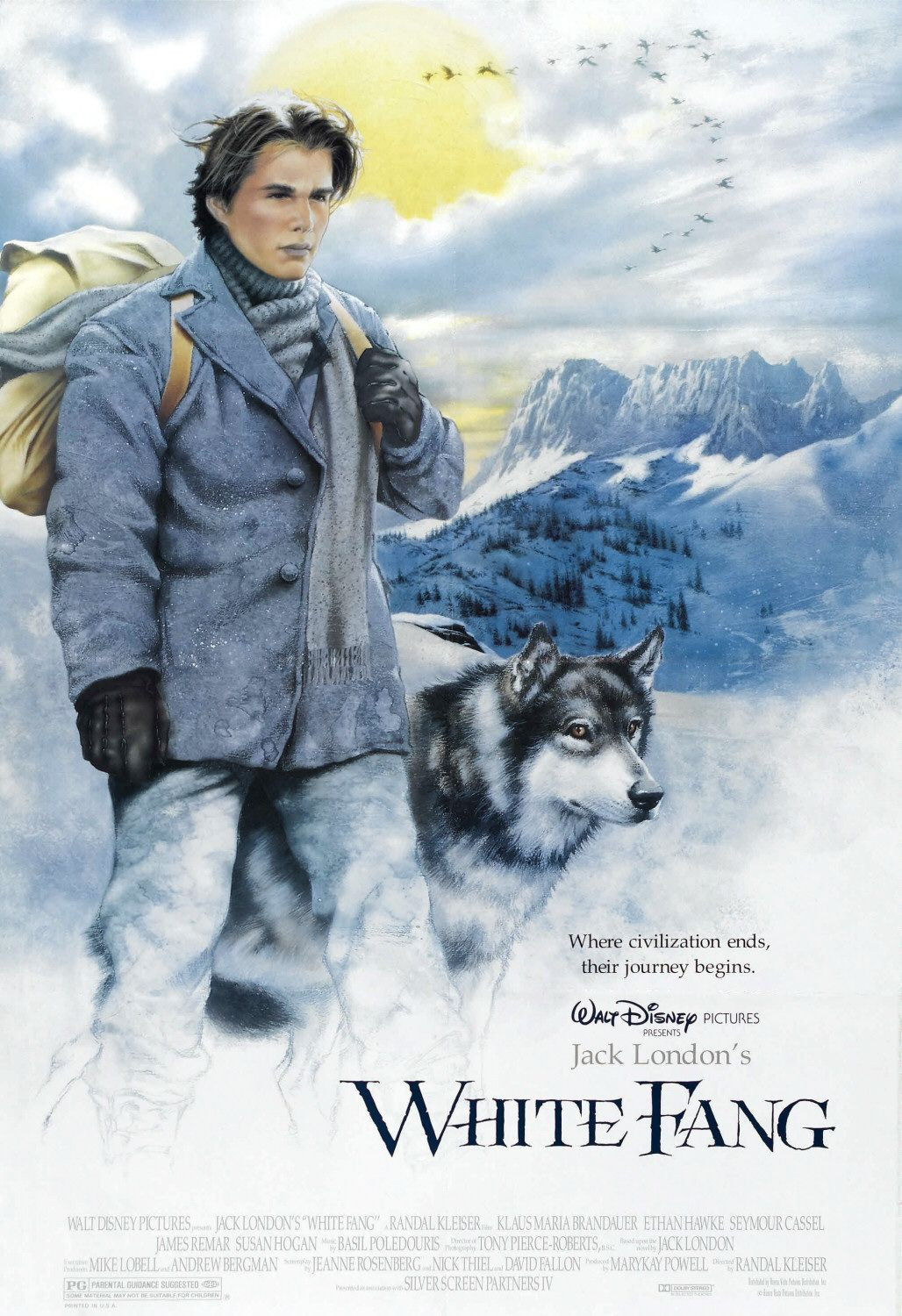
When director Randal Kleiser brought Jack London’s 1906 wilderness novel to theaters in January 1991, the production faced an immediate artistic dilemma. London's classic text was an unsparing, deterministic study of survival during the 1890s Klondike Gold Rush, told largely through the sensory perceptions of a feral wolfdog hybrid. Disney, eager for a live-action family adventure, needed a conventional human emotional core. The resulting film delivered a breakout vehicle for a twenty-year-old Ethan Hawke and veteran Austrian actor Klaus Maria Brandauer, grossing over $34 million domestically and cementing itself in the collective memory of a generation.
Decades later, cinematic appraisals, including an extensive Alternate Ending - Movie Reviews Report, revisit how drastically the Hollywood treatment diverted from its source material. Rather than documenting the brutal, indifferent machinery of nature, the 1991 production softened the edge of the Yukon Territory into an uplifting coming-of-age story. Fact-checking Disney’s script against London’s prose reveals a calculated overhaul of character, historical violence, and thematic intent.
📌 Key Takeaways:
- Invented Human Lead: Ethan Hawke’s protagonist, Jack Conroy, does not exist in Jack London’s novel; he is an amalgamation designed to give audiences an empathetic human focal point.
- Sanitized Animal Combat: The film dramatically toned down the book's graphic dog-fighting circuits, cutting the sadistic cruelty of Beauty Smith to secure a family-friendly PG rating.
- Altered Geography: London ended his novel on an idyllic California ranch, while Disney opted to keep its dramatic resolution firmly anchored in the Alaskan wilderness.
The Frontier Myth vs London’s Darwinian Naturalism
Jack London wrote White Fang as a thematic mirror to his 1903 masterpiece, The Call of the Wild. Where the earlier book tracked a domesticated pet reverting to primeval savagery, White Fang traced the inverse trajectory: an animal born in the frozen wild undergoing forced, painful acculturation into human society. London witnessed the Klondike Gold Rush firsthand between 1897 and 1898, developing scurvy and absorbing the cold realities of animal mortality on the trail. His novel reflects those observations directly. Nature in London's prose does not care about personal virtue, and animals operate under sheer natural law.
Disney replaced London’s clinical naturalism with high-stakes Hollywood sentimentality. The 1991 film reframes the animal protagonist not as a creature shaped purely by stimulus, trauma, and survival instincts, but as a loyal canine partner waiting for the right human touch. The harsh, transactional dynamic of the Yukon frontier, where pack animals were regularly worked to death along the Dead Horse Trail, recedes into the background, functioning merely as scenic set dressing for an adolescent discovery narrative.
Inventing Jack Conroy: How Ethan Hawke Reshaped the Plot
Readers revisiting the original text are often shocked to discover that Jack Conroy does not exist on the page. In the novel, the narrative remains fixed on White Fang's internal world. Humans appear as powerful, often terrifying beings whom the wolfdog perceives as "gods", arbitrary dispensers of meat, warmth, or whips. The animal passes through three primary masters: Gray Beaver, an Indigenous hunter who domesticates him; Beauty Smith, a grotesque monster who tortures him into a fighting dog; and Weedon Scott, a wealthy mining engineer who patiently rehabilitates him.
Screenwriters Jeanne Rosenberg, Nick Thiel, and David Fallon collapsed these relationships into a traditional boy-and-dog bond. To anchor Ethan Hawke’s performance, the production created Jack Conroy, a greenhorn who journeys north to claim his late father’s gold stake. Klaus Maria Brandauer was cast as Alex Larson, an experienced guide who replaces multiple minor characters from London’s opening chapters. By elevating Conroy to the primary narrative driver, the 1991 adaptation inverted London's hierarchy: the wolfdog became a supporting player in a young man’s moral awakening.
Structural Breakdown: Book vs 1991 Film vs 2018 Animated Adaptation
Analyzing how different adaptations alter London’s narrative architecture highlights Disney’s specific commercial compromises. When Alexandre Espigares directed the French computer-animated version in 2018, released globally via Netflix, he retained much of the visual stylization and animal-centric framing that the 1991 production abandoned, while still pulling back from London’s most punishing prose.
| Narrative Dimension | Jack London’s 1906 Novel | Disney’s 1991 Live-Action Film | Alexandre Espigares’ 2018 Film |
|---|---|---|---|
| Point of View | Wolfdog's internal perception; humans viewed as terrifying "gods" | Third-person human perspective centered on Jack Conroy | Predominantly animal-centric visual framing |
| Human Protagonist | Weedon Scott (mining engineer appearing late in story) | Jack Conroy (invented youthful prospector) | Weedon Scott and Marshal Jim Read |
| Dog-Fighting Sequences | Brutal, graphic bloodsport; nearly killed by a bulldog named Cherokee | Staged pit sequence ending before graphic injury; Jack intervenes | Stylized animation focusing on tension over visceral trauma |
| Setting of the Climax | Santa Clara Valley, California (Judge Scott’s suburban estate) | Yukon Territory cabin and gold claim | Wild Yukon frontier forest edge |
| The Animal Star | Fictional three-quarters wolf, one-quarter dog hybrid | Jed (famed timber wolf-Alaskan Malamute animal actor) | 3D digital painterly rendering |
The Dog-Fighting Arenas and Disney’s Censorship Line
The darkest passages of London’s writing explore the dog-fighting rings organized by Klondike miners. In the book, the villainous Beauty Smith exploits White Fang’s wild nature, intentionally torturing the animal with beatings to cultivate an unhinged ferocity. White Fang becomes an undefeated killer in the pits until he meets Cherokee, a compact English bulldog whose clamped jaw suffocates him in an agonizing, slow-motion sequence. London spares no details regarding shredded flesh and broken limbs.
For the 1991 movie, Kleiser and animal coordinator Clint Youngreen had to deliver tension without alienating parents. The production relied heavily on Jed, an experienced wolfdog hybrid who previously worked on John Carpenter’s 1982 horror milestone The Thing. Rather than depicting raw carnage, editor Clark Henderson used rapid cutting, snarling sound effects, and reaction shots from the jeering human crowd to convey brutality. Jack Conroy charges into the ring to pry the bulldog off White Fang, replacing the novel’s calculated intervention by Weedon Scott with a burst of adolescent heroics. The sequence fulfilled Disney’s narrative requirements while sidestepping London's uncompromising despair.
From Yukon Snow to California Orchards: The Rewritten Finale
The starkest departure between the 1906 text and the 1991 film is its geographic resolution. In London’s novel, the Yukon is merely a formative crucible. Once Weedon Scott earns White Fang’s trust through infinite patience and raw meat, he packs the animal onto a steamer bound for San Francisco. White Fang transitions to Scott's family estate in the Santa Clara Valley of California, adjusting to suburban livestock, paved roads, and domestic collies.
London’s final chapter functions as an allegory of civilization. White Fang nearly dies defending the estate from Jim Hall, an escaped convict seeking vengeance against Scott’s father, a judge. Surviving several gunshot wounds, the wolfdog earns the title of "The Blessed Wolf" and sires a litter of puppies with the household sheepdog, Collie. The animal’s wildness is subordinated to bourgeois domesticity.
The 1991 film discarded the California epilogue entirely. After Jack Conroy strikes gold and foils the local claim-jumpers, he chooses to remain in the Yukon frontier. Recognizing that White Fang belongs in the wild, Jack initially tries to drive the creature away, a classic Hollywood trope seen in films from Old Yeller to Harry and the Hendersons. Yet before Jack departs on his journey home, White Fang returns to the Alaskan cabin. The film ends on an image of cross-species companionship in the snow, maintaining the frontier myth rather than embracing London’s suburban assimilation.
Frequently Asked Questions (FAQ)
Q1: Did Ethan Hawke perform his own stunts with the wolfdog in the 1991 movie?
A1: Ethan Hawke performed many of his character's close-contact scenes alongside Jed, the primary animal actor. However, trainer Clint Youngreen supervised every interaction closely using meat lures, and specialized stunt doubles handled dangerous river crossings and chaotic sled sequences.
Q2: What animal was actually used to play White Fang in the Disney production?
A2: White Fang was portrayed by Jed, an animal actor that was an Alaskan Malamute and Canadian timber wolf hybrid. Jed was famous for his expressive face and calm demeanor on set, previously starring in John Carpenter's The Thing (1982) and The Journey of Natty Gann (1985).
Q3: Why did Disney change the ending of Jack London's original book?
A3: London's original ending relocated the story to a sunny California ranch, shifting tone from frontier survival to suburban domestic drama. Disney filmmakers decided that keeping Jack Conroy and White Fang in the Yukon preserved the cinematic appeal of the wilderness setting and provided a cleaner emotional payoff for family audiences.
The Cultural Endurance of the 1991 Adaptation
Jack London wrote to interrogate nature, viewing living organisms through an unyielding Darwinian lens. Disney made White Fang to tell a story about friendship in an untamed landscape. While purists may lament the sanitization of the novel's violence and the erasure of its California conclusion, the 1991 adaptation succeeded on its own terms. It translated the awe of the northern wilderness to modern audiences, anchored by the grounded performances of Hawke and Brandauer and the quiet dignity of Jed. The film remains an enduring portrait of early-nineties live-action filmmaking, standing as a cinematic compromise between literary naturalism and accessible commercial mythmaking.


