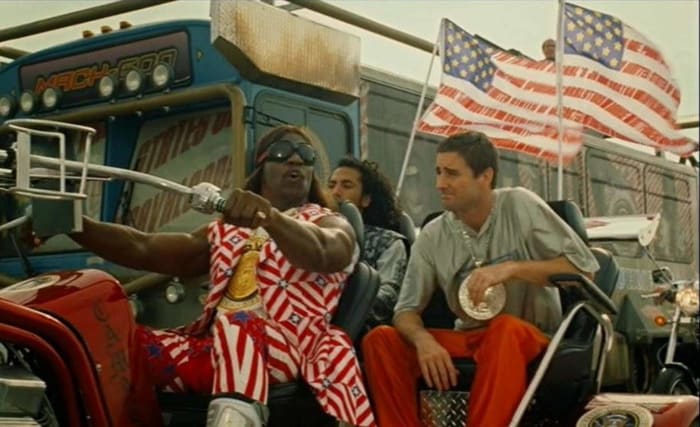
Who Is President Camacho? Quotes, Origin, and the Idiocracy Legacy Explained
In 2006, 20th Century Fox quietly buried Mike Judge’s sci-fi comedy Idiocracy, releasing it in roughly 130 theaters without marketing campaigns, press junkets, or critical screenings. Two decades later, the film's commanding figurehead, President Dwayne Elizondo Mountain Dew Herbert Camacho, portrayed with ferocious energy by Terry Crews, occupies a permanent place in global political analysis. Whenever contemporary elections veer toward spectacle, Camacho resurfaces across news commentary, digital essays, and late-night television as the primary benchmark for institutional decay.
Treating Camacho as a simple caricature of anti-intellectualism misses the precise mechanism of Judge and co-writer Etan Cohen’s satire. As cultural observers have documented, notably highlighted in a classic Flavorwire Report tracking voter confusion between real-world campaign soundbites and Camacho’s cinematic rants, the fictional head of state embodies a striking paradox. He is bombastic and undereducated, yet he remains refreshingly transparent, deferential to actual expertise, and desperate to fix a broken country.
📌 Key Takeaways:
- The Persona: A former five-time ultimate smackdown champion and adult film star whose legal middle names were auctioned off to corporate soda sponsors.
- The Satirical Twist: Unlike cynical modern politicians, Camacho actively admits national crises, steps aside for qualified problem solvers, and changes policy when proven wrong.
- Cultural Footprint: What began as a buried studio asset evolved into one of the most referenced fictional US presidents in American political history.
The Origins of Camacho in Mike Judge’s Dystopian Vision
Mike Judge conceived Idiocracy around 2001 after observing consumer behavior and retail architecture in central Texas. Partnering with Etan Cohen, Judge imagined an America five centuries into the future where natural selection favored rapid reproduction over cognitive ability. The year is 2505. Commercial interests have swallowed civic governance whole, soil has stopped yielding food, and the machinery of state administration is barely functioning.
Judge needed an avatar for this future. He needed a character who reflected the total union of entertainment, professional athletics, and presidential authority. Terry Crews, then transitioning from a career as an NFL linebacker into comedic acting via Everybody Hates Chris and White Chicks, delivered an audition that defined the character. Crews combined athletic physicality with a preacher's cadence, producing a leader who ruled not by aristocratic privilege or ideological dogma, but by pure muscular adrenaline.
Corporate Sponsorship and Combat Sports: Character Backstory
Camacho’s backstory represents Judge’s sharpest critique of late-stage commercial influence. His full title, Dwayne Elizondo Mountain Dew Herbert Camacho, signals a world where naming rights override constitutional norms. The federal government ran out of capital centuries earlier, liquidating state assets and executive identity to beverage conglomerates.
Before his political ascension, Camacho spent decades in the arena. His resume includes:
- Five consecutive world ultimate smackdown championships.
- A high-profile career as an adult film star.
- A corporate ambassadorship for commercial snack foods and energy beverages.
Camacho did not inherit power through backroom party machinery. Voters elected him because he was physically dominant, telegenic, and spoke without intellectual pretension. He embodies voter preference for charisma over technical competence. In a world stripped of historical literacy, an arena champion with automatic rifles feels entirely qualified to occupy the White House.
Iconic Dialogue and the House of Representatives Speech
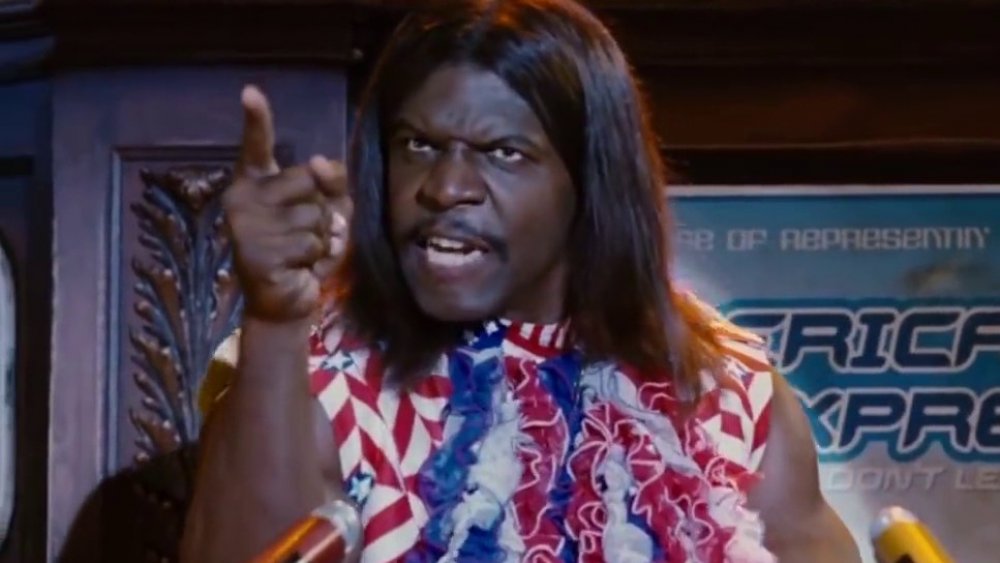
The centerpiece of Camacho’s screen time occurs inside the House of Representatives. Dressed in a star-spangled leather vest, Camacho restores order in a chaotic legislature by pulling an automatic rifle from his motorcade display and unloading live rounds directly into the ceiling.
His address delivers some of the most enduring lines of modern political satire:
- "Now I understand everyone's shit's emotional right now. But I've got a three-point plan that's going to fix EVERYTHING."
- "Shit. I know shit's bad right now with all that starving bullshit, and the dust storms, and we are running out of French fries and burrito coverings."
- "Number one: We've got this guy Not Sure. Number two: He's got a higher IQ than ANY MAN ALIVE. And number three: He's going to fix EVERYTHING."
The dialogue functions through sharp comedic contrast. Camacho acknowledges material shortages, food supplies and industrial paper, with complete frankness. He uses profanity not to deflect, but to connect with an exhausted public. Rather than claiming personal brilliance, he stakes his administration on the discovery of Joe Bauers (Luke Wilson), an average Army clerk frozen for 500 years who now ranks as the planet's smartest human.
The Cultural Evolution of Idiocracy (2006, 2026)
The transition of Idiocracy from studio write-down to cultural touchstone illustrates the unpredictable nature of cult cinema. Audiences initially missed the theatrical run, discovering Camacho through cable broadcasts, DVD rentals, and online highlight clips.
| Era | Milestone Event | Societal Resonance |
|---|---|---|
| 2006, 2007 | Limited theater release; word-of-mouth DVD explosion | Viewed primarily as an absurdist comedy by fans of Office Space and King of the Hill. |
| 2015, 2016 | Co-writer Etan Cohen tweets: "I never expected Idiocracy to become a documentary." | Mainstream media uses Camacho to describe the circus atmosphere of presidential debates. |
| 2020, 2022 | Public health crises bring agricultural & electrolyte parallels back into commentary. | Camacho reassessed by publications like Patheos for trusting scientific expertise. |
| 2024, 2026 | Twentieth-anniversary retrospectives establish Camacho as classic satirical archetype. | Character frequently compared with fictional leaders in cinema history, from Dr. Strangelove to Veep. |
Brawndo, Electrolytes, and the Conflict with Logic
Camacho’s government faces total collapse because America’s agricultural plains have dried up. The reason is corporate consolidation: the multinational brand Brawndo ("The Thirst Mutilator") purchased the FDA, the Department of Agriculture, and the FCC, replacing all irrigation water with bright green sports drink.
When Joe Bauers suggests switching back to clean water, Camacho's Cabinet pushes back with brand slogans:
"Brawndo's got what plants crave. It's got electrolytes."
When Joe asks what electrolytes actually are, the Cabinet stumbles: "It's what they use to make Brawndo."
This closed loop of marketing logic highlights the real target of Mike Judge’s work. The citizens of 2505 are not inherently malicious. They are captive consumers who cannot separate commercial marketing from biological reality. Camacho presides over this mess, yet he displays no personal greed. He gives Joe a single week to solve the agricultural drought, promising immediate rehabilitation if the crops begin to grow.
Why Audiences Unironically Respect President Camacho
During the political polarization of recent election cycles, commentators routinely drew comparisons between real campaigns and Idiocracy. A recurring realization emerged across analytical commentary: Camacho demonstrates superior executive integrity compared to many genuine politicians.
Camacho exhibits three critical traits missing in modern partisan leadership:
- Humility about his limits: He never claims to understand agronomy, soil chemistry, or economic theory. When confronted with starvation, he looks for the most capable intellect in the country and delegates authority to him.
- Direct accountability: Camacho speaks directly to citizens without reliance on sanitized political spin. He calls catastrophic dust storms exactly what they are.
- Receptivity to facts: When Bauers shows that water restores crop growth, Camacho halts an arena execution, pardons him on the spot, and names him Vice President.
Camacho’s character endures because his incompetence contains zero malice. He loves his country, seeks tangible solutions, and wants his voters to thrive. That innocence separates him from real-world demagogues who weaponize chaos for self-enrichment.
Frequently Asked Questions (FAQ)
Q1: What is President Camacho's full official name?
A1: His full legal name in the film is Dwayne Elizondo Mountain Dew Herbert Camacho. The corporate inclusion of Mountain Dew highlights a future where personal names and government offices are bought and sold through brand sponsorship deals.
Q2: Did Terry Crews improvise his performance as Camacho?
A2: While the script by Mike Judge and Etan Cohen provided the sharp dialogue, Crews added much of the character's physical presence, including the chest-thumping theatrics, motorcycle entrances, and vocal cadences inspired by church revivals and professional wrestling promos.
Q3: Why did 20th Century Fox bury Idiocracy during its theatrical run?
A3: Studio executives were alarmed by test screenings and feared blowback from the numerous corporate brands satirized throughout the movie, including Starbucks, Carl's Jr., Fuddruckers, and Fox itself. As a result, the film opened without a proper marketing campaign or standard national distribution.
Q4: Is President Camacho an antagonist in the film?
A4: No. While Camacho initially sentences Joe Bauers to arena combat ("Rehabilitation") when public panic spikes over immediate job losses at Brawndo, he is fundamentally well-intentioned. Once the crops sprout from water irrigation, he acknowledges Joe's success, commutes his sentence, and elevates him to executive leadership.
The Enduring Mark of Mike Judge’s Most Celebrated Leader
Terry Crews crafted an indelible portrait of leadership in Dwayne Elizondo Mountain Dew Herbert Camacho. Two decades after Idiocracy vanished from cinemas, Camacho stands among the most quoted fictional US presidents in pop culture history. He remains iconic precisely because he exposes the line between entertainment and governance. In a media landscape dominated by performative outrage, Camacho reminds audiences of what happens when a society mistakes spectacle for leadership, and why character matters far more than showmanship.


