Why Channing Tatum Joked About Legally Changing His Name to Jeff
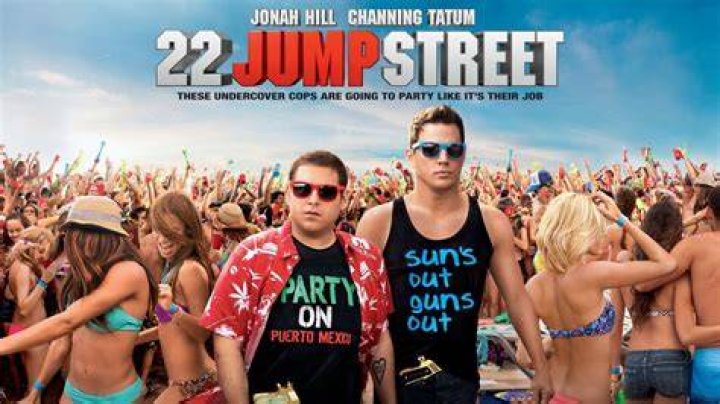
More than a decade after mumbling four heavily accented words in 22 Jump Street, Channing Tatum still cannot escape his most durable punchline. While promoting his true-crime feature Roofman, in which he portrays notorious real-life fugitive Jeffrey Manchester, the actor quipped that his cinematic destiny has essentially forced his hand. As highlighted in a Yahoo Report covering the press tour, Tatum joked that after spending years being accosted by fans quoting the line, stepping into the shoes of yet another high-profile Jeff means he might as well surrender to the state bureaucracy and legally change his name.
The self-deprecating remark instantly ignited social feeds, reigniting an internet artifact that first took root in 2014. What began as a throwaway bit of physical comedy between Tatum and Jonah Hill has endured across Vine, YouTube compilations, and TikTok remix culture. Tatum's latest role proves that even prestige drama cannot completely sever ties with an apex pop-culture meme.
📌 Quick Summary:
- The Viral Rebirth: Channing Tatum reignited the 2014 "My Name Is Jeff" phenomenon while doing press for his biographical drama Roofman.
- The Role Behind the Joke: Tatum stars as real-world armed robber Jeffrey Manchester, marking his second major cinematic run as a character named Jeff.
- The Cultural Staying Power: Over a decade after 22 Jump Street, an improvised line delivery continues to outlast conventional Hollywood marketing cycles.
The Accidental Punchline That Outlived 22 Jump Street
When directors Phil Lord and Christopher Miller sent undercover cops Morton Schmidt and Greg Jenko into a Mexican cartel hideout, the script did not call for an era-defining meme. Jenko, played by Tatum, was supposed to blend in with vicious syndicate enforcers. Dressed in a silk shirt with a pencil-thin mustache, he was instructed to keep his mouth shut. When pressed by a skeptical boss, Jenko panic-improvised an unconvincing, high-pitched identity claim: "My name is Jeff."
The comedy hinged on the contrast between Tatum's muscular frame and the meek vocal delivery. Audiences seized on it immediately. Between June 2014 and the end of 2015, six-second Vine clips of the scene racked up tens of millions of loops. It became conversational shorthand across high school hallways, gaming lobbies, and comment threads. Tatum later admitted he had no idea the delivery would stick to his public identity quite so aggressively.
Jonah Hill played the ideal foil in that exchange, offering a bewildered glare that mirrored the audience's disbelief. That dynamic carried the film to a massive $331 million global box office haul. Yet long after theatrical receipts settled, the phrase took on an autonomous digital life, separated entirely from the plot of the undercover action comedy.
Stepping Into the Shoes of Real-Life Fugitive Jeffrey Manchester
The irony reached its peak when Tatum signed on to headline Roofman, directed by Derek Cianfrance. The drama tracks the bizarre life of Jeffrey Manchester, a former U.S. Army reserve officer convicted of robbing dozens of McDonald's locations nationwide by drilling through their roofs. Manchester later staged a daring prison escape in 2004, spending months hiding in plain sight inside a North Carolina Toys "R" Us and a Circuit City before his recapture.
The character is complex, charming, and deeply flawed, a dramatic showcase designed to exhibit Tatum's range. Yet the moment trade publications announced Tatum would play Jeffrey Manchester, online communities bypassed the gritty historical details to revive the 2014 soundbite. Reddit film boards and X users flooded casting announcements with clips of Greg Jenko. Tatum leaned directly into the overlap, acknowledging during early festival screenings that the script's title character felt like cosmic retribution for an ad-libbed joke from twelve years earlier.
Tracking the Evolution of a Decade-Long Viral Audio Byte
| Phase & Era | Distribution Vehicle | Cultural Footprint |
|---|---|---|
| Theatrical Origin (2014) | 22 Jump Street theatrical release | Spontaneous theater laughter; word-of-mouth quotes among theatergoers. |
| Vine Loop Era (2014, 2016) | Vine, early Instagram video, dubstep edits | Over 500 million aggregate loops; remixed into electronic dance tracks and soundboards. |
| Algorithmic Resurgence (2020, 2023) | TikTok trending audio templates | Used as irony-soaked background audio for awkward introductions and fail videos. |
| Meta-Reclamation (2025, 2026) | Roofman promotional junkets | Tatum directly adopts the joke during press rounds; bridges comedy past with prestige drama. |
Hollywood Rebranding and the Reality of Celebrity Legal Names
Tatum's joke about submitting official name-change paperwork touched on a legitimate Hollywood tradition. Performers frequently discard their birth names for professional expediency. Screen Actors Guild rules mandate unique stage names, driving actors like Nicolas Kim Coppola to adopt Nicolas Cage, or Winona Laura Horowitz to become Winona Ryder. In extreme cases, performers actually visit the county clerk to align their birth certificates with their working identities.
Aaron Paul dropped his family surname Sturtevant permanently in court. Michael Keaton was born Michael Douglas, adopting a pseudonym to avoid confusion with the Oscar-winning star of Wall Street. But altering a legal moniker purely due to a runaway comedic catchphrase remains an exclusively humorous proposition. Tatum's public identity is worth hundreds of millions across brand partnerships and production credits under Free Association, his production banner. Trading "Channing Matthew Tatum" for a viral punchline would complicate trademark registrations, passport filings, and international contracts.
The contrast between serious industry legalities and Tatum's playful reaction highlights how modern stars manage their public profiles. Rather than bristling against an old, juvenile gag, Tatum embraces it. That self-effacing instinct shields A-list talent from looking detached or humorless in an online environment that rarely lets celebrities shed their past.
Why Phonetic Absurdity Keeps Pop Culture Memes Alive
Internet humor burns through trends at an exhausting rate. The vast majority of blockbuster one-liners evaporate within eighteen months of a film leaving theaters. The longevity of this specific scene rests on phonetic simplicity. The sentence requires zero contextual knowledge of the movie to function. It operates as pure, unadorned awkwardness.
Comedy theorists often point to the sharp dissonance of the line. Jenko is an imposing physical presence attempting an undercover disguise, yet his voice cracks like a timid middle schooler. The phrase requires no setup. Anyone entering an unfamiliar room, fumbling an introduction, or suffering an identity crisis can deploy it instantly. That utility turned the clip from a standard movie quote into a portable social mechanism.
When Derek Cianfrance cast Tatum in Roofman, the director was hunting for Manchester's bizarre mix of disarming charisma and reckless confidence. Manchester was an offender who apologized to employees, offered them coats inside walk-in freezers, and rode bicycles through department stores after dark. The casting works precisely because Tatum embodies earnest charm. That same earnestness is what made his 2014 line delivery funny in the first place.
Frequently Asked Questions (FAQ)
Did Channing Tatum actually change his legal name to Jeff?
No. Tatum's comment during the Roofman press cycle was entirely tongue-in-cheek. His legal name remains Channing Matthew Tatum, and he has not filed any formal paperwork with state agencies or courts to modify it.
Where did the original meme originate?
The line first appeared in the 2014 comedy 22 Jump Street, directed by Phil Lord and Christopher Miller. Tatum's character, undercover officer Greg Jenko, attempts to intimidate a group of cartel bosses while disguised, but panics and nervously says, "My name is Jeff."
What is the true story behind the movie Roofman?
Roofman dramatizes the criminal career of Jeffrey Manchester, a former Army reservist who robbed an estimated 40 to 60 fast-food restaurants across the United States by cutting holes in their roofs. After escaping prison in 2004, Manchester lived secretly inside a North Carolina Toys "R" Us for months before law enforcement apprehended him.
When Satire and Serious Cinema Cross Paths
Channing Tatum has navigated a career trajectory that few leading men manage to sustain. He moved seamlessly from franchise dance films and raucous studio comedies to intense character studies directed by Bennett Miller, Steven Soderbergh, and Derek Cianfrance. He understands that trying to outrun a widely beloved piece of comedic history is futile.
By joking that he might as well surrender to the courthouse and become Jeff on paper, Tatum demonstrated the easiest way to handle digital immortality: lean directly into the absurdity. As Roofman heads through its global release run, theater audiences may prepare for a tense crime drama about a fugitive hiding in retail ceilings. Yet the moment Tatum appears on screen as Jeffrey Manchester, a collective, knowing chuckle will ripple across the dark room. Some punchlines simply refuse to fade.


