Why Eric Northman Remains HBO's Most Complex and Ruthless Vampire Hero
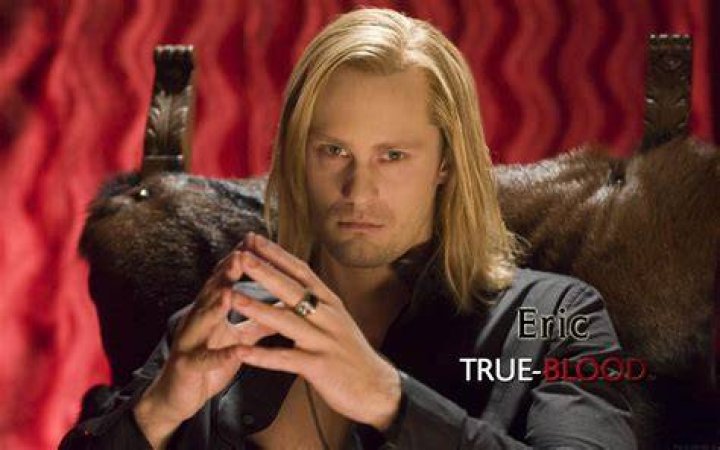
When HBO launched True Blood in September 2008, the modern vampire genre was suffocating under brooding adolescent melodrama. Then came Eric Northman. Perched atop a raised throne in the back of the Shreveport goth club Fangtasia, Alexander Skarsgård introduced a predatory Norse prince who refused to apologize for his violent appetites. As Skarsgård later revealed in an Entertainment Weekly Report, embodying that 1,000-year-old Scandinavian warrior directly seeded his decade-long ambition to produce an unvarnished cinematic Viking saga, ultimately realizing that creative vision in Robert Eggers' 2022 film The Northman.
Eric did not pine for mortality. He did not seek divine redemption through clean suburban living. Instead, he treated humanity with amused indifference, governing his territory with absolute pragmatism while maintaining an unpredictable, caustic wit. Nearly two decades after his debut, Northman stands apart from television's crowded crypt of immortals as an archetype of raw power tempered by unyielding devotion to his chosen bloodline.
📌 Key Takeaways:
- The Character Dynamic: Eric subverted the tortured vampire archetype by embracing apex predation, bureaucratic efficiency, and an unapologetic moral neutrality.
- Viking Authenticity: Alexander Skarsgård grounded the role in genuine Norse historical texture, an obsession that sparked his development of the 2022 feature film The Northman.
- The Lineage Structure: Northman's profound emotional anchors came from familial bonds with his ancient maker Godric and his progeny Pam, rather than standard romantic heroics.
From Fangtasia Nightclub to Area 5 Sheriff: The Architecture of Power
Alan Ball’s adaptation of Charlaine Harris’s The Southern Vampire Mysteries built its universe on political realism. Vampires had "come out of the coffin" thanks to Japanese synthetic blood, creating a fragile legal framework where immortals registered with governments and operated legitimized businesses. Eric understood this geopolitical chess match far better than his peers.
Operating out of the neon-lit Fangtasia nightclub, Northman functioned as the official Area 5 Sheriff within Louisiana’s vampire hierarchy. The bar was never just an eccentric tourist trap catering to vampire groupies; it was an intelligence hub, a money-laundering channel, and a lethal detention facility hidden in plain sight. Eric sat elevated above the dance floor, wearing Scandinavian designer leather, assessing every threat that entered his perimeter.
Unlike traditional horror antagonists who ruled through mindless terror, Eric wielded bureaucratic leverage. He answered to the Louisiana Monarchy and later tangled with the fundamentalist Vampire Authority, executing orders with glacial disinterest until political survival demanded extreme violence. When human interlopers or rebellious fledglings stepped out of line, Eric's retaliation was swift, calculated, and devastating. He recognized that authority in a post-revelation world required theatrical brutality matched with legal manipulation.
Godric, Pam, and the Ancient Ties of Blood
The character's moral architecture crystallized around his maker and his progeny. In the mythology of True Blood, the bond between sire and fledgeling superseded romantic infatuation or political loyalty. Eric’s unyielding reverence for his maker, Godric, introduced unexpected vulnerability into an otherwise ruthless creature.
When Godric, a 2,000-year-old pacifist former Roman slave, chose to end his existence by meeting the sun atop a Dallas rooftop in Season 2, Skarsgård stripped Eric of his predatory vanity. Falling to his knees, tears of blood streaking his face, Eric wept openly and begged his maker for permission to burn alongside him. That single scene exploded the cardboard villain mold, revealing an immortal warrior anchored by ancient filial piety.
That same ferocious loyalty defined his dynamic with Pam Swynford De Beaufort, his sardonic progeny whom he turned in early 20th-century San Francisco. Their relationship bypassed conventional master-servant conventions, evolving into an ironclad partnership rooted in shared pragmatism and dry cynicism. While Eric maintained chaotic entanglements with humans and monarchs, his instinct to shield Pam remained absolute. Even when releasing her from maker-bonds during the Authority crisis, his choice was driven by a desperate necessity to preserve her life.
The Sookie Stackhouse Dynamic and the Bill Compton Rivalry
The heart of the series' commercial success rested on the volatile love triangle between Eric, telepathic waitress Sookie Stackhouse, and mainstreaming poster-boy Bill Compton. While Bill presented himself as a reformed Southern gentleman striving for civil integration, Eric exposed the hypocrisy underpinning Compton's southern-fried gentility.
The Bill Compton rivalry operated on multiple tactical fronts:
- Bill operated as an undercover asset under Eric’s geographic jurisdiction, sparking constant friction over territory and clandestine Royal agendas.
- Bill chased social acceptance through compromised assimilation; Eric viewed human institutions with clinical detachment, taking what he needed without philosophical hand-wringing.
- Eric recognized Sookie's fae heritage early on, initially viewing her as an operational asset before falling into genuine romantic fixation.
The dynamics shifted radically during Season 4's amnesia arc, adapted from Harris's novel Dead to the World. Cursed by necromancer Hallow Stonebrook, Eric lost a thousand years of accumulated malice, revealing a gentle, trusting creature who fell deeply in love with Sookie in rural Bon Temps. Yet once his memories returned, Eric did not discard that warmth entirely. He integrated the experience into his identity, loving Sookie with the fierce, possessive honesty Bill routinely suppressed under moralistic excuses.
A Millennium of Violence: How Eric Northman Evolved Across True Blood
Eric Northman's screen presence spanned distinct narrative chapters, shifting from regional underworld boss to global rebel against immortal dogmatists.
| Narrative Phase | Socio-Political Role | Defining Psychological Pivot |
|---|---|---|
| Seasons 1, 2 (2008, 2009) | Area 5 Sheriff & Proprietor of Fangtasia | Absolute apex predator; emotional crack appears during Godric's sunrise suicide. |
| Seasons 3, 4 (2010, 2011) | Vengeance Seeker / Amnesiac Fugitive | Executes Russell Edgington's line for his family's murder; experiences vulnerability with Sookie. |
| Seasons 5, 6 (2012, 2013) | Authority Prisoner & Anti-Human Insurgent | Rejects Lilith fundamentalism; wages brutal guerilla war against Governor Burrell’s camps. |
| Season 7 (2014) | Hepatitis V Outlaw & Corporate Monopolist | Survives terminal infection; commercializes the cure to establish global corporate dominance. |
By the series finale, while other characters chased domestic bliss or met tragic ends, Eric reclaimed his kingdom. Flanked by Pam on the floor of the New York Stock Exchange, he monetized "New Blood," reigning as a corporate billionaire while returning to his beloved Fangtasia throne. It was the only ending that honored his thousand years of survival: unbowed, wealthy, and fundamentally unchanged by suburban ideals.
The Viking Vampire Origin and the Spark for The Northman
The character's backstory is rooted in violent 10th-century history. Born the son of a Norse king, Eric was an accomplished warrior who faced sickness, slaughter, and freezing Scandinavian winters before Godric found him dying on a blood-soaked battlefield. That authentic warrior ethos separated him from aristocratic European vampires modeled after Victorian gothic tropes.
Skarsgård channeled that heritage physically. Standing 6 feet 4 inches with an imposing athletic frame, he carried himself with deliberate, predatory economy. Every strike was precise. When Eric decapitated human guards or tore hearts from chests, Skarsgård avoided theatrical flourishes, playing the action with the terrifying efficiency of a veteran raider.
That historical identity ran deeper than scripted dialogue. Skarsgård's deep connection to Eric's origins fostered a profound dissatisfaction with Hollywood's conventional, hyper-stylized depictions of Norse mythology. Working closely with visionary director Robert Eggers, Skarsgård spent years developing an uncompromising historical epic. The resulting 2022 masterpiece, The Northman, emerged directly from Skarsgård's desire to strip away modern pop-culture polish and capture the primal, fatalistic core of the Viking warrior he first explored under Alan Ball's direction.
Charlaine Harris’s Novels Versus Alan Ball’s Screen Adaptation
Book purists and television audiences often debate how Northman transformed across mediums. In Charlaine Harris’s literary series, Eric is notably more flamboyant, frequently dressing in neon spandex, pink tracksuits, and silk shirts to mock human fashion while disarming his prey. Harris gave him an internal narrative that leaned more heavily into cold commercial pragmatism and overt physical attraction to Sookie.
Alan Ball and writer-producer Brian Buckner grounded the character for television. They dialed back the eccentric wardrobe in favor of stark leather, dark tailoring, and muted modern streetwear, letting Skarsgård’s physical gravity carry the humor.
The screen adaptation elevated his tragedy. Eric’s pursuit of Russell Edgington in Season 3 became a century-spanning revenge quest for the murder of his royal mortal family, an angle executed with Shakespearean brutality. Television Eric was darker, far more dangerous, and less forgiving than his print counterpart, transforming a beloved romantic foil into an imposing cultural force.
Frequently Asked Questions (FAQ)
Q1: How old is Eric Northman, and who turned him into a vampire?
Eric Northman was born in the late 10th century in Scandinavia, making him roughly 1,000 to 1,100 years old during the events of True Blood. He was made by Godric, an ancient vampire originally from Gaul who lived over two millennia before meeting the sun in Season 2.
Q2: Why did Eric Northman lose his memory in Season 4?
Eric lost his memories after clashing with Hallow Stonebrook, a powerful witch and necromancer who placed an ancient binding curse on him. This amnesia arc stripped away his ruthless defense mechanisms and allowed him to fall in love with Sookie Stackhouse before his memories were restored.
Q3: Did Eric Northman end up with Sookie Stackhouse in the finale?
No. Eric and Sookie parted ways romantically. Sookie chose to seek a normal mortal life away from high-stakes vampire politics, while Eric returned to his imperial pursuits alongside Pam, ultimately cured of Hepatitis V and running a multi-billion-dollar synthetic blood corporation.
The Lasting Legacy of TV's Premier Norse Immortal
Modern television routinely struggles to write characters who are monstrous yet genuinely captivating. Writers often cave to redemption arcs, systematically domesticating ruthless antiheroes until their initial edge dissolves into generic melodrama.
Eric Northman never surrendered his edge. Skarsgård understood that Eric’s charm existed precisely because he was terrifying, not in spite of it. He was a thousand-year-old Norse berserker navigating corporate boardrooms, blood bars, and ancient vampire politics with unbothered supremacy. As audiences tire of sterile, hyper-moralized streaming narratives, Northman’s unapologetic brutality, razor-sharp wit, and ancient code of loyalty ensure his throne in television history remains entirely unchallenged.


