Why Everyone Is 'Crashing Out': Inside the Internet's Most Chaotic Meme Craze
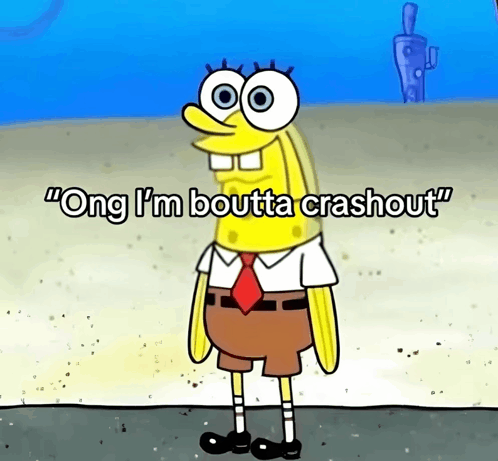
Every corner of social media has hit its boiling point. From cinematic animated reptiles snapping on screen to retail investors torching portfolios during chaotic market swings, the crashing out meme has cemented itself as the definitive shorthand for public meltdowns. As documented in a deep-dive Entertainment Weekly Report profiling Tom the Lizard from Disney-Pixar's Hoppers, digital audiences have found irresistible catharsis in watching individuals abandon self-preservation to unleash pure, unadulterated rage.
The term captures something distinct from ordinary anger. It describes the exact second someone decides that consequences no longer matter, choosing total combustion over compromise. What started as localized street slang has grown into a dominant cultural template across TikTok, X, and YouTube, redefining how online communities react to financial ruin, workplace burnout, and pop culture drama.
📌 Key Takeaways:
- The Core Meaning: To "crash out" means recklessly losing control in a fit of rage, discarding personal consequences, safety, or legal fallout in pursuit of immediate retaliation.
- Cultural Roots: The phrase originated in African American Vernacular English (AAVE), specifically within Southern regional communities, before migrating into hyper-viral TikTok reaction formats.
- The 2025, 2026 Shift: Digital creators turned the phrase into an ironic visual archetype, highlighted by animated mascots like Tom the Lizard and high-profile financial disasters across Wall Street and crypto markets.
How Street Vernacular Became Digital shorthand
Before it populated viral reaction templates and corporate brand accounts, the term carried serious weight. In African American Vernacular English (AAVE), particularly across Louisiana and broader Southern urban centers, to "crash out" meant making a fatal or life-altering mistake during an escalated dispute. It described an individual willing to spend the rest of their life behind bars or risk their physical survival simply to win a street-level feud. The core crash out definition centered on reckless self-sabotage driven by pride and fury.
The phrase drifted into rap lyrics across the early 2020s, showing up in tracks from artists like YoungBoy Never Broke Again. As youth subcultures adopted the cadence, algorithmic platforms stripped away its strictly carceral connotations. On TikTok and Instagram, Gen Z slang transformed the concept into hyperbolic humor. By late 2024, spilling an iced latte on a commuter train or losing a high-stakes match in Call of Duty was framed as a valid justification to crash out. The phrase shifted from real-world danger to a theatrical posture of absolute irritation.
From Animation to Wall Street: The Anatomy of a Meltdown
The explosion of the crashing out meme accelerated when visual culture gave the phrase a memorable face. In early 2026, footage from Pixar's animated project Hoppers introduced audiences to Tom the Lizard. With dilated pupils, flared nostrils, and trembling claws, the character became an instant viral reaction image. Clips of Tom slamming surfaces paired with aggressive bass-boosted audio tracks generated billions of impressions on TikTok within weeks.
The meme quickly leaped from fictional cartoons into raw financial volatility. On June 24, 2026, shares of Wendy’s surged over 40% during an unexpected trading session after retail investors on Reddit's WallStreetBets orchestrated an aggressive short squeeze, driving volume to historic intraday highs. Financial commentary dubbed the speculative frenzy a collective crash out, with day traders openly celebrating high-risk margin calls with animated clips of Tom the Lizard.
A month later, on July 24, 2026, another high-profile financial implosion mirrored the meme. The controversial meme coin tied to internet personality Andrew Tate plummeted over 40% following escalating legal crackdowns in Eastern Europe. Disgruntled holders flooded X with crash out reaction videos, smashing computer monitors, burning merchandise, and sharing voice notes screaming at crypto influencers. The aesthetic of self-inflicted disaster had become mainstream theater.
Tracking the Crash Out Evolution: 2023 to 2026
The journey of the phrase from regional subcultures to global corporate boardrooms illustrates how fast internet subcultures cycle through linguistic appropriation, memetic transformation, and institutional co-optation.
| Phase & Years | Dominant Format & Origin | Primary Cultural Drivers |
|---|---|---|
| Underground Era (2020, 2023) | Southern AAVE rap lyrics, street interviews, localized drill rap videos | Real-world altercations, serious criminal risk, life-altering legal exposure |
| Algorithmic Pivot (2024, 2025) | TikTok viral sound snippets, POV sketch comedy, gaming rage quit montages | Ironic venting, workplace exhaustion, relationship conflicts, Gen Z humor |
| Mainstream Saturation (2025, 2026) | Tom the Lizard clips from Hoppers, financial market meltdowns, brand social accounts | Speculative trading, pop-culture fandoms, political theater, corporate marketing |
The Psychology of Modern Outrage and Digital Burnout
Why did a phrase rooted in physical recklessness capture the collective imagination of a generation? The answer lies in widespread emotional exhaustion. Navigating economic instability, rising housing costs, algorithmic feeds, and professional gridlock produces sustained internal friction. For many digital natives, losing your temper feels like an honest reaction to absurd circumstances.
Platforms reward disproportionate behavior. Quiet frustration earns zero engagement; unhinged crash out moments capture millions of views. On TikTok, the algorithm favors creators who break plates, scream into dashboard cameras, or smash desk setups over minor inconveniences. The performance of instability has become a profitable genre of content. Users live vicariously through others throwing caution to the wind.
A report published by Crisis Text Line on August 18, 2025, noted a growing trend among adolescent contacts referencing "crashing out" during moments of acute emotional distress. Mental health practitioners noted that while the slang serves as playful hyperbole for most users, it also masks genuine feelings of helplessness. The line between harmless digital theatrics and legitimate emotional breakdown can blur when chronic stress strips away coping mechanisms.
The Double-Edged Sword of Internet Meme Culture
The commodification of the phrase follows a predictable trajectory. Once a linguistic artifact achieves ubiquity, corporate entities attempt to sanitize and profit from it. Fast-food marketing teams, political campaigns, and consumer tech brands routinely tweet about "crashing out" when their apps experience brief server outages. This dilution strips the term of its original context, turning edge into bland corporate copy.
At the same time, this memetic shield offers emotional distance. Laughing at someone destroying an office cubicle or dumping thousands of dollars into an erratic altcoin allows observers to process modern instability safely. The crash out video is the modern slapstick comedy. It replaces the classic banana peel with a shattered smartphone, turning everyday friction into a viral punchline.
Frequently Asked Questions (FAQ)
Q1: What does "crashing out" mean in simple terms?
A1: Crashing out means completely losing self-control during an argument or crisis, acting out with extreme rage or reckless behavior, and disregarding any personal, social, or legal consequences.
Q2: Where did the crashing out meme originate?
A2: The phrase originated in African American Vernacular English (AAVE), primarily in Southern communities and drill rap cultures, to describe violent retaliation. It migrated to TikTok and mainstream social media between 2024 and 2026, evolving into an ironic meme format used for animated characters, gaming rants, and financial meltdowns.
Q3: Who is Tom the Lizard and why is he linked to crashing out?
A3: Tom the Lizard is a character from Disney-Pixar's film Hoppers. A scene showing him in a wild, wide-eyed fury was clipped across social media in early 2026, becoming the web's definitive visual meme for flying into an uncontrollable rage.
Q4: Is the phrase considered offensive or inappropriate to use?
A4: While widely used across mainstream internet culture, users should recognize its origins in AAVE and its initial, serious associations with real-world violence and legal peril. In professional settings, using the phrase can sound overly informal or trivializing of genuine emotional crises.
What the Crash Out Phenomenon Tells Us About Modern Attention
The staying power of the crashing out meme reflects a culture strained by constant friction. By converting chaotic meltdowns into bite-sized entertainment, internet users have transformed panic into a shared running joke. As long as economic shocks, high-stakes internet arguments, and absurd media moments continue to test human patience, people will find reasons to celebrate hitting the eject button on sanity.


