Why Is Homer Simpson Adding a Butterfinger to Orlando? The Viral Meme Explained

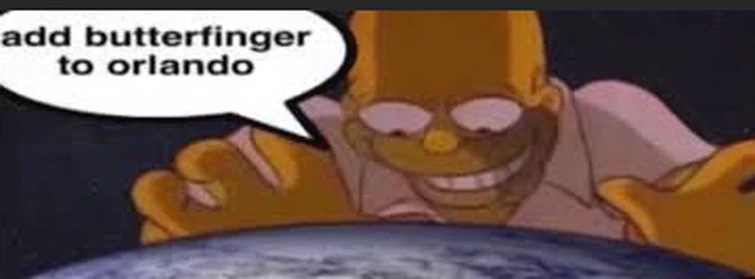
A giant, cosmic Homer Simpson looms over the Western Hemisphere, clutching a colossal Butterfinger candy bar with a look of manic concentration. His target is not Springfield, nor a nuclear reactor, but the sunbaked coordinates of Central Florida. For millions of social media users scrolling across X, TikTok, and Reddit, the caption "add butterfinger to orlando" has sparked a blend of profound confusion and hysterical laughter. As documented in a detailed Know Your Meme Report, this bizarre webcomic trend represents a peak moment in modern internet culture, where anti-humor, nostalgic intellectual property, and community-driven shitposting collide.
The image refuses to offer an obvious punchline. There is no political allegory, no topical movie tie-in, and no sponsored corporate campaign from Ferrero, the current manufacturer of the Butterfinger candy bar. Instead, the joke thrives on aggressive non sequitur logic. To understand why a cartoon patriarch is dropping confectionery ordnance onto Disney World's backyard, you have to peel back several layers of niche online communities, surreal webcomic artists, and the evolving nature of post-ironic humor.
📌 Quick Summary:
- The Root Origin: Created by surrealist artist absolutenutcase162, known for unsettling, darkly absurd comic strips that subvert beloved childhood animation.
- The Core Premise: Homer Simpson hovers in low Earth orbit acting as an omnipotent, celestial deity carrying out arbitrary geographic modifications.
- The Cultural Impact: The phrase mutated into an open-ended meme template across visual platforms, fueling an entire subculture of map edits and corporate parodies.
The Absurdist Roots of Artist absolutenutcase162
The viral phenomenon did not emerge from a mainstream marketing board or a Reddit thread dedicated to standard television jokes. It originated from the mind of an online creator known as absolutenutcase162. Active across platforms like Instagram, Twitter, and specialized comic boards, the creator developed a devoted following throughout 2023 and 2024 through hyper-detailed, unsettling comic strips. Their signature style hinges on taking universally recognized Saturday morning icons and plunging them into existential horror or mundane lunacy.
Before launching Homer Simpson into orbit, the artist built a cult reputation through dark SpongeBob comic parodies. These strips featured Bikini Bottom residents engaging in grotesque body modifications, cosmic rituals, or psychologically punishing retail jobs. The visuals mimic the hand-drawn animation frames of late 1990s television, but the dialogue reads like untranslated fever dreams. The juxtaposition proved addictive to an audience weary of polished, formulaic online humor. When the artist shifted focus to Springfield, the absurdity intensified.
Absurdist humor works through cognitive disruption. When an audience expects a traditional set-up and punchline, deliberate incoherence forces the brain to manufacture its own amusement. Absolutenutcase162 mastered this dynamic by rendering ridiculous situations with immaculate, classical comic-book draftsmanship. The image of Homer looking over Earth is not a slapped-together digital collage; it is an intricately shaded, expressive illustration that treats an impossible scenario with deadpan artistic seriousness.
The Celestial Homer Simpson Template and the Orlando Anomaly
The comic strip shows Homer Simpson floating through the cold vacuum of space, staring down at planet Earth with intense gravity. Instead of a cosmic staff or astronomical instrument, he grips a yellow-wrapped Butterfinger candy bar. Below him, the continental United States stretches across the frame. A single imperative command text bubble hangs over the panel: "add butterfinger to orlando."
The choice of ingredients fuels the absurdity. The Butterfinger candy bar holds a deep, nostalgic connection to Simpsons internet culture. During the late 1980s and early 1990s, the candy bar was inextricably linked to The Simpsons through ubiquitous television commercials featuring the famous catchphrase, "Nobody better lay a finger on my Butterfinger." For anyone raised on classic television syndication, Homer or Bart holding that jagged chocolate-and-peanut-butter brick carries immediate subconscious recognition.
Then comes Orlando, Florida. Orlando carries specific cultural baggage: the capital of hyper-commercialized theme parks, sprawling suburbs, humid swampland, and Florida weirdness. Why Orlando? The comic never answers. Placing a candy bar in that specific metropolitan area sounds like a bug report from a broken video game simulation or a garbled command typed into a malfunctioning satellite console. The sheer lack of explanation became the engine of the meme's spread.
The Evolution from Niche Art to Viral Trend
Tracking the trajectory of the meme reveals how quickly digital communities can convert a single piece of standalone surrealism into a widespread template. The comic did not stay confined to its creator's feeds. Within weeks, the panel was clipped, stripped of context, and remixed across digital media platforms.
| Phase & Date Range | Platform Milestone | Cultural Transformation |
|---|---|---|
| May 2024 | Know Your Meme registers initial indexing; original comic published by absolutenutcase162. | Underground popularity within surreal webcomic, anti-meme, and post-irony art circles. |
| Late 2024, Early 2025 | Cross-posting to TikTok audio trends, Reddit's r/comedynecrophilia, and visual message boards. | Phrase shifts into an all-purpose reaction phrase used to derail unrelated arguments. |
| November 2025, 2026 | Secondary spin-offs enter Know Your Meme records; dynamic video remixes proliferate. | Global recognition as a classic shitposting template for geographical modification edits. |
The timeline illustrates a classic lifecycle in modern shitposting lore. The joke began as bespoke visual art, transitioned into an insider reference for niche online communities, and finally broke out into mainstream awareness. Users on TikTok began animating the sequence, setting Homer’s planetary intervention to ominous, ambient synthesizer drones. Others created hyper-specific map modifications, showing Google Earth satellite renders of Orange County, Florida, crushed beneath an asphalt-sized slab of crisped peanut butter.
Why Digital Platforms Embraced Post-Irony
To grasp why this image resonated so heavily, consider the broader state of comedy on social networks. Traditional punchlines, meme formats built on predictable setups, and clean topical references face severe audience fatigue. Algorithmic feeds are flooded with manufactured engagement bait, brand-safe marketing banter, and automated content. In response, web audiences gravitate toward jokes that cannot easily be weaponized by a corporate marketing manager.
The "add butterfinger to orlando" phenomenon thrives because it resists easy categorization. It represents pure, unfiltered nonsense humor. Sociologists and media analysts who study internet folklore note that Gen Z and Gen Alpha users frequently gravitate toward humor that feels impervious to commercial co-optation. When an image makes no rational sense, it creates an informal barrier of entry: you either instantly find the absurdity hilarious, or you scroll past in bewilderment.
The format also offers near-infinite flexibility. Users quickly began swapping out both the object and the target location. Within months, derivatives flooded the internet: celestial characters dropping random grocery items on Tokyo, London, or small Midwestern towns. The structural formula, a massive omnipotent entity performing an inconsequential, mundane geographic task, became a plug-and-play visual gag for creative creators.
Decoding the Florida Connection
Orlando's inclusion was not entirely accidental in the grander tapestry of American folklore. For decades, the state of Florida has occupied an eccentric role in news culture, typified by the enduring "Florida Man" archetype. Placing the epicenter of a bizarre cosmic intervention in Central Florida feels weirdly appropriate to an audience conditioned to associate the state with unexplainable real-world headlines.
Adding a Butterfinger bar also invokes the commercial sensory overload of Orlando itself. Home to Universal Studios, Walt Disney World, and International Drive, Orlando is America's playground of consumer iconography. Dropping a giant corporate chocolate bar onto the city reads like a literal manifestation of its physical reality. Whether absolutenutcase162 intended this subtle cultural commentary or simply picked two arbitrary words that sounded funny together, the pairing resonated strongly with the public imagination.
Frequently Asked Questions (FAQ)
Q1: What does "add butterfinger to orlando" actually mean?
The phrase has no hidden, literal, or coded meaning. It is a work of intentional absurdist humor from artist absolutenutcase162, intended to provoke confusion through surreal imagery and a completely random juxtaposition of pop culture icons and real-world geography.
Q2: Is this meme part of an official Simpsons episode or Butterfinger promotion?
No. Neither 20th Television, The Simpsons creative team, nor Ferrero (makers of Butterfinger) had any involvement in creating the comic. It is an independent, fan-made parody that leverages classic 1990s television advertising nostalgia.
Q3: Why did the Homer Simpson template become popular years after its release?
Memes that rely on pure anti-humor often spread in waves. As video creators on platforms like TikTok and YouTube Shorts paired the still comic panels with dramatic orchestral music, cinematic sound effects, and 3D map animations, the visual gained a second life as an animated meme template.
The Enduring Appeal of Unfiltered Internet Culture
The meteoric rise of the cosmic Homer comic marks a refreshing reminder of what keeps internet humor vibrant. Even in an online environment increasingly dominated by algorithmic feeds, search-optimized articles, and corporate brand accounts attempting to speak in slang, authentic creativity still bubbles up from independent weirdos with digital drawing tablets.
Absolutenutcase162 did not build an audience by chasing analytics or appealing to lowest-common-denominator humor. The artist made a wildly surreal panel featuring Homer Simpson, a Butterfinger candy bar, and the city of Orlando simply because the visual was intrinsically, unexplainably funny. As the image continues to circulate and evolve across online platforms, it stands as proof of the persistent power of pure nonsense in the digital age.


