Why Modern Hollywood Stopped Making Tearjerkers Like The Notebook (And What Replaced Them)
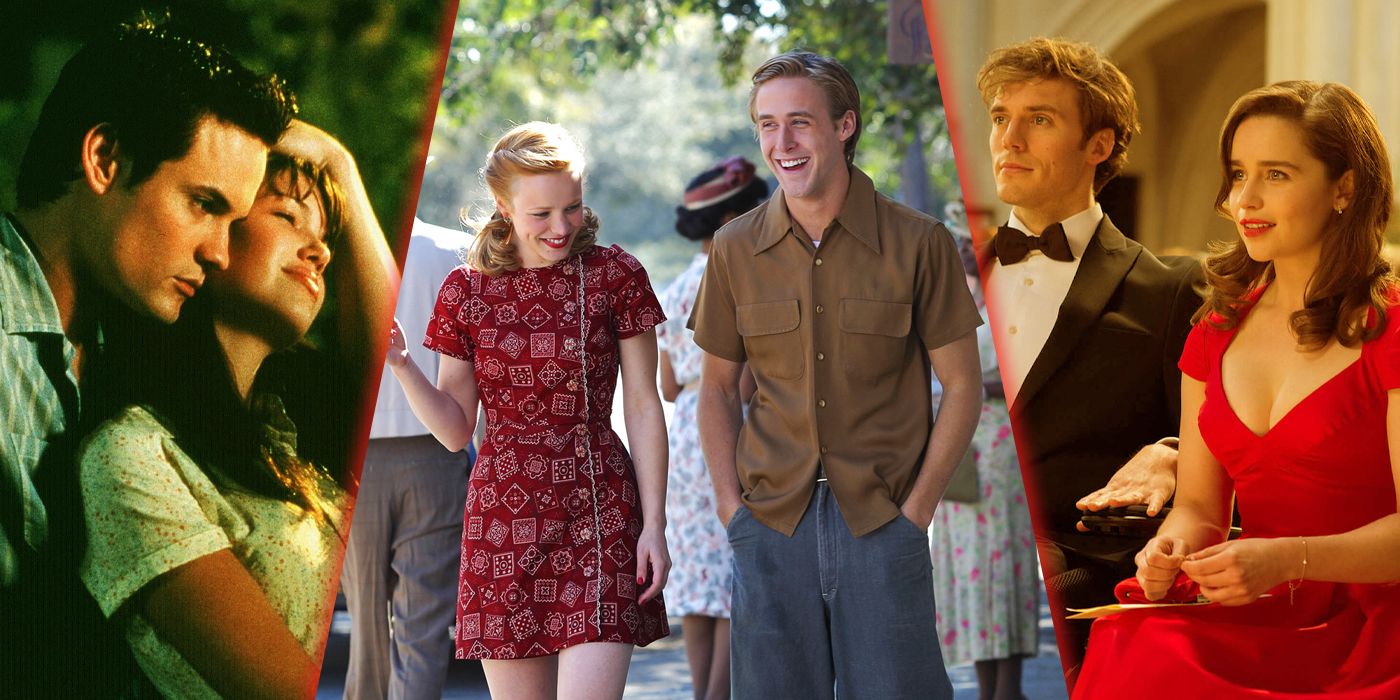
Twenty-two years after Noah Calhoun rowed through a cypress swamp clouded with white geese, the mid-budget studio melodrama feels like an artifact from a lost civilization. Nick Cassavetes’s 2004 adaptation of Nicholas Sparks’s novel grossed $118.3 million worldwide against a modest $29 million budget, establishing a cultural high-water mark for 21st-century passion. Yet theatrical slates today have almost entirely purged the sweeping period romance from multiplex screens. A retrospective analysis from the SlashFilm Report underlines how audiences searching for movies similar to The Notebook now encounter algorithmic streaming libraries rather than major summer tentpole releases.
The disappearance was neither accidental nor sudden. Studios systematically abandoned sincere, high-stakes relationship dramas as international box office math began favoring dialogue-light action spectacles. In their place came irony, fast-paced genre hybrids, and low-risk franchises. Still, viewer hunger for unironic emotional catharsis never diminished; it merely migrated to fresh distribution ecosystems and global television productions.
📌 Key Takeaways:
- The Theatrical Exodus: Mid-budget melodramas earning $50M, $120M vanished from cinema schedules when studio executives shifted capital into four-quadrant franchise IP.
- The Essential Formula: Lasting tearjerkers require tactile production values, high-stakes external barriers, and visceral, unrehearsed screen chemistry.
- The Modern Heirs: Streaming services and foreign productions have quietly revitalized classic star-crossed lovers tropes for audiences seeking raw emotional payoff.
The Vanishing Mid-Budget Romance: How Studio Economics Shifted
Between 1999 and 2014, Hollywood treated heartfelt melodramas as reliable financial engines. Screen Gems, New Line Cinema, and Relativity Media poured tens of millions into romance properties because home video, cable syndication, and domestic box office delivered steady margins. Films like Dear John unseated Avatar at the domestic box office in February 2010 with a $30.5 million debut, proving that counter-programming could topple visual-effects giants.
The collapse of physical DVD sales shattered that business model. When theatrical releases began depending heavily on non-English-speaking territories, studios discovered that word-heavy romantic dialogue and localized cultural social norms translated poorly across foreign markets compared to superhero battles. Mid-budget productions budgeted between $25 million and $50 million were squeezed out. Major studios redirected capital toward massive $200 million tentpoles or micro-budget horror films costing under $10 million, leaving adult romance without an economic home in theaters.
The Lightning-in-a-Bottle Factor: Ryan Gosling and Rachel McAdams
Scripts alone do not create enduring cinematic love stories. The enduring staying power of The Notebook stems primarily from the electric Ryan Gosling Rachel McAdams chemistry, an intense screen dynamic forged through behind-the-scenes friction. Director Nick Cassavetes famously revealed that Gosling asked to replace McAdams during early rehearsals on the Charleston set, sparking an impromptu shouting match in a producer’s trailer that transformed their mutual creative irritation into uninhibited emotional vulnerability.
That friction produced raw, kinetic realism. The rain-soaked confrontation at the dock and Noah’s desperate plea ("What do you want?") carry an improvisational fury absent from heavily sanitized modern streaming romances. Subsequent Nicholas Sparks adaptations like The Lucky One (2012) and The Best of Me (2014) attempted to duplicate the visual trademarks, sun-dappled Southern oak trees, rustic porch swings, handwritten letters, without capturing the chaotic emotional heat generated by two performers pushing each other to the psychological brink.
The Evolution of Tearjerker Romance Films: 2002 to 2026
Melodrama has not vanished; it evolved across distinct narrative movements. The genre transitioned from nostalgic, post-war Southern historical fiction in the early 2000s toward mortality-focused young adult fiction, cerebral high-concept speculative romance, and serialized streaming television.
| Film / Project | Release Era | Central Narrative Conflict | Box Office / Viewership Scale |
|---|---|---|---|
| A Walk to Remember | 2002 | Terminal illness vs. youthful redemption | $47.5M global theatrical |
| The Notebook | 2004 | Class disparity and Alzheimer's disease | $118.3M global theatrical |
| Atonement | 2007 | False accusation, social shame, and war | $131.0M global theatrical |
| The Fault in Our Stars | 2014 | Adolescent oncology and existential loss | $307.2M global theatrical |
| Me Before You | 2016 | Severe disability, assisted dying, and duty | $208.3M global theatrical |
| One Day (Limited Series) | 2024, 2026 | Decades-long missed timing and sudden tragedy | Over 35M viewing accounts |

Five Modern Films That Replicate the Emotional Weight
Viewers hunting for the unvarnished earnestness of 2000s studio melodramas can still find compelling stories across theatrical archives and recent streaming titles.
Atonement (2007) operates on an operatic canvas that dwarfs standard melodramas. Directed by Joe Wright, this sweeping period romance charts the destruction of two lovers, played by Keira Knightley and James McAvoy, torn apart by a child’s catastrophic lie on an English country estate. Wright combines painterly visual craft with tragic historical scope, offering the same socioeconomic heartbreak found in Allie and Noah’s summer romance, but magnified through the horrors of Dunkirk.
About Time (2013) approaches devotion through a speculative lens. Richard Curtis weaves time manipulation into an everyday romance starring Domhnall Gleeson and Rachel McAdams. While the premise suggests science fiction, the film centers squarely on the fragile finality of ordinary moments and the grief of saying goodbye. McAdams channels the luminous charm she brought to The Notebook and The Time Traveler's Wife, grounding the narrative in domestic warmth.
Me Before You (2016) resurrects the star-crossed lovers trope through clash-of-temperaments drama. Emilia Clarke’s irrepressible caregiver Lou Clark clashes with Sam Claflin’s paralyzed, cynical former banker Will Traynor. Like The Notebook, the film relies on contrasting social worlds, grand pastoral estates, and an unapologetic determination to draw genuine tears during its third act.
The Fault in Our Stars (2014) demonstrated that youth melodramas could handle profound philosophical weight. Adapted from John Green’s novel, the film avoids manipulative sentimentality by giving Hazel Grace Lancaster (Shailene Woodley) and Augustus Waters (Ansel Elgort) sharp, sardonic dialogue. The film earned an astounding $307 million worldwide on a $12 million budget, proving audiences craved sincere discussions about mortality.
Past Lives (2023) reinvents the genre for contemporary adults. Celine Song’s drama avoids shouting matches and melodramatic twists, focusing instead on the Korean concept of In-Yun, the fate that binds two souls across lifetimes. Greta Lee and Teo Yoo deliver quiet, devastating performances as childhood sweethearts reunited in New York after two decades apart. It is a mature reinvention of Noah and Allie’s porch conversations, anchored by lingering glances and unvoiced regret.
The Streaming Renaissance: Serialized Heartbreak Over Two-Hour Cuts
The traditional two-hour theatrical romance faced an impossible structural constraint: developing decades of character connection within 120 minutes while maintaining realistic pacing. Streaming platforms solved this by reallocating production budgets into six-to-fourteen-episode limited series adaptations of beloved novels.
Netflix’s adaptation of David Nicholls’s novel One Day demonstrated the power of episodic expansion. By devoting twenty to thirty minutes to a single calendar day across twenty consecutive years, the series allowed Emma Morley (Ambika Mod) and Dexter Mayhew (Leo Woodall) to evolve naturally. Viewers witnessed their career stumbles, bad haircuts, bad marriages, and gradual maturation. When tragedy struck in the penultimate episode, the grief felt earned because audiences had lived through two decades of character progression alongside them.
Television adaptations now command the creative budgets and prestige talent previously reserved for theatrical releases. Writers can preserve literary nuances, slow-burn tension, and internal character dilemmas that studio executives once stripped away to satisfy theatrical run-time constraints.
Frequently Asked Questions (FAQ)
Q1: Which Nicholas Sparks movie is most similar to The Notebook?
A1: Dear John (2010) and The Last Song (2010) share the strongest narrative DNA. Dear John emphasizes class differences, handwritten letters, and years of painful separation caused by military service, while The Last Song delivers coastal Southern scenery and devastating family medical drama.
Q2: Why did major studios stop releasing romantic melodramas in theaters?
A2: The decline of DVD retail sales removed the secondary profit window that once protected mid-budget $30M, $50M dramas. Additionally, studio distribution strategies shifted toward global markets where visual-effects spectacles generate higher returns than nuanced, dialogue-driven American romance.
Q3: Where can viewers find sweeping period romances today?
A3: Global streaming platforms and international television networks have taken over the format. British historical dramas, European mini-series, and Korean romantic melodramas like Crash Landing on You now deliver the high-stakes separation and sweeping emotional scope once dominated by American cinema.
What Lies Ahead for the Romance Genre in 2026
The epic romantic melodrama did not die; it shed its outdated theatrical wrapper. The genre migrated into long-form television and specialized international productions that treat character vulnerability as a strength rather than an economic liability. Audiences remain just as eager to weep over star-crossed lovers as they were in 2004. While Hollywood multiplexes continue chasing explosive spectacles, screenwriters and directors who honor unvarnished passion continue finding devoted viewers across global streaming screens.


