Why Rainbow Babies Are in the News: From Celebrity Posts to Viral Awareness
When Kelsey Parker shared that she had welcomed a new child following a devastating stillbirth the previous year, as detailed in a recent BBC Report, she joined a growing cohort of public figures refusing to bury their reproductive grief. Months later, during spring training in February 2026, Chicago Cubs pitcher Justin Steele announced his family was growing with their own rainbow baby. These declarations mark a clear departure from decades of clinical silence, pulling parental bereavement directly into mainstream cultural conversation.
For generations, pregnancy loss was handled behind closed hospital curtains. Parents left maternity wards empty-handed, instructed by well-meaning relatives to try again and keep quiet. Today, the phrase "rainbow baby" has evolved from an obscure message-board colloquialism into a recognized emblem of hope after loss, anchoring a movement that insists grief and joy can occupy the same room.
📌 Key Takeaways:
- The Core Meaning: A rainbow baby is a child born after miscarriage, stillbirth, or neonatal loss, representing light after darkness without replacing the child who died.
- The Cultural Catalyst: High-profile disclosures from public figures like Kelsey Parker and Justin Steele have dismantled long-standing stigmas surrounding reproductive loss.
- The Clinical Reality: Pregnancy after loss brings unique psychological demands, requiring specialized care for scan-related anxiety and complex postpartum emotional health.
From Private Sorrow to Public Solidarity
Grief carried in secret tends to fester. Historically, parents experiencing neonatal loss or early miscarriage encountered a medical system geared toward physical stabilization rather than psychological continuity. Discharge paperwork offered basic clinical instructions, but almost no language for the sudden absence of a planned future.
The proliferation of public disclosures has altered that dynamic entirely. High-profile disclosures have dismantled long-standing stigmas surrounding reproductive loss, transforming how ordinary families communicate their own experiences. When a professional athlete or public personality discusses stillbirth recovery openly, it gives language to parents who felt isolated by their loss. Miscarriage awareness is no longer confined to October remembrance campaigns; it has become an integrated part of how families tell their reproductive stories.
Online communities have amplified this transparency. On forums and social platforms, discussions about pregnancy milestones after loss attract millions of interactions. Parents track everything from beta hCG blood levels to anatomy scans, sharing the specific panic that accompanies every routine appointment. The term rainbow baby gives these disparate, fragile journeys a collective identity.
Deconstructing the Term: Hope Coexisting with Grief
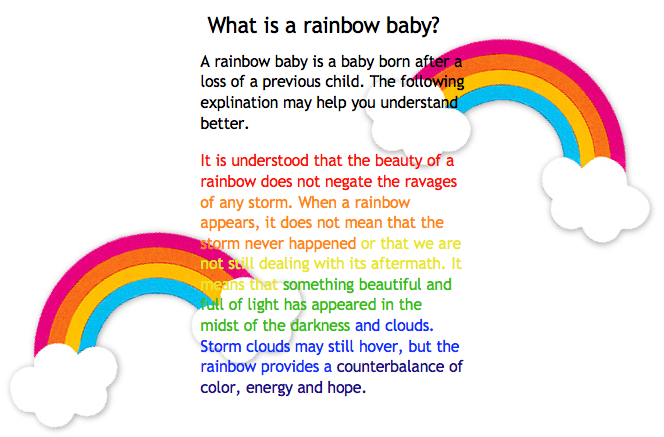
The metaphor is straightforward: a rainbow does not negate the damage of the storm that preceded it. Instead, the rainbow appears alongside the aftermath, signaling that calm weather has returned while acknowledging that the ground remains altered.
A rainbow baby is a child born following a miscarriage, ectopic pregnancy, stillbirth, or infant loss. Crucially, the arrival of this child does not replace the infant who died. This distinction matters deeply within parental bereavement communities. When people assume a healthy delivery cures previous grief, they misread the human heart. The baby born after a loss is a distinct individual, carrying their own life story, not an emotional replacement for an earlier child.
The vernacular around reproductive loss has broadened to define each phase of a family's journey:
- Sunshine Baby: A child born before any loss occurred, representing life before the storm.
- Angel Baby: A term commonly used by families to honor an infant or pregnancy lost to miscarriage, stillbirth, or neonatal death.
- Rainbow Baby: The child born after a loss, marking renewed life after trauma.
- Pot of Gold Baby: A less common term denoting a child born subsequent to a rainbow baby, or the arrival of twins following loss.
Understanding these distinctions helps friends, relatives, and clinicians avoid dismissive language, replacing platitudes with informed, empathetic support.
Mapping Loss and Renewal Across the Perinatal Spectrum
Perinatal loss touches a vast cross-section of the population, yet diagnostic distinctions often blur in everyday conversation. The table below delineates the common terminology, clinical thresholds, and emotional functions these designations serve in modern bereavement support.
| Term | Clinical / Situational Definition | Core Role in Parental Healing |
|---|---|---|
| Sunshine Baby | A biological or adopted child born prior to an experienced reproductive loss. | Represents a period of parenthood untouched by perinatal trauma or anxiety-laden pregnancies. |
| Angel Baby | A fetus or infant lost to miscarriage (prior to 20 weeks), stillbirth (at or after 20 weeks), or early neonatal demise. | Gives tangible identity, remembrance, and validity to an interrupted life. |
| Rainbow Baby | A living child delivered following a documented loss across any perinatal stage. | Symbolizes recovery and future hope while coexisting alongside permanent remembrance. |
| Pot of Gold Baby | A subsequent healthy child born after a rainbow baby, or surviving multiples from a complicated pregnancy. | Signifies sustained family growth, ongoing healing, and continued recovery after severe disruption. |
Miscarriage occurs in an estimated 10% to 20% of clinically recognized pregnancies, while stillbirth affects roughly one in every 175 births annually in the United States. Despite these numbers, public discussions often treated loss as an anomaly. By systematizing this vocabulary, families establish an emotional framework that validates every phase of their reproductive history.
Anxiety, Milestones, and Postpartum Emotional Health
Carrying a child after a loss rarely resembles the carefree experience portrayed in popular culture. Joy is real, but it regularly shares space with hypervigilance. Expectant mothers describe an ongoing psychological toll during subsequent trimesters, often dreading routine appointments instead of anticipating them.
Clinical practitioners refer to this anticipatory dread as "scan anxiety." The waiting room becomes an echo chamber of past trauma. Parents brace for bad news every time cold gel hits their abdomen. Passing the specific gestation week where a previous baby died represents a major hurdle, often marked by acute insomnia and panic symptoms rather than celebration.
Postpartum emotional health after a rainbow baby arrives brings its own complexities. Many parents encounter survivor guilt, wondering why this child survived when another did not. Others struggle with intense separation anxiety, checking the bassinet compulsively through the night. Recognizing these responses as standard clinical reactions to trauma, rather than personal shortcomings, helps parents seek targeted mental health support during the fourth trimester.
How Viral Awareness Is Reshaping Clinical Care
The cultural embrace of the rainbow baby concept has begun influencing hospital protocols and perinatal medicine. Historically, hospital staff rarely coordinated communication between emergency departments, surgical units, and subsequent prenatal clinics. A woman who endured a stillbirth could easily walk into an obstetrician’s office a year later and face routine intake questions that completely ignored her loss.
Today, integrated health networks increasingly implement perinatal bereavement registries. Visual identifiers, such as small butterfly or rainbow icons on medical charts, notify medical personnel of a patient’s history before anyone steps into the examination room. This simple systemic tweak prevents careless, re-traumatizing questions from staff unfamiliar with the patient's record.
Hospitals also employ dedicated perinatal bereavement teams who provide memory boxes, professional photography, and specialized counseling referrals immediately following a loss. These resources establish a continuous standard of care, ensuring families receive proper emotional support long before they ever decide to try for another child.
Frequently Asked Questions (FAQ)
What is the formal definition of a rainbow baby?
A rainbow baby is a child born following a prior pregnancy loss, stillbirth, or neonatal death. The phrase uses the imagery of a rainbow emerging after a storm to describe hope returning to a family without minimizing the pain that came before.
How does a rainbow baby differ from a sunshine baby?
A sunshine baby is a child born before a family experiences pregnancy loss, representing life before the hardship. A rainbow baby is a child born after that loss has occurred.
Is emotional distress common during pregnancy after loss?
Yes. Anxiety, hypervigilance, and trauma responses are standard throughout subsequent pregnancies. Many parents struggle with medical milestones, ultrasound appointments, and anniversaries of their previous loss, requiring proactive mental health support.
What does the phrase "pot of gold baby" signify?
A pot of gold baby generally refers to a child born after a rainbow baby, or a child delivered after an especially prolonged journey through recurrent losses, fertility treatments, or high-risk medical hurdles.
The Lasting Shift in Perinatal Bereavement
The conversation around pregnancy loss has permanently moved beyond quiet shame. What began as private tributes on personal blogs has grown into an international standard for how parents, clinicians, and communities honor reproductive journeys. A rainbow baby does not close a chapter on grief, nor does the child carry the burden of replacing a lost sibling. Instead, the term establishes that life can move forward with honesty, making room for both deep remembrance and genuine renewal.


