Why the CeCe Drake 'A' Reveal Broke the Internet: Plot Holes and Controversies Explained
Why the CeCe Drake 'A' Reveal Broke the Internet: Plot Holes and Backlash Explained
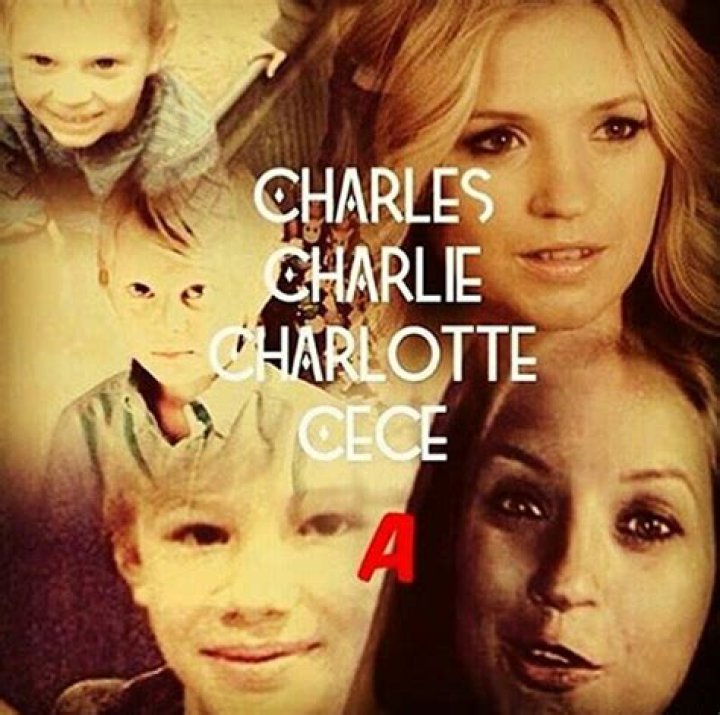
On August 11, 2015, ABC Family aired "Game Over, Charles," the tenth episode of Pretty Little Liars season six. Promoted relentlessly as the culmination of the "Summer of Answers," the broadcast drew 3.07 million live viewers eager to uncover the identity of "Big A." The figure lurking behind the black hoodie turned out to be CeCe Drake, played by Vanessa Ray. CeCe stepped forward in a high-tech control room beneath the Carissimi Group, revealing her birth name as Charles DiLaurentis and her true identity as Charlotte DiLaurentis, Alison's transgender older sister.
Within minutes of the broadcast, social media turned hostile. Longtime fans flooded Twitter, Reddit, and Tumblr with expressions of disbelief, cataloging narrative inconsistencies that broke years of established television lore. Cultural critics were equally unsettled by the decision to code the show's most depraved stalker through a tragic transgender backstory. As highlighted in a contemporary Seventeen Magazine Report, the narrative framing raised immediate red flags regarding the portrayal of transgender women as deceptive and mentally unstable.
📌 Key Takeaways:
- The Unmasking: CeCe Drake was revealed as Charlotte DiLaurentis, answering the multi-year "Big A" mystery while establishing her as Alison and Jason DiLaurentis’s sibling.
- The Social Backlash: Viewers and LGBTQ+ advocacy groups faulted the script for framing Charlotte's gender transition alongside institutional confinement and violent psychopathy.
- The Narrative Fractures: The episode introduced severe timeline conflicts, most notably the age of Marion Cavanaugh at the time of her death inside Radley Sanitarium.
- The Decoy Problem: Revealing newcomer Sara Harvey as both Red Coat and the Black Widow alienated audiences who had tracked primary characters for five years.
The August 2015 Meltdown That Fractured the Fandom
The reveal generated 1.6 million tweets during its original broadcast window, making it the most tweeted television episode of 2015. Yet the sentiment analysis was overwhelmingly negative. For five seasons, executive producer I. Marlene King had promised that every clue mattered, urging fans to scrutinize board games, background props, and literary references.
Viewers discovered that Charlotte watched the Liars through futuristic surveillance monitors while explaining her life story in a room separated by soundproof glass. The narrative structure reduced the core protagonists, Aria, Emily, Hanna, and Spencer, to passive spectators in their own climax. Instead of cracking the code, they stood motionless in front of a digital screen while CeCe recounted decades of exposition.
The immediate reaction on platforms like Reddit's r/PrettyLittleLiars was furious. Fans felt deceived by production assurances that the reveal would be organic and logically airtight. Rather than rewarding close viewing, "Game Over, Charles" bypassed established plot mechanics to manufacture emotional shock value.
The Charlotte DiLaurentis Transgender Arc and Its Cultural Fallout
The core controversy of the finale centered on Charlotte’s backstory. Born Charles DiLaurentis, she was institutionalized at Radley Sanitarium at age five after her father, Kenneth DiLaurentis, misinterpreted an innocent incident involving baby Alison as an attempt to drown her. While confined, Charles realized her female identity with the quiet support of her mother, Jessica DiLaurentis. At sixteen, Charles staged a fake death and transitioned into Charlotte, remaining locked in the psychiatric hospital until adulthood.
Advocacy groups and media analysts condemned the framing. In 2015, public discussions around transgender representation in mainstream media were reaching a critical point, following milestones like Laverne Cox’s visibility in Orange Is the New Black. Pretty Little Liars anchored its primary antagonist in outdated Hollywood tropes: the predatory, unstable transgender villain whose transition is linked directly to madness and deception.
Charlotte’s transition was treated less as an organic character arc and more as a final narrative sleight of hand to explain how Charles could be CeCe Drake. Critics pointed out that Kenneth DiLaurentis’s transphobia was presented as the root cause of Charlotte’s initial commitment, yet the show still chose to make her a remorseless tormentor who kidnapped teenage girls, placed microchips in their necks, and tortured them in a life-sized subterranean dollhouse.
Radley Sanitarium Timeline Errors and Continuity Fractures
The logistics of Charlotte’s confession shattered the show’s internal chronology. The most glaring inconsistency involved the death of Marion Cavanaugh, Toby Cavanaugh’s mother.
In Season 4, flashbacks established that Toby and Alison were young adolescents, roughly twelve to fourteen years old, when Marion died at Radley Sanitarium. Toby watched his mother’s body being removed while speaking to Alison. In Season 6A, Charlotte recounted that Marion was pushed off the sanitarium roof by Bethany Young when Charlotte was a young child, approximately twelve years old. Charles and Bethany were depicted on the roof as pre-teens. If Charles was twelve at the time of Marion’s death, Alison would have been a toddler, completely invalidating Toby’s earlier adolescent memory with Alison.
| Narrative Thread | Established Series Canon | Season 6A Retcon | Continuity Conflict |
|---|---|---|---|
| Marion Cavanaugh's Death | Toby and Alison are young teens when Marion dies (Season 4). | Charles is 12 and Bethany is a child when Marion is pushed (Season 6). | Alison could not have been both a toddler and a speaking teen at Marion's death. |
| CeCe's University Life | CeCe dates Jason DiLaurentis, goes on family trips, and has a college yearbook photo. | Charlotte was locked inside Radley continuously from childhood until age 20. | Radley security permitted full-time college attendance, dating, and vacationing without detection. |
| Detective Wilden's Role | Wilden is an active Rosewood police officer who covered up Marion's death. | Wilden covered up the incident when Charles was 12 years old. | Wilden would have been a corrupt beat cop while still an elementary school student. |
| The Black Widow Identity | Introduced in Season 4 as an endgame operator; fans theorized Melissa or Jenna. | Sara Harvey, introduced in Season 6A, acted under Charlotte’s orders. | Relegated major antagonist roles to a character with no established emotional ties. |
The discrepancies multiplied when examining CeCe’s relationship with Jason DiLaurentis. The two dated for over a year, vacationed together in Cape May, and shared a social life. The finale claimed Charlotte did this simply to get closer to her family, and that they never had a physical relationship. For long-time viewers, the retrofitted explanation sounded contrived, raising uncomfortable questions about how a registered psychiatric patient slipped away unnoticed to take college graduation portraits and operate an upscale boutique.
Sara Harvey and the Deflation of the Black Widow Mystery
The episode compounded viewer frustration by resolving two lingering secondary mysteries in the most uninspired way possible. For several seasons, the identities of Red Coat and the Black Widow, also known as the Black Veil, fueled intense fan speculation. Marlene King had publicly described the Black Widow as the series' endgame entity.
The finale revealed that Sara Harvey, played by Dre Davis, was both Red Coat and the Black Widow, serving as Charlotte’s hired minion. Sara had only appeared on screen as an active character in the preceding ten episodes, having previously been mentioned only in passing as a missing girl from a neighboring town.
Assigning high-profile identities to a late-arrival character stripped the mystery of its dramatic weight. Fans who spent years analyzing the motives of established figures like Melissa Hastings, Jenna Marshall, or Wren Kingston felt dismissed. The choice quickly turned Sara Harvey into an internet meme, with fans mocking her stiff dialogue delivery and frequent showers rather than fearing her as a criminal mastermind.
Behind the Writers' Room: Planned Arc or Retcon?
Following the broadcast, the production team went on defense. Marlene King maintained in press interviews that Charlotte’s identity had been mapped out since Season 3, pointing to CeCe Drake’s first appearance in the episode "Crazy." CeCe arrived wearing Alison’s exact clothing, mirroring Alison’s behavioral mannerisms, and immediately demonstrated an intimate understanding of the Liars' personal secrets.
Devoted fans even compiled video compilations documenting early foreshadowing. In Season 3, CeCe was seen outside the Ezra Fitz apartment in a black trench coat. She visited Mona Vanderwaal at Radley Sanitarium, and Nigel Wright linked a flight plan to "CeCe Drake" in Season 4.
The defense failed to satisfy critics because foreshadowing CeCe’s involvement was not the same as constructing a coherent identity for Charles. The evidence suggested that while CeCe Drake was always meant to be deeply implicated in the mystery, the specific Charles-to-Charlotte transgender narrative was grafted onto the story late in production. The rushed mechanics of the Carissimi Group, the hologram screens, and the dismissive explanations for established plot threads suggested last-minute scrambling rather than careful, multi-year architecture.
The Narrative Pitfalls of Mystery Box Television
The handling of CeCe Drake stands as a cautionary tale in modern television writing. Pretty Little Liars thrived on social media engagement, building a massive audience through week-to-week fan theorizing. That structural advantage collapsed into a creative liability.
When a show's primary currency is surprising the audience, writers often prioritize misdirection over emotional logic. By the time Season 6 arrived, online communities had deduced nearly every viable narrative pathway. To deliver a twist that viewers had not collectively predicted, the writers had to discard the internal rules of Rosewood entirely.
The episode proved that shocking an audience is counterproductive if the resolution invalidates the preceding journey. The CeCe Drake unmasking alienated a deeply invested digital audience, leaving a cloud over the show's legacy that persisted through the subsequent time-jump and the later introduction of "A.D." in Season 7.
Frequently Asked Questions (FAQ)
Q1: In which episode is CeCe Drake revealed as 'A'?
A1: CeCe Drake is revealed as "Big A" in Season 6, Episode 10, titled "Game Over, Charles," which originally aired on ABC Family on August 11, 2015.
Q2: Why was the timeline regarding Toby's mother considered a plot hole?
A2: Season 4 showed Toby and Alison as young adolescents when Marion Cavanaugh died at Radley Sanitarium. The Season 6A finale rewrote this event, depicting Charles as a twelve-year-old child and Bethany Young as a young girl pushing Marion, which would mean Alison was an infant at the time.
Q3: Who played CeCe Drake and Sara Harvey?
A3: CeCe Drake (Charlotte DiLaurentis) was portrayed by actress Vanessa Ray. Sara Harvey, who acted as both Red Coat and the Black Widow, was played by Dre Davis.
Q4: Did the transgender storyline receive official backlash?
A4: Yes. Numerous media outlets, cultural critics, and LGBTQ+ advocates criticized the show for associating gender transition with psychopathy, trauma, and institutionalization, relying on harmful media tropes.
The Cultural Footprint of Rosewood's Most Divisive Twist
The reveal of CeCe Drake as "Big A" altered how audiences approach serialized teen mystery dramas. It marked the moment where interactive, social-media-driven television ran up against the limits of its own plotting. The uproar over "Game Over, Charles" was not simply about who was beneath the black hoodie; it was a response to an ending that broke faith with the audience's attention to detail. Decades of serialized mysteries from Twin Peaks to Lost grappled with delivering satisfying conclusions, but Pretty Little Liars illustrated the perils of prioritizing a fleeting shock factor over character integrity and structural logic.


