Why the Inglourious Basterds 3-Finger Scene is Dominating Culture Feeds Again
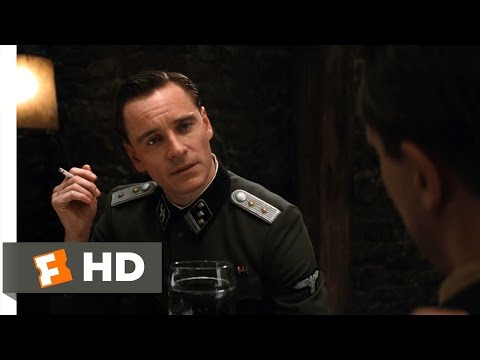
Sixteen years after Quentin Tarantino unveiled Inglourious Basterds in 2009, a three-second hand gesture inside a fictional French tavern continues to generate millions of impressions across social platforms. The basement tavern scene in Nadine, where British commando Lieutenant Archie Hicox unintentionally blows his cover by ordering a round of drinks, has escaped the boundaries of World War II cinema. On modern video feeds, digital travel guides, and online comedy boards, the fatal order remains an unrivaled visual shorthand for the subtle slip-ups that destroy an elaborate bluff.
The sequence owes its staying power to a blend of meticulous cinematic craft and relatable cultural friction. As detailed in a Know Your Meme Report, viral interest surged around the "Major Hellstrom Sees Three Fingers" template, expanding across creator communities and spawning spin-off parodies through 2025 and 2026. The gesture has migrated from historical film trivia into an omnipresent internet reaction image, cited by etiquette vloggers, body language analysts, and meme creators alike.
📌 Key Takeaways:
- The Fatal Slip: Lieutenant Archie Hicox signals the number three using his index, middle, and ring fingers, instantly alerting Gestapo Major Dieter Hellstrom to his foreign identity.
- The Cultural Divide: Central and Western European hand counting begins with the thumb, whereas Anglo-American habits start with the index finger.
- The Digital Resurgence: Online feeds frequently repurpose August Diehl's chilling facial shift into a universal meme template signaling exposed impostors and ruined pretense.
The Deadly Scotch Order Inside La Louisiane Tavern
The sequence occurs midway through the film during Operation Kino, a secret Allied plot to eliminate senior Nazi leadership at a Parisian film premiere. Lieutenant Archie Hicox, portrayed by Michael Fassbender, poses as an SS officer to rendezvous with undercover German actress Bridget von Hammersmark. Their meeting place is La Louisiane tavern, a cramped subterranean drinking hole in the village of Nadine. Hicox is an elite film critic turned commando, fluent in German and thoroughly briefed on Nazi military decorum. His linguistic cadence is nearly flawless, explained away as an odd regional accent from the Bavarian village of Pitz Palü.
The operation derails when Gestapo Major Dieter Hellstrom, played with razor-sharp tension by August Diehl, joins their table uninvited. Following an intense parlor game of Who Am I?, Hicox orders another round: "Drei Gläser", three glasses, to accompany a rare bottle of Scotch whiskey. To signal the quantity to the bartender, Hicox raises his hand, extending his index, middle, and ring fingers while holding his thumb against his palm with his pinky curled in. Hellstrom's eyes drop instantly to the hand. In that silent heartbeat, the mission ends.
British vs German Finger Count: The Somatic Tell
The fatal mistake hinges on dactylic numeral systems, the ingrained muscle memory of hand counting. In Germany, Austria, and broader continental Europe, counting on one hand always begins with the thumb. To indicate the number one, a native German raises their thumb. To signal two, the thumb and index finger extend together. For the number three, the thumb, index finger, and middle finger go up in unison.
Anglo-American habits differ completely. In the United Kingdom, the United States, and Canada, counting typically begins with the index finger. Signaling three means extending the index, middle, and ring fingers, leaving the thumb pinned across the palm. Hicox spent years mastering pronunciation, military terminology, and aristocratic manners. Yet in an offhand moment, his subconscious somatic habits betrayed him. He spoke like a German officer, but his hand signaled like an Englishman in an Oxfordshire pub.
| Behavioral Element | Continental German Standard | British Military Standard | Narrative Outcome |
|---|---|---|---|
| Number 3 Hand Shape | Thumb + Index + Middle finger | Index + Middle + Ring finger | Exposes Hicox as an undercover foreigner |
| Linguistic Camouflage | Standard High German expectation | Flawless grammar with Pitz Palü cover story | Holds up under Hellstrom's vocal scrutiny |
| Alcohol Preference | Schnapps, Rhine wine, regional spirits | Rare Scotch single malt | Raises initial suspicion before the hand tell |
| Tactical Environment | Single subterranean exit, armed guards | Confined point-blank proximity | Guarantees mutual destruction once guns draw |
How Tarantino Crafted Cinematic Paranoia
The brilliance of the basement tavern scene stems from spatial claustrophobia and tempo. Quentin Tarantino spends roughly 25 minutes building suspense in a small, windowless cellar. The audience understands the threat before Hicox realizes he is trapped. Hellstrom is not an oblivious bureaucrat; he is a predator who smells inconsistency long before the Scotch arrives.
August Diehl plays the realization with chilling restraint. Rather than shouting or immediately drawing his Walther PPK, his demeanor hardens into icy clarity. The jovial camaraderie of the card game evaporates. Tarantino positions the camera to catch every micro-expression: the sudden tightening of Fassbender’s jaw, the wide-eyed panic in Diane Kruger's Bridget von Hammersmark, and the calm calculation behind Diehl’s eyes. When Hicox realizes his blunder, he accepts his fate with quiet dignity, finishing his drink and remarking on the futility of negotiating in a basement.

The Evolution into a Viral Meme Template
Over a decade after the movie hit theaters, short-form video algorithms breathed new life into the tavern standoff. Creators on TikTok and Instagram began juxtaposing the clip with modern etiquette mistakes, cross-cultural misunderstandings, and workplace blunders. By 2024, online forums turned August Diehl’s shifting gaze into the "Major Hellstrom Sees Three Fingers" meme format. The joke structure is straightforward: an individual attempts to blend into an unfamiliar community, only to reveal their outsider status through a tiny, instinctive quirk.
Online communities have adapted the template endlessly. Ranker highlighted the scene across its top movie meme roundups, while meme archives documented celebrity mashups, including parodies replacing Hellstrom with contemporary pop icons. The image of three raised fingers now signals an undercover failure across gaming lobbies, sports fandoms, and software development debates. Whenever a casual newcomer misuses specialized terminology, internet commenters reply simply with a frame of August Diehl lowering his drink.
Why Audiences Remain Obsessed with Micro-Tells
The three-finger sequence continues to captivate audiences because it touches a fundamental human anxiety: the fear that our subconscious habits will reveal our secrets. Spies spend months perfecting documentation, uniforms, and backstories, yet true belonging is coded into trivial physical actions. Hand gestures, dining etiquette, posture, and spatial boundaries are absorbed in early childhood. They resist intellectual rehearsal.
Modern travel culture lists frequently cite the scene as a cautionary tale for Western tourists navigating foreign customs. In Germany, asking for two beers with your index and middle finger might confuse a bartender or result in an unintended order. In broader European markets, finger configurations carry divergent historical meanings. Tarantino took an esoteric linguistic nuance and transformed it into visceral drama, cementing a brief gesture as one of modern cinema's most indelible moments of suspense.
Frequently Asked Questions (FAQ)
Q1: Why did Archie Hicox order drinks using his index, middle, and ring fingers?
A1: Hicox was born and raised in Great Britain, where people naturally count using their index finger first. Even though he spoke fluent German and studied local culture, his physical reflex defaulted to British counting habits under pressure.
Q2: Do people in Germany still count starting with the thumb today?
A2: Yes. Across Germany, Austria, Switzerland, and most of continental Europe, standard finger counting begins with the thumb representing one, the index finger added for two, and the middle finger for three. Extending the three middle fingers without the thumb remains uncommon for locals.
Q3: Did Quentin Tarantino invent this cultural detail for Inglourious Basterds?
A3: No. The distinction between Anglo-American and Continental European finger counting is an authentic historical and anthropological fact. Tarantino incorporated the real-world behavioral divergence into his screenplay to create an unforced, historically plausible moment of discovery.
The Enduring Power of the Cellar Standoff
The longevity of the basement tavern sequence proves that well-constructed cinematic stakes outlast cheap digital spectacles. Michael Fassbender and August Diehl delivered a clinic in subtle psychological warfare, driven entirely by vocal cadences, posture, and a brief order of Scotch. While computer-generated action sequences fade from cultural memory, the terrifying realization of three extended fingers remains etched into collective pop culture. It stands as a masterclass in tension, reminding audiences that the smallest detail can bring down the grandest deception.


