Why You Have Been Playing Scrabble Wrong: The Unspoken Math Secret to Winning
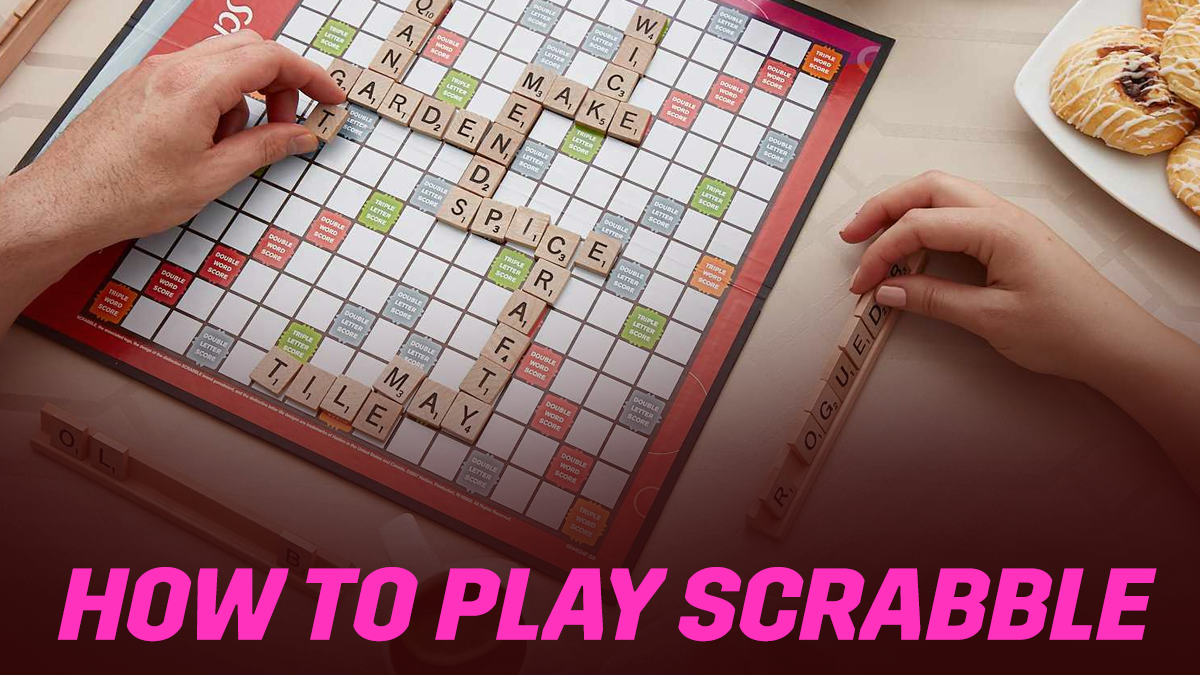
Watch a casual living-room match and you will witness the same ritual play out every time. Players squint over their wooden racks, hunting desperately for literary flourishes like "QUIXOTIC" or "ZEPHYR." They hoard high-value letters, pray for open triple word spots, and treat the contest as an English vocabulary exam. Yet across competitive club circuits, tournament masters win without memorizing obscure Victorian poetry. According to reporting highlighted by a bizjournals.com report detailing how academics apply advanced mathematics to competitive Scrabble, the board is governed by combinatorial probability, geometric grid efficiency, and resource distribution rather than linguistic vanity.
The divide between hobbyists and tournament winners is stark. In February 2026, when a secondary school math teacher claimed the UK Scrabble Championship, post-match analysis confirmed that mastering short, high-efficiency plays and controlling grid real estate, not sprawling vocabulary, drives victory. Scrabble rewards mathematical asset management. Treating every turn as an isolated puzzle leads to catastrophic board openings, stagnant tile racks, and blown leads. Learning how the game truly operates requires ditching romantic notions about long words and grasping the mathematical engine running beneath the board.
📌 Key Takeaways:
- The Core Flaw: Chasing long, artistic words usually leaves vulnerable premium squares open while wrecking your future scoring potential.
- The Probability Driver: Maintaining an optimal balance of consonants and vowels outranks raw single-turn point values by creating high-probability setups for 50-point bonus plays.
- The Positional Edge: Dominating the 107 acceptable two-letter words provides compound scoring across parallel axes while closing scoring avenues for your rival.
The Kitchen Table Fallacy and Vocabulary Traps
Most players learn Scrabble under an illusion: the bigger the word, the better the player. This assumption causes amateur racks to stall out. When you drop a six-letter word worth 18 points simply because you spotted it, you often burn critical transition letters like E, R, and S while stranding high-friction consonants like V or W on your rack.
Competitive players view every move through the lens of equity. Equity equals the points scored on the current turn plus the statistical value of the tiles kept for future turns, minus the scoring potential handed to the opponent. Dropping an intricate word that scores 22 points while handing an opponent direct access to an unprotected triple word score placement yields deeply negative equity.
Casual players also routinely misinterpret letter value scoring rules. They celebrate dropping a Q on an open lane for 11 points, ignoring that a simple two-letter hook placing Q on a double letter score intersecting two directions could yield 44 points. Raw vocabulary without spatial geometry is dead weight.
Rack Balance Over Raw Points
If you want to win consistently, you must manage your rack as a portfolio of liquid assets. The game consists of 100 tiles: 42 vowels, 56 consonants, and 2 blanks. That ratio dictates that an ideal rack holds three vowels and four consonants, or four vowels and three consonants.
Deviating from this baseline cripples your scoring velocity. The moment you accumulate five vowels or six consonants, your probability of playing an efficient move plunges. Expert players routinely make small sacrifices, burning one or two awkward letters for a modest 8-point play just to restore clean rack balance management.
Preserving flexible letter combinations, often called "bingo stems" such as T-I-N-E-A-R-S or R-E-T-I-N-A, dramatically boosts the statistical likelihood of clearing your entire rack. Emptying all seven tiles triggers the coveted bingo 50 point bonus, an injection of points that almost always decides tournament matches. Holding a blank tile strategy is equally vital. A blank tile scores zero points on its own, but competitive analysts assign it an implied value of roughly 25 to 30 points. Sacrificing a blank for an ordinary 20-point turn is tactical malpractice; reserve it almost exclusively for 50-point bonus plays or decisive end-game blocks.
The Mathematical Contrast: Casual Versus Tournament Execution
The systemic differences between recreational intuition and probabilistic execution reveal why traditional habits routinely collapse against disciplined players.
| Strategic Dimension | Casual Play Style | Probabilistic Master Strategy |
|---|---|---|
| Turn Objective | Hunt for the longest recognizable English word. | Maximize net turn equity (Current Points + Rack Equity, Opponent Reply). |
| Rack Management | Hoards high-point tiles (Q, Z, X) without exit lanes. | Maintains strict 3-vowel / 4-consonant ratios; tracks stems for 50-point bingos. |
| Grid Interaction | Builds perpendicularly away from the center toward board edges. | Employs parallel plays using the two-letter list; protects premium lanes. |
| Information Tracking | Ignores unseen tiles until the bag runs dry. | Runs real-time tile tracking techniques to deduce the opponent's exact rack. |
| Defensive Posture | Leaves open paths to triple word squares to pursue big plays. | Restricts open vowels near edges; neutralizes explosive counter-attacks. |

The Heavy Artillery of Two-Letter Words
In competitive play, the two-letter words list functions as structural rebar. As the UK Scrabble Championship highlighted, an elite player does not memorize obsolete ten-letter terms to secure titles; they master words like QI, ZA, XU, AA, and JO.
Under official Scrabble dictionary standards, such as NASPA Word List in North America or Collins Official Scrabble Words internationally, there are 107 acceptable two-letter words. These tiny formations serve as the lifeblood of parallel play. By dropping a four-letter word directly alongside another existing word, you generate points not just for your main word, but for three or four newly created two-letter words simultaneously.
A word like AX played parallel across existing tiles can easily score 25 to 30 points on what looks like a throwaway move. This micro-scoring locks down real estate, denies counter-attacks, and quietly drains the bag while your rival waits for an opportunity that never materializes.
Grid Geometry and Premium Square Control
Scrabble boards are deliberate geometric minefields. The outer rim holds eight triple word score placement squares. The center contains double word squares leading outwards. How you position letters relative to these multipliers determines who controls the match.
Defensive board play requires choking off access to high-multiplier territory when your rack cannot capitalize on it. Leaving an open vowel like A or O two spaces away from a triple word multiplier is an unforced error. Your opponent will use high-point consonants or hook letters, adding a single letter like S, C, or D to mutate your word while landing squarely on the multiplier.
True premium square control means baiting traps or clogging lanes. If you must open a line toward a triple word square, ensure it requires an awkward consonant cluster that makes scoring mathematically improbable based on remaining tile distribution strategy metrics.
Endgame Math and Bag Exhaustion Tactics
When the bag runs low, Scrabble ceases to be an open-ended game and becomes an open-hand chess problem. Tournament players use systematic tile tracking techniques throughout the match. By crossing off tiles played from a standard tracking sheet, a player knows the exact contents of the remaining bag.
When five tiles remain in the bag, a skilled player knows precisely what those five tiles are. Once the bag hits zero, you know every single tile sitting on your rival's rack.
This transparency shifts the entire decision tree. If you identify that your opponent holds a cumbersome Q without an available U, your defensive imperative is clear: close every open vowel hook on the board. Trapping that 10-point tile on their rack at the final buzzer forces them to subtract 10 points from their score while adding 10 points to yours, a massive 20-point swing that routinely flips match outcomes.
Frequently Asked Questions (FAQ)
Q1: What is the most effective way to memorize two-letter words without burning out?
Start by memorizing words built around high-value consonants: the **Q** words (**QI**), the **Z** words (**ZA**), the **X** words (**AX**, **EX**, **OX**, **XI**, **XU**), and the **J** words (**JO**). Once those are second nature, master the vowel-heavy combinations (**AA**, **AE**, **AI**, **OE**, **OI**). Grouping them phonetically or by high-point letters makes retention far faster than rote alphabetical study.
Q2: Should I exchange tiles if my rack contains all vowels or all consonants?
Yes, but do it selectively. Exchanging tiles sacrifices your turn and costs you zero points, so only take that step if your rack balance management cannot be repaired with a 6-to-10-point dump play. If you hold **A-A-E-E-I-O-U**, playing **AA** for 4 points to keep **E-E-I-O-U** leaves you in the same trap. In that scenario, swap four or five vowels at once to reset your statistical odds.
Q3: How do hook letters alter scoring on an established board?
Hook letters are single tiles added to the front or back of an existing word that form a completely new word (such as turning **LUSH** into **BLUSH**, or **HOST** into **GHOSTS**). The player who plays the hook collects full point values for the entire underlying base word plus the new word formed along the perpendicular axis, turning minor five-point board positions into explosive scoring engines.
Transforming Your Match Play
Treating Scrabble as a mathematical contest alters every turn you take. Stop hunting across the room for obscure vocabulary meant to impress spectators. Focus on managing your rack balance, husbanding your blanks, exploiting parallel two-letter connections, and tracking the tile pool.
When you strip away the literary romanticism, Scrabble reveals its true nature: a cutthroat game of spatial probability and asset management. Master the math, command the board, and the victories will take care of themselves.


