'You Can't Just Say Perchance': Meme Guide, Meaning, Grammar Rules, and FAQs
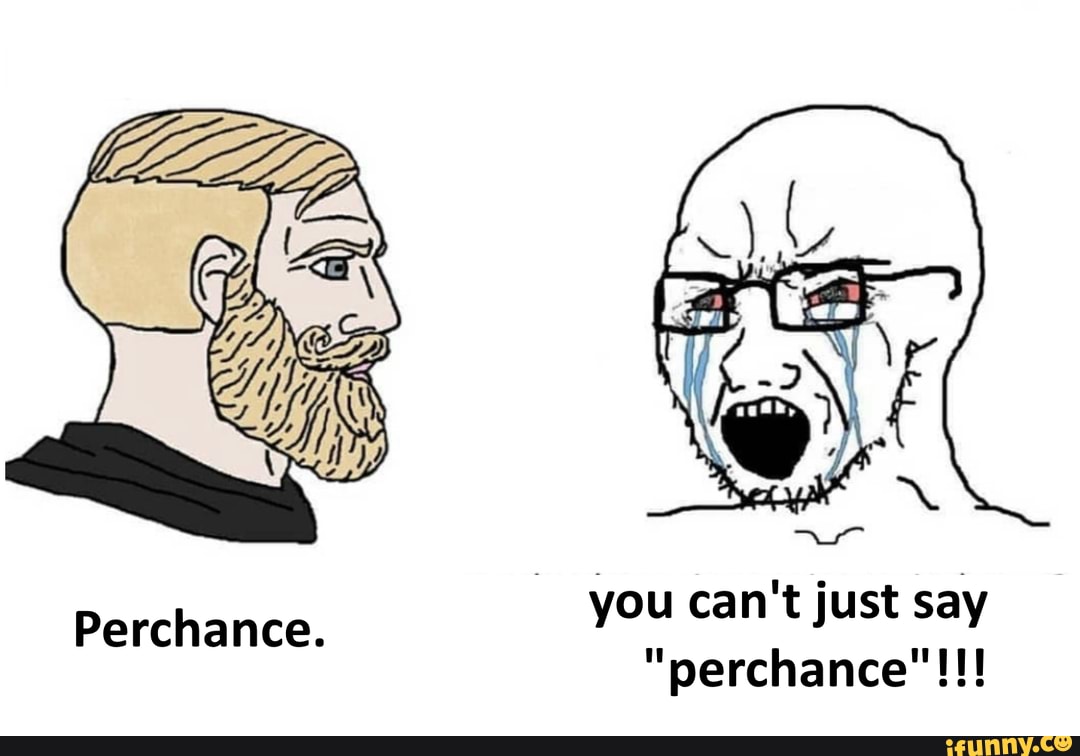
Few comedic artifacts survive the digital lifecycle with their charm intact, yet a mock term paper about an 8-bit plumber continues to circulate through group chats, academic hallways, and message boards. Modern internet slang migrates across platforms faster than formal linguistics can track, influencing everyday speech patterns and interpersonal dynamics highlighted in cultural coverage like this Mamamia Report. Among the endless cycle of short-lived viral screenshots, one deadpan phrase remains inescapable: "You can't just say perchance."
The line originated not from a confused freshman's genuine philosophy assignment, but from a calculated piece of internet satire. It struck a nerve because it captures the universal tension between academic pretension and fundamental incoherence. When people quote it today, they are not merely repeating a punchline; they are invoking a miniature comedy masterclass etched in red ink.
📌 Key Takeaways:
- The Real Creator: Comedian Phil Jamesson staged and posted the satirical essay on Twitter in February 2022, writing both the text and the handwritten teacher remarks.
- The Grammatical Reality: As an intransitive sentence adverb, "perchance" cannot function as a standalone fragment without a predicate or qualifying clause.
- The Lasting Legacy: The phrase endures because it perfectly parodies the habit of inflating ordinary writing with archaic vocabulary to feign intellect.
The Satirical Spark: Phil Jamesson and the Fictional Term Paper
On February 19, 2022, comedian and writer Phil Jamesson posted an image of a printed paper to Twitter. The essay opened with a bold title: "Mario, the Idea vs. Mario, the Man." What followed was an exercise in pure rhetorical chaos masquerading as high-minded scholarship.
The first paragraph laid the comedic trap:
"Everyone knows Mario the character, but who is Mario the man? Perchance."
Directly beneath the word "Perchance," a squiggly red pen line led to a teacher's reprimand written in the margin: "You can't just say 'perchance.'" The exchange looked so authentic that thousands of casual readers assumed an exasperated teaching assistant had actually marked up an undergraduate paper. According to documented timeline entries tracking its Know Your Meme origins, the post racked up over 130,000 likes and tens of thousands of retweets within 48 hours.
Jamesson confirmed he wrote the text, printed it out, and applied the red ink annotations himself. The joke relies on contrast. The high-minded cadence of classic philosophy collides immediately with elementary school video game lore, exposing the hollow language often used to fluff out collegiate essays.
The Red Pen Marginalia: Why the Correction Created the Comedy
If the fictional student had simply turned in a strange paper, the post would have faded quickly. The comic engine driving the viral essay meme is the visual presence of the grading pen. Essay marginalia carries an immediate emotional weight for anyone who has ever survived high school composition courses.
Red ink evokes authority, frustration, and pedantic weariness. By positioning the teacher as a deadpan straight man, the image creates a two-character play on a single sheet of 20-pound copy paper. The instructor does not offer an elaborate breakdown of Latinate syntax. Instead, they drop an exasperated, direct critique: "You can't just say 'perchance.'"
That simplicity makes the line ring true. It captures an educator at the end of a long grading stack, confronting a student who reached into a thesaurus and threw an archaic word at the page like a flashbang.
Adverb Usage in English: The Rules Broken by 'Perchance'
To understand why the fictional grader reacted so sharply, consider how the word actually functions in English syntax. "Perchance" entered Middle English via the Anglo-French phrase par cheance, meaning "by chance" or "perhaps."
In standard grammar rules for perchance, the word serves as an adverb of modal qualification. It indicates probability or circumstance, modifying a verb, an adjective, or a complete independent clause. Shakespeare used it to cast doubt over hypothetical conditions: "To sleep: perchance to dream." In that famous soliloquy, "perchance" modifies the infinitive verb phrase "to dream," establishing a conditional thought.
| Syntactical Role | Grammatically Sound Example | The Fictional Student's Error |
|---|---|---|
| Adverbial Sentence Modifier | "Perchance we shall encounter delays on the southern route." | Treated as a standalone statement without an accompanying predicate. |
| Conjunctive Softener | "The document is missing, lost perchance in the archive fire." | Placed after an inquiry without offering an alternative scenario. |
| Standalone Rhetorical Interjection | "Perhaps?" (Permissible informally as an interrogative tag). | Punctuated with a period, asserting itself as a full sentence. |
The student paper commits a double error. First, it isolates the adverb completely, severing it from any predicate or subject. Second, it closes the word with a period rather than a question mark. The resulting construction asserts "by chance" as an absolute, declarative statement. The teacher's correction is technically precise: you literally cannot just say it.

Beyond the Opening Line: Turts Stomping and Absurdist Canon
While the opening line generated the viral catchphrase, the rest of the essay maintains that same manic energy. As the text unfolds, the author attempts to explain the sociological imperative of the Mushroom Kingdom.
The paper describes Mario's central task as "stomping turts," abbreviating turtles with unearned familiarity. The grader strikes again in red ink, noting: "Stop saying that." Undeterred by tone or reason, the essay builds toward an incomprehensible rallying cry: "Keep it up, baby!"
This escalating lunacy separates Jamesson's work from run-of-the-mill internet jokes. It mimics the cadence of academic writing, using transition words like "furthermore" and solemn declarations of purpose, while filling the container with pure nonsense. Voice actors quickly adapted the text on YouTube and TikTok, delivering dramatic readings styled after classical theater or gravel-voiced video game antiheroes. That audio trend pushed the phrase far beyond Twitter, cementing it in the permanent vernacular of web culture.
Deploying the Joke in Everyday Digital Banter
Using the phrase effectively requires an ear for timing. Dropping it into casual conversation works best when someone tries to manufacture unearned profundity or abuses formal language to sound sophisticated.
The most common conversational format mimics the original text:
Speaker A: "Our quarterly metrics will naturally balance out before Q3. Perchance."
Speaker B: "You can't just say perchance."
It acts as a comedic reset button. Whenever someone stretches their vocabulary or poses a pseudo-intellectual question, the response cuts through the pretense immediately. The joke also works in reverse. Ending an utterly trivial message, such as whether a local grocery store still carries oat milk, with an isolated "Perchance." invites the recipient to play the role of the exasperated teacher.
The bit fails only when overexplained. The humor relies on deadpan delivery and assumed literacy. If you stop to cite the origin or spell out the grammar rules, the comedy evaporates instantly.
Why Academic Parody Holds Up Over Time
Internet trends usually have a brutal shelf life. Visual memes peak within three weeks, burn out through algorithmic overexposure, and vanish into compilation videos. Text-based parodies built on structural satire behave differently.
Almost everyone has stared at an empty word processor document late at night, trying to hit a 1,500-word threshold by substituting five-dollar words for nickel thoughts. Jamesson did not invent that desperation; he merely gave it a definitive form. The essay exaggerates a real human impulse that spans generations of students.
Because the image relies on static type and physical red ink rather than ephemeral platform trends, it feels timeless. It functions like a newspaper cartoon strip: concise, sharply framed, and cleanly executed. It continues to be shared because the underlying joke never requires a contemporary cultural reference to make sense.
Frequently Asked Questions (FAQ)
Q1: Was the essay written by a real student?
A1: No. Comedian Phil Jamesson created the document in February 2022 as a deliberate parody. He authored both the printed essay text and the handwritten red-pen grading remarks before posting the photograph to Twitter.
Q2: Why is it grammatically incorrect to use "perchance" on its own?
A2: "Perchance" is an adverb meaning "perhaps" or "by chance." An adverb must modify a verb, an adjective, or a complete clause. Using it as a single-word, period-terminated sentence creates a syntactical fragment that lacks a subject, predicate, and coherent grammatical function.
Q3: What does the rest of the original essay say?
A3: The piece continues to examine Mario's moral duty, using phrases like "stomping turts" (which the grader marks with "Stop saying that") and ending with the celebratory sign-off "keep it up, baby!"
The Staying Power of a Well-Placed Adverb
The enduring appeal of "You can't just say perchance" proves that strong comedic writing outlasts algorithmic churn. In an era dominated by fleeting visual formats and short-form video loops, a mock essay printed on cheap paper still commands collective attention.
It remains funny because pretentious language will always be ripe for deflation. As long as people attempt to sound smarter than they are by deploying dust-covered adverbs, there will always be someone waiting in the wings with a virtual red pen.


