Your TV Arrived Broken: The Step-by-Step Return and Refund Playbook

Unboxing a brand-new television should bring immediate gratification, but slicing open the factory tape only to discover fractured glass and bleeding liquid crystals is an escalating consumer headache. Fragile display assemblies routinely face extreme turbulence inside parcel sorting facilities, resulting in structural failure long before the delivery van reaches your curb. The nightmare worsens when customer service insists the damage occurred after drop-off, as documented in an investigative ABC11 News Report detailing how a North Carolina shopper unpacked a smashed screen missing essential hardware, only to hit an immediate wall of retail bureaucracy.
When your television arrives damaged in transit, the burden of proof rests entirely on your shoulders. Navigating corporate return policies demands meticulous evidentiary discipline, strict adherence to statutory claim windows, and knowing precisely which financial protections bypass stonewalling merchant desks.
📌 Key Takeaways:
- Crucial First Move: Halt your unboxing immediately, retain all internal foam packaging, and capture an unboxing proof video alongside high-resolution photos of external box punctures.
- Warranty Realities: Standard manufacturer warranty coverage automatically excludes cracked glass and impact trauma under universal cosmetic and accidental damage exemptions.
- Recourse Hierarchy: Demand an exchange through the retailer return policy first; if locked in a carrier liability dispute, escalate directly through secondary credit card purchase protection.
The First 60 Minutes: Securing Clear Proof Before Moving the Box
The moment you spot an internal stress fracture or a classic spiderweb panel crack, stop handling the unit. Moving the frame around your living room risks bending the fragile chassis, giving adjusters grounds to claim you dropped it yourself. Leave the display halfway in its styrofoam cradle if possible. If you already placed it on a stand, do not peel off the protective screen film, which preserves impact point striations that forensic damage inspectors examine.
Begin documenting the physical state of the shipment with timestamped digital media. Photograph the outer cardboard container from all six angles, paying close attention to accordion folds, ripped seams, crushed corner protectors, or punctures that align with screen impact sites. Photograph the shipping label, serial barcode, tracking tag, and interior shock-absorption inserts.
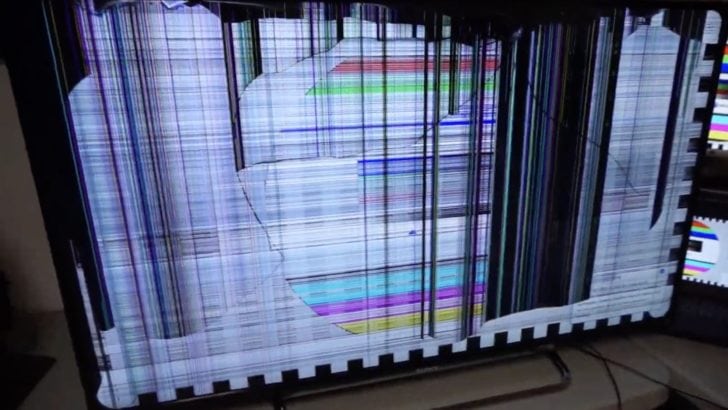
Record a continuous, uncut video showing the serial number sticker on the rear casing, the model plate, and the front panel. Plug the power cable into a known working wall outlet and switch the unit on while recording. Even if the outer glass remains intact, powering the unit reveals underlying matrix fractures, colorful vertical lines, or black internal ink pooling. This visual sequence definitively proves the display failure is physical shock rather than a software defect.
Why Manufacturer Warranty Coverage Shuts Down Physical Damage Claims
Calling customer support for LG, Samsung, Sony, or TCL rarely yields a free replacement when glass is shattered. Standard one-year limited warranties cover internal electronic defects, power supply failures, board burnouts, and manufacturing panel artifacts. They unambiguously exclude external shock, dropped chassis, and broken glass.
Warranty fine print classifies a spiderweb fracture as consumer-induced physical damage unless you possess documented proof that an authorized installation technician opened the carton. Authorized repair technicians will not replace panels under standard coverage because an authentic replacement display costs between 70% and 90% of the television's total retail value.
When you factor in specialized freight for an oversized glass module and certified bench labor running $150, $250 an hour, total screen replacement cost easily surpasses the price of an entire replacement set. Technicians call this condition a "beyond economical repair" threshold. Attempting to argue warranty language with customer support representatives wastes precious time. Your viable financial recovery pathways lie with transit logistics, merchant policies, and consumer payment statutes.
Navigating Freight Inspection Rules and Carrier Liability Disputes
When freight haulers deliver screens larger than 65 inches, signature protocols change substantially. Couriers drop small parcels on doorsteps, but palletized freight carriers often require a consignee signature on a delivery receipt or bill of lading. Signing this sheet without recording comments waives legal claims for visible external trauma.
If the packaging shows visible tears, corner crushing, or footprint marks, you must write "Damaged Subject to Inspection" right above your signature. When you spot obvious internal rattles or protruding frame fragments, reject the delivery outright at your doorstep. Once an unsigned parcel sits inside your home, an invisible timer begins ticking. Major shipping carriers restrict concealed shipping damage claim submissions to windows as short as 48 hours to 5 calendar days following drop-off.
| Resolution Channel | Filing Deadline | Required Documentation | Expected Turnaround |
|---|---|---|---|
| Direct Retailer Return | 14, 30 calendar days | Order number, photos of shattered panel, original carton | 3, 7 business days |
| Carrier Damage Claim | 48 hours, 5 days | Waybill, box photos, freight inspection report, invoice | 15, 30 business days |
| Credit Card Protection | 60, 90 calendar days | Denial notice from seller, repair estimate, checkout receipt | 10, 21 business days |
| Statutory Chargeback | 60, 120 calendar days | Written communications log, proof of delivery return, photo log | 30, 60 business days |
Carriers regularly deflect claims back to the merchant, arguing the item was improperly packed. Concurrently, retailers push liability to couriers, leaving buyers trapped in bureaucratic finger-pointing. Keep in mind that consumer contracts exist directly with the merchant who took your payment, not with the freight vendor they contracted.
Securing an RMA: How to Bypass Retailer Deflection
Your primary objective is securing a Return Merchandise Authorization (RMA) or an immediate carrier pick-up order from the merchant. Major electronics vendors maintain strict timelines for claims involving cracked panels. Best Buy, Target, and Walmart generally enforce a 14-to-30-day electronics return window, but internal automated screening tools flag shattered screens as customer damage unless reported within 48 hours of drop-off.
Contact the retailer via written chat or email rather than voice calls to establish a verifiable paper trail. Open the conversation with precise facts:
"Order #XXXXX arrived damaged in transit on [Date]. The external carton shows visible transit compression, and opening the top padding revealed a cracked OLED panel without any customer handling. I require a prepaid freight return label or scheduled white-glove pickup for a full refund or immediate replacement under your damaged merchandise policy."
If an entry-level tier agent claims they cannot accept broken screens under their standard return policy, immediately request escalation to a supervisor or resolution specialist. Explain that the television arrived unusable and was not broken during consumer possession. Remind them that under commercial trade laws, merchants bear risk of loss during shipment until the goods reach the customer in functional order.
Do not discard any packaging materials until the courier physically loads the television into their truck. Throwing away the cardboard container, molded styrofoam blocks, or packing slips can instantly void return collection rules.
Credit Card Purchase Protection: The Overlooked Consumer Safety Net
If a merchant stops responding or accuses you of causing the damage, rely on your financial institution. Premium credit cards, such as those issued by American Express, Chase, and Capital One, include embedded purchase protection against accidental physical damage or theft.
This built-in coverage typically covers items within 90 to 120 days from the transaction date, providing protection limits between $500 and $10,000 per incident. While standard manufacturer warranties exclude shattered screens, credit card purchase protection is specifically structured to cover acute physical trauma.
To file this claim successfully, supply the following documentation:
- The itemized store receipt detailing the exact television make and purchase price.
- The specific monthly credit card statement displaying the full transaction charge.
- High-resolution photographs showing the screen fracture, outer carton condition, and serial label.
- An official repair estimate or a formal statement from an authorized service provider noting the repair cost exceeds the television's replacement value.
- Written records demonstrating that the seller denied an exchange or return.
If your payment card lacks built-in purchase coverage, explore a formal merchant chargeback under Fair Credit Billing regulations using the reason code for "Defective or Not as Described." When a retailer charges your account for a functioning television but delivers cracked glass, they fail to supply the contracted merchandise. Banks routinely decide these billing disputes in favor of consumers who provide comprehensive photo evidence.
Frequently Asked Questions (FAQ)
Can I repair a broken TV screen yourself by purchasing a replacement panel online?
Sourcing individual television display panels is economically impractical for everyday consumers. Display makers sell raw glass panels in volume directly to assembly facilities rather than consumer supply chains. Replacement displays sold via aftermarket websites regularly cost as much as a new unit once crating and domestic freight charges are tallied, making DIY panel replacement financially unviable.
What should I do if the shipping box shows no signs of damage, but the display panel inside is cracked?
Concealed transit damage occurs frequently when boxes experience high drop shocks or torsional twisting that snaps rigid glass panels inside without puncturing cardboard walls. Contact the seller within 48 hours of delivery, emphasize that the issue is concealed transit shock, and supply full photos of the box alongside the cracked panel powered on to demonstrate internal failure.
Does basic homeowner or renter insurance cover a damaged television that arrived broken?
Standard property policies exclude transit damage that occurred before delivery, as liability lies squarely with the merchant or logistics provider. Even if an accidental damage rider applied, standard deductibles generally range between $500 and $1,000, making insurance claims financially counterproductive for all but ultra-premium home theater displays.
Shielding Future Display Purchases from Transit Loss
Shopping habits in 2026 demand proactive defensive measures when ordering high-end televisions online. As display bezels continue to shrink and panels thin down to mere millimeters, these electronics become far more susceptible to drop shock and transit damage.
Whenever feasible, arrange in-store pickup for sets 65 inches or larger so you can examine the exterior packaging before accepting custody. When choosing delivery, opt for threshold or white-glove setup services that require technicians to unbox, mount, and plug in the television in your presence.
If direct doorstep drop-off remains your only delivery choice, maintain end-to-end evidence. Capture a clear, uncut unboxing video starting from the sealed tape through the initial power-on sequence. Always pay with a credit card that offers robust purchase protection. Treating every fragile parcel as a potential transit damage claim safeguards your rights and ensures you never end up paying for a shattered piece of hardware.


