Dealing With Acute Bloating: Immediate Steps to Unblock Trapped Gas
The sensation arrives without warning: a stabbing ache below the ribs, a hard abdominal wall, and an unmistakable pressure that refuses to move. When intestinal gas becomes trapped along the tortuous curves of the colon, the resulting distension stretches local nerve endings, triggering sharp, debilitating pain that many confuse with gallstones or cardiac events. As detailed in a recent SELF Magazine Report, trapped gas occurs when air pockets pool in anatomical dead zones like the splenic flexure, creating acute discomfort that passive resting rarely resolves.
Flatulence is a normal physiological byproduct of digestion, with the average human expelling gas 12 to 25 times per day. Yet when peristalsis stalls or pelvic muscles clench in response to pain, that gas stays locked in place. Coaxing it out demands a deliberate, biomechanical approach rather than forceful, counterproductive straining.
📌 Key Takeaways:
- The Biomechanical Fix: Inverting the pelvis and adopting targeted postures opens the anorectal angle, using gravity to channel pockets of trapped gas toward the rectum within 5 to 15 minutes.
- Manual Mobilization: Clockwise abdominal massage tracing the ascending, transverse, and descending colon accelerates transit time through tight intestinal bends.
- Pharmacological Support: Over-the-counter simethicone coalesces scattered micro-bubbles into larger, passable gas pockets, while enteric-coated peppermint oil eases smooth muscle spasms.
- Root Causes: Common flare-ups stem from acute aerophagia (swallowing air) and poorly absorbed short-chain carbohydrates, particularly raffinose, fungal mannitol, and sulfurous crucifers.
Postures That Mobilize Colonic Air Fast
The human colon is not a straight pipe. It ascends along the right flank, makes an abrupt 90-degree turn under the liver (hepatic flexure), runs across the upper abdomen, and makes another sharp hairpin turn near the spleen (splenic flexure) before descending toward the pelvis. Gas naturally rises to these upper bends. When you sit or stand upright during an acute bloating episode, buoyant gas bubbles become trapped at the peaks of these anatomical arches.
Reorienting your torso uses gravity to route trapped air downward. The single most reliable physical intervention is the classic wind-relieving pose (known in Sanskrit as Pawanmuktasana). Lie flat on your back on a firm surface, draw both knees up to your chest, and clasp your arms around your shins. Pulling the thighs tightly against the lower ribcage exerts gentle, uniform intra-abdominal pressure that compresses the transverse colon while flexing the hips to relax the puborectalis muscle.
If that fails to trigger release within three to five minutes, transition to the child's pose with an elevated pelvis or a hands-and-knees position. Dropping your chest toward the floor while keeping your hips lifted above your heart flips the colonic slope. Air trapped in the sigmoid colon moves swiftly toward the rectum. Hold this inversion for 8 to 10 slow, deep diaphragmatic breaths. Expanding the belly against the thighs stretches the pelvic floor, providing the physical clearance needed to pass gas without pushing.
Clockwise Abdominal Massage: The I-L-U Technique
When physical repositioning alone does not dislodge trapped air, physical manipulation along the colonic path can break up gas pockets. Physical therapists and gastroenterologists widely recommend the "I Love You" (I-L-U) massage protocol, an external tactile therapy designed to match the natural peristaltic rhythm of the large bowel.
Begin by lying flat on your back with knees slightly bent and feet flat on the floor to keep the abdominal wall completely slack. Use moderate, steady pressure with the pads of three fingers:
First, trace a straight line down the left side of your abdomen, moving from just beneath your left ribcage down to your hip bone (the "I"). Repeat this downward stroke 10 times to clear the descending and sigmoid colon.
Second, trace an inverted "L" shape. Start underneath the right ribcage, slide straight across the upper abdomen beneath the sternum to the left ribcage, and then sweep downward to the left hip. Repeat this sequence 10 times to guide gas through the transverse colon.
Third, complete the inverted "U". Begin in the lower right quadrant near the appendix, push upward toward the right ribcage, move across the upper belly to the left, and travel down to the lower left quadrant. Performing this complete loop for 5 to 7 minutes stimulates localized mechanoreceptors, triggering propulsive contractions that shepherd gas toward the rectum.
Comparing Rapid Relief Interventions
Choosing the correct remedy depends on whether your pain originates from structural blockages, smooth muscle cramping, or foamy gas suspensions. The table below compares the primary home interventions by speed, mechanism, and practical limitations.
| Method | Response Window | Primary Mechanism | Best Suited For |
|---|---|---|---|
| Wind-Relieving Pose | 3, 10 minutes | Realigns anorectal angle; compresses colon mechanically | Sudden lower-abdominal distension |
| I-L-U Abdominal Massage | 5, 15 minutes | Manually pushes pockets through splenic/hepatic bends | Sluggish motility, post-meal fullness |
| Simethicone (125, 250 mg) | 20, 45 minutes | Reduces liquid surface tension; merges micro-bubbles | Diffuse, foamy, upper-GI gas pain |
| Peppermint Tea / Menthol | 15, 30 minutes | Blocks smooth-muscle calcium channels to stop spasms | Colonic cramping, IBS-related trapped gas |
| Deep Squat / Pelvic Drop | 2, 5 minutes | Releases the puborectalis muscle sling completely | Air stuck right at the rectal vault |
Neuromuscular Triggers and Pelvic Floor Relaxation
When stomach pain spikes, the involuntary human response is to tighten the abdominal wall and clench the buttocks. This defensive posture is counterproductive. Clenching locks the puborectalis muscle, a sling-like band wrapping around the rectum that maintains fecal continence. Pulling that sling tight creates a sharp kink in the anorectal canal, making flatulence physically impossible no matter how hard you push.
Forceful straining increases venous pressure in the anal cushions, inviting hemorrhoidal flares without releasing the trapped air. Instead of pushing, you must induce pelvic drop. Sit on a toilet with your feet resting on a six-to-nine-inch footstool, placing your knees above your hips in a 35-degree squatting posture.
Inhale deeply through your nose, expanding your belly and sides rather than your upper chest. As you exhale, imagine your sitting bones widening apart. This down-training cue signals the internal and external anal sphincters to disengage. A low-pitched vocal hum or gentle "shhh" sound during the exhale helps prevent the Valsalva maneuver, dropping pelvic resistance and letting colonic pressure vent on its own.
Pharmacological Aids and Digestive Motility Enhancers
When physical maneuvers stall, targeted over-the-counter options help alter the physical properties of trapped gas. The gold standard for rapid chemical relief is simethicone, dosed between 125 mg and 250 mg. Simethicone is an inert surfactant that does not enter the bloodstream. Instead, it works strictly within the digestive lumen by breaking the surface tension of mucous-coated bubbles. Millions of tiny, immovable micro-bubbles collapse into a single, cohesive volume of gas that peristalsis can easily push out.
Botanical antispasmodics provide a parallel path to relief. Peppermint tea or enteric-coated peppermint oil capsules contain high concentrations of l-menthol. Menthol acts as a natural calcium channel antagonist in gastrointestinal tissue, preventing extracellular calcium from entering smooth muscle cells. This blocks intestinal spasms, relaxing the hyperactive circular muscles of the bowel wall that clamp down around air pockets.
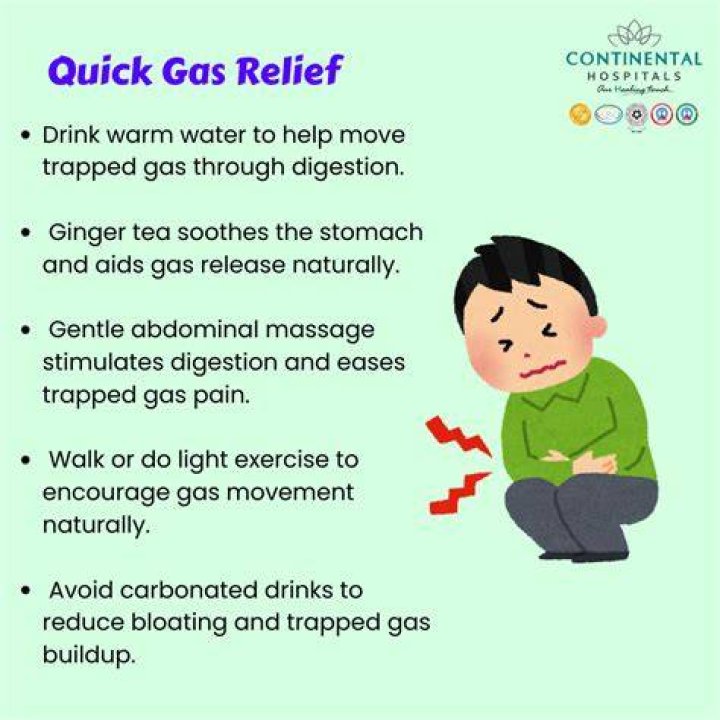
Pair chemical aids with light physical ambulation. A brisk 10-to-15-minute walk stimulates the release of motilin, an endocrine hormone that drives the migrating motor complex (MMC). Gentle pacing jostles the intestines, helping move gas toward exit points far faster than staying curled up in bed.
Dietary Culprits and Aerophagia: Stopping the Recurrence
Resolving an immediate bout of trapped gas is step one; pinpointing the source prevents the next one. A significant portion of sudden-onset gas is simply swallowed atmospheric air, a condition known as aerophagia. Drinking through straws, chugging carbonated seltzers, chewing gum, and eating during high-stress conversations introduce huge quantities of nitrogen and oxygen directly into the stomach. While much of this air is expelled through belching, unvented pockets travel downstream into the small and large intestines.
The remaining bulk of intestinal gas stems from colonic fermentation. As reported by Men's Health, certain fermentable foods generate aggressive amounts of hydrogen, methane, and hydrogen sulfide gases when metabolized by gut flora. Cruciferous vegetables (broccoli, cabbage, Brussels sprouts) contain high amounts of the complex carbohydrate raffinose, which humans lack the enzymes to break down in the upper GI tract.
Furthermore, an investigation by EatingWell highlighted that common culinary mushrooms pack substantial concentrations of mannitol, a sugar alcohol that draws excess fluid into the bowel before undergoing rapid microbial fermentation. When combined with carbonated drinks or rushed meals, these poorly absorbed substrates turn the colon into a pressure cooker.
Frequently Asked Questions (FAQ)
Can straining to force out a fart cause serious physical damage?
Yes. Bearing down forcefully while holding your breath (the Valsalva maneuver) spikes intra-abdominal and venous pressure. This habit risks engorging hemorrhoidal veins, causing painful thrombosis, bleeding, or anal fissures. Gas evacuation should rely on postural opening and muscular relaxation rather than brute pushing force.
Why does trapped gas often cause intense pain under the left ribcage?
This is known clinically as splenic flexure syndrome. The anatomical bend where the transverse colon meets the descending colon sits directly under the spleen and adjacent to the diaphragm. Gas rising into this high corner stretches the visceral peritoneum, generating localized sharp pains that frequently radiate toward the left shoulder and mimic chest or heart conditions.
When does acute abdominal gas pain warrant an emergency room visit?
While benign gas pain can be excruciating, it typically moves or eases with postural changes within a few hours. Seek immediate medical evaluation if the bloating is accompanied by a rigid, board-like abdomen, persistent vomiting, fever, blood in the stool, unexplained weight loss, or an inability to pass either gas or stool for over 24 to 48 hours, which may indicate a bowel obstruction.
Reclaiming Gut Mobility When Gas Halts Digestion
Trapped gas pain is an intense biomechanical dilemma with a straightforward mechanical solution. Treating the body like a closed pneumatic system yields the fastest results: drop the pelvic floor, manipulate the colon along its anatomical transit path, invert the torso to clear intestinal hairpin turns, and use surfactants like simethicone to break up micro-bubbles.
Managing recurrent episodes requires daily awareness of gut speed. Track your intake of high-mannitol and sulfur-dense carbohydrates, eliminate the hidden sources of swallowed air that flood the stomach, and prioritize post-meal movement. By swapping forced straining for targeted physical decompression, you give the digestive tract the physical space it needs to vent pressure safely and comfortably.