Gram Flour, Besan, or Garbanzo? The Real Differences Explained

Walk down the baking aisle of any well-stocked supermarket, and you will encounter an array of pale yellow flours bearing seemingly interchangeable labels: garbanzo bean flour, besan, and gram flour. To the casual shopper, they appear identical. Grab the wrong package for a batch of Ligurian flatbread or an Indian spiced yogurt curry, however, and your dinner will quickly unravel into either a gummy paste or a gritty, separated mess.
The confusion stems from culinary shorthand that collapses distinct pulse varieties, milling techniques, and regional traditions into a single pantry category. As home cooks turn to comfort staples like the yogurt-simmered pakoras highlighted in a recent Serious Eats Report, the precision of your flour selection matters immensely. Substituting standard supermarket chickpea flour for traditional besan does not just alter flavor; it alters the fundamental chemistry of your batter.
📌 Key Takeaways:
- Botanical Origin: Western garbanzo bean flour is milled from large, beige Kabuli chickpeas, while authentic Indian besan comes exclusively from split, husked brown Desi chickpeas (chana dal).
- Milling and Texture: Besan undergoes a micro-milling process that produces a silky, powdery texture with rapid hydration, whereas standard garbanzo flour retains a grittier grain that absorbs liquid more slowly.
- The "Gram Flour" Trap: In the UK and Commonwealth markets, bags labeled "gram flour" frequently blend split yellow peas with chickpeas, drastically changing gelatinization behavior during cooking.
- Culinary Application: Use fine besan for delicate savory pancakes and yogurt-based gravies; reserve coarser garbanzo flour for high-heat Mediterranean flatbreads like socca and farinata.
The Botanical Divide: Desi Chana Versus Kabuli Chickpeas
The primary source of confusion lies in botany. Chickpeas are not a monolith; they divide into two main varieties: Desi and Kabuli.
Kabuli chickpeas dominate Western agriculture and grocery shelves. They are large, beige, smooth-skinned, and relatively mild in flavor. When American brands mill "garbanzo bean flour," they grind whole, raw Kabuli chickpeas. The resulting meal possesses an earthy, slightly vegetal aroma and a distinct graininess when rubbed between your fingers.
Besan tells an entirely different botanical story. Produced across South Asia, true besan is milled from Bengal gram (chana dal), the split and skinned kernel of the Desi chickpea. Desi seeds are small, wrinkled, dark brown, and structurally denser than Kabuli beans. Once hulled and split into chana dal, the seeds reveal a bright yellow interior with a higher concentration of soluble starches and a sweeter, deeply nutty profile. Grinding this single-origin pulse yields an ultra-fine, velvety powder that behaves more like cornstarch or pastry flour than whole-grain meal.
Then comes commercial gram flour, particularly across British and European retailers. While historically synonymous with besan, mass-market manufacturers often blend split Desi chana with yellow split peas (Pisum sativum) to manage raw material costs. That subtle inclusion shifts both the flavor profile and the protein matrix, resulting in a heavier, more tannic batter that sets with a noticeably firmer bite.
Grind, Density, and Hydration: Why Direct Swaps Fail
Milling mechanics govern how pulse flours hydrate. Whole Kabuli chickpea flour retains portions of the seed coat, creating irregular, angular particles. When whisked with water, it resists immediate saturation. The flour requires prolonged resting periods, often 30 to 60 minutes, for moisture to penetrate the dense cellular walls of the bean fragments. If cooked immediately, dishes develop a chalky mouthfeel and a lingering raw-bean bitterness.
Besan, by contrast, is pulverized on stone or high-speed roller mills into microscopic particles. It hydrates almost instantaneously. Whisked into water, stock, or milk, besan forms an immediate, lump-free slurry capable of suspending itself without gritty sediment. This behavior makes it the premier choice for delicate batters like besan chilla (spiced savory pancakes), where a smooth, pourable consistency is essential for achieving paper-thin, crisp edges.
The hydration variance also ruins structural moisture ratios in gluten-free baking. A cup of standard garbanzo bean flour weighs approximately 120 grams, whereas a cup of sifted besan weighs roughly 95 to 100 grams due to its airy, fine grind. Swapping them cup-for-cup without adjusting water volume causes batters to either seize into a dense dough or spread uncontrollably across the pan.
Flour Variety and Culinary Performance Comparison
Understanding which pulse flour to buy requires comparing their processing methods, water absorption capabilities, and ideal culinary roles.
| Flour Designation | Base Ingredient | Texture & Grind | Hydration Rate | Ideal Culinary Use |
|---|---|---|---|---|
| Besan (Gram Flour) | Split brown Desi chickpeas (Chana Dal) | Micro-fine, silken powder | Rapid (instantly emulsifies) | Kadhi pakora, chilla, deep-fry coatings, Indian sweets (ladoo) |
| Garbanzo Bean Flour | Whole white/beige Kabuli chickpeas | Medium-coarse, slightly grainy | Slow (requires 30+ min rest) | Socca flatbread, farinata, rustic quick breads, falafel binder |
| Commercial UK Gram Flour | Chana dal blended with yellow split peas | Fine to medium-dense | Moderate | Onion bhajis, vegetable pakoras, heavy sauce thickeners |
Savory Classics: From Mediterranean Farinata to Indian Kadhi
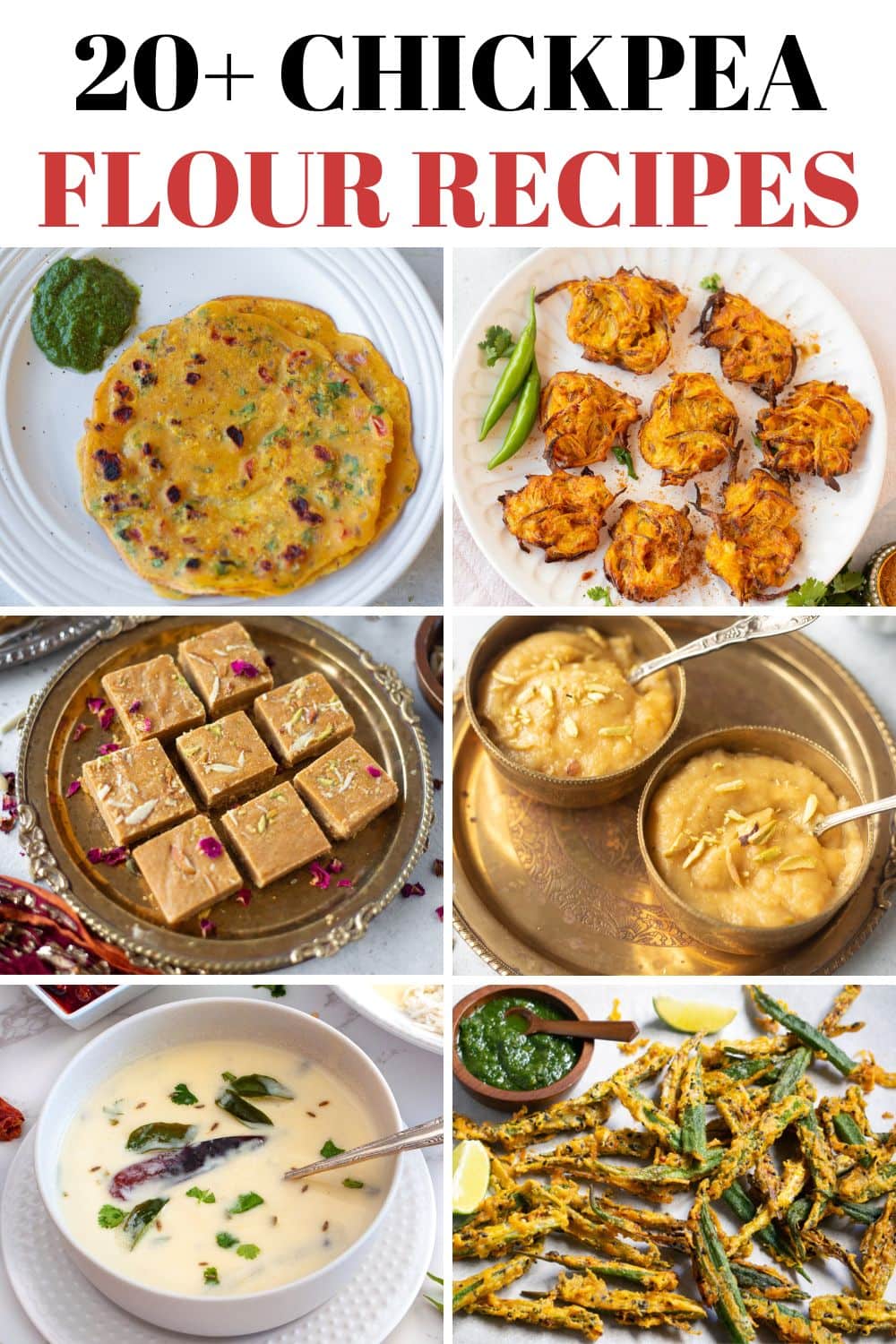
Nowhere are these physical differences more apparent than in regional flatbreads and stews. Consider the farinata recipe of Liguria and its Provençal cousin, socca flatbread. Both rely on a minimalist formulation: chickpea flour, water, extra virgin olive oil, and sea salt, baked at blistering temperatures inside heavy cast iron or copper tins.
Because traditional Mediterranean socca relies on coarse Kabuli meal, resting the batter is mandatory. During this resting phase, complex starches swell, enzymatic breakdown moderates raw pyrazines (the compounds responsible for bitter, beany flavors), and the surface foam settles. Poured into a scorching, oil-slicked pan at 450°F to 500°F (230°C, 260°C), the coarse starch matrix yields a custardy, moist interior sheltered beneath a crackling, blistered crust.
Attempt that same preparation with micro-fine besan, and the batter absorbs oil differently, creating a denser, more uniform pancake rather than the desired custardy split crumb. Conversely, besan reigns supreme in kadhi pakora, the North Indian comfort dish where yogurt is simmered with chickpea flour and crowned with spiced fritters. In kadhi, besan serves a critical biochemical role: its soluble proteins cross-link with dairy proteins, stabilizing the emulsion and preventing the yogurt from splitting over direct heat.
Baking Chemistry: Vegan Egg Substitutes and Fudgy Brownies
Beyond regional traditions, pulse flours have emerged as a high-protein flour alternative in modern culinary science. Chickpea flour contains roughly 21 to 22 grams of protein per 100 grams, alongside generous reserves of insoluble dietary fiber and iron. In its annual nutritional flour review, EatingWell ranked pulse flours among the top functional alternatives to refined white wheat, citing their low glycemic load and rich mineral density.
In sweet and savory gluten-free baking, chickpea flour excels through functional protein behavior:
- Binding Agent in Cooking: The starch-protein complex mimics the structural network of egg proteins. Whisking three tablespoons of besan with three tablespoons of water yields an exceptional vegan egg substitute for binding veggie patties, fritters, and casseroles without gummy binders like xanthan gum.
- Moisture Retention in Rich Batters: In treats like chickpea flour brownies, highlighted in Camilla V. Saulsbury's The Chickpea Flour Cookbook, the pulse’s hydrophilic starches trap fats and sugars tightly. This generates an extraordinarily fudgy crumb that stays moist for days without developing the dry crumble typical of rice-flour blends.
- Toasting for Flavor Control: Raw chickpea flour contains volatile compounds that taste astringent when undercooked. Dry-toasting the flour in a wide skillet over medium-low heat for 6 to 8 minutes until pale golden neutralizes the grassy bitterness, leaving behind a toasted hazelnut aroma ideal for delicate desserts and cookies.
The Market Shift: From Regional Essential to Global Staple
The evolution of chickpea flour from an ethnic market staple to a centerpiece of global retail reflects shifting dietary patterns. Reporting by NPR's The Salt chronicled how an ancient pulse flour, central to South Asian and Mediterranean diets for millennia, became embraced by Western health trends seeking nutrient density, allergy safety, and plant-based protein.
Industrial demand shows no sign of slowing. Market projections published by Future Market Insights indicate that the global chickpea flour sector is expanding at a steady compound annual growth rate, driven by commercial bakeries replacing refined starches with pulse flours to hit clean-label protein targets. What home cooks are discovering on their cutting boards matches what industrial food scientists already know: pulse flours offer structural cohesion, moisture control, and nutritional density that few grain starches can replicate.
Frequently Asked Questions (FAQ)
Q1: Can I substitute garbanzo bean flour for besan at a 1:1 ratio in recipes?
A1: Not directly by volume. Garbanzo bean flour is coarser and heavier than besan. If a recipe calls for besan, weigh your ingredients with a digital scale rather than using cup measurements. When substituting garbanzo flour into a besan recipe, allow the batter to rest for at least 20 to 30 minutes and add one to two tablespoons of extra water to compensate for the higher liquid absorption of Kabuli chickpeas.
Q2: Why does my chickpea flour flatbread or batter taste bitter?
A2: Bitterness indicates undercooking. Raw chickpeas contain astringent saponins and pyrazines that break down only when exposed to sufficient heat or enzymatic resting. To fix this, let your batter rest for 30 minutes before cooking, ensure your oven or skillet reaches high heat (above 400°F/200°C), or dry-toast the dry flour in a skillet for several minutes before whisking it into liquids.
Q3: Is besan naturally gluten-free, and is cross-contamination an issue?
A3: Pure besan, garbanzo bean flour, and gram flour are 100% gluten-free by nature because pulses do not contain gluten proteins. However, cross-contamination often occurs during agricultural harvesting and milling. If you manage celiac disease or severe gluten sensitivity, purchase brands certified gluten-free, as standard Indian grocery brands may process besan on shared lines with wheat flour.
Mastering the Pulse Pantry for Modern Kitchens
Achieving consistent results with pulse flours comes down to recognizing that garbanzo bean flour, besan, and gram flour are specialized ingredients with distinct structural personalities. They are not interchangeable commodities.
Stock your kitchen thoughtfully. Keep stone-ground garbanzo bean flour on hand when you want the blistered, rustic crust of a Mediterranean socca or need a sturdy binder for pan-fried vegetable fritters. Keep a tightly sealed container of authentic, micro-milled Indian besan ready for velvety sauces, quick breakfast chillas, and delicate gluten-free baking. Selecting the specific flour engineered for your dish turns a frustrating, dense culinary failure into an effortless, perfectly textured meal.