The Evolution of Taco Rice: From Okinawa Comfort Food to American Casserole
Decades before suburban dinner tables adopted it as an easy family meal prep staple, taco rice was born out of economic necessity and cross-cultural trade outside military gates. In 1984, Matsuzo Gibo, founder of Parlor Senri in Kin Town, Okinawa, began piling seasoned ground beef, shredded iceberg lettuce, and processed cheese atop mounds of hot short-grain white rice. Stationed young service members wanted cheap, filling Tex-Mex flavors, but crispy corn shells shattered easily and cost too much to import. Gibo solved the logistical bottleneck with a local starch, creating an enduring staple of US military culinary fusion, as documented in a detailed historical review by the Stripes Okinawa Report.
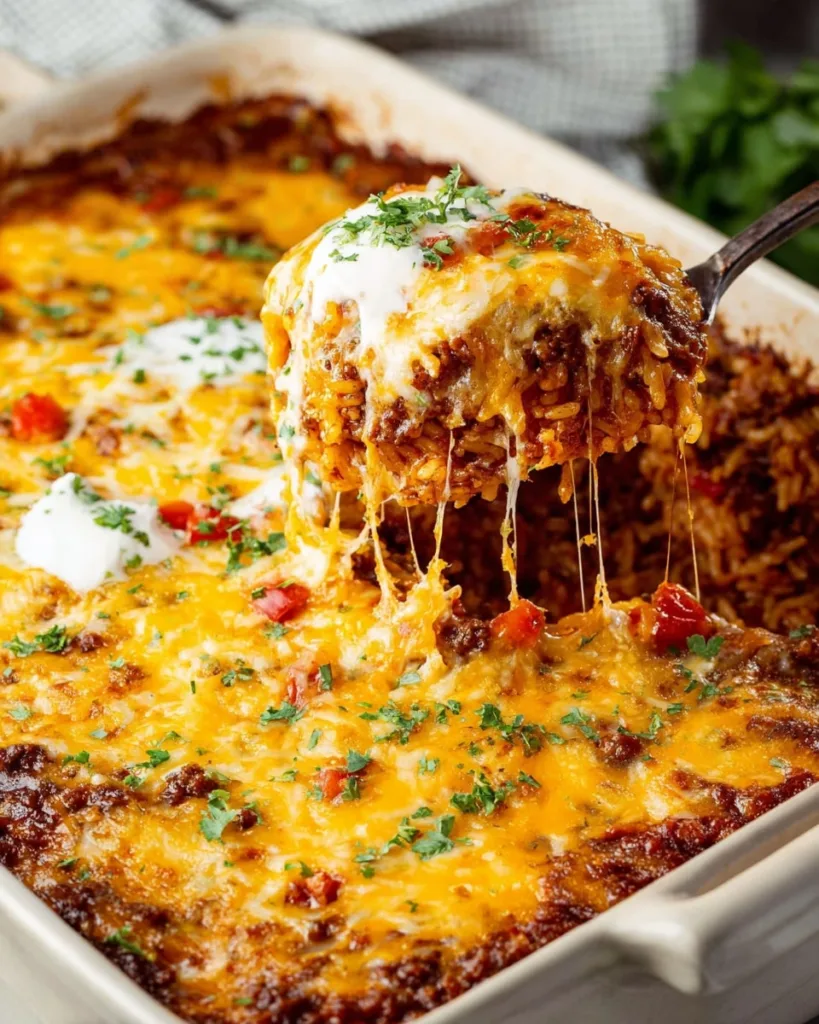
Four decades later, that handheld takeout invention has migrated across the Pacific and transformed into a powerhouse comfort food bake. Driven by high grocery inflation and time-strapped schedules, modern home cooks have retired the cold-lettuce bowl format in favor of the taco rice casserole. By uniting baked Mexican rice with bubbling proteins and molten cheese in a single dish, the contemporary casserole delivers a high-yield weeknight dinner for under $3.50 per serving.
📌 Key Takeaways:
- The Post-War Origin: Invented outside Camp Hansen in 1984, taco rice bypassed brittle taco shells to pair military Tex-Mex spices with affordable Japanese short-grain rice.
- The Modern Casserole Shift: American home cooks restructured the original diner bowl into a one-pan baked casserole, substituting raw lettuce with baked black beans, salsa, and melted cheese to survive reheating.
- Budget Efficiency: Driven by consumer demand for cost-effective cooking, the dish stretches a single pound of ground beef across six full portions using pantry staples.
From Kin Town Diners to US Domestic Stoves
The Okinawan taco rice origins trace back to a specific geography: the commercial strip fronting Camp Hansen. When US Marines walked through the gates into Kin Town during the mid-1980s, their appetite for familiar Tex-Mex food clashed with local supply chains. Imported hard shells broke during transit across the Pacific. Flour tortillas went stale on humid docks.
Matsuzo Gibo saw an opening. White rice was abundant, subsidized, and universally stocked in Japanese commercial kitchens. By cooking ground beef taco seasoning directly into bulk mince and layering it over warm rice, Gibo created a calorie-dense plate that cost around 300 to 500 yen ($2.00 to $3.50). The format proved so popular that Gibo expanded it through his King Tacos chain, cementing the dish as Okinawa's ultimate soul food. Military personnel rotating back to stateside bases in North Carolina, Texas, and California carried the memory of those late-night takeout styrofoam cartons home with them.
Once inside domestic American kitchens, however, the dish collided with suburban weeknight cooking patterns. The original Kin Town version was strictly assembled cold-over-hot: piping-hot rice, hot seasoned ground beef, a handful of sharp cheddar, cold shredded lettuce, diced fresh tomatoes, and spicy ketchup or salsa. That architecture falls apart in a Pyrex dish. Cold shredded lettuce turns slimy when stored, and modern families needed dinner solutions they could assemble ahead of time, freeze, and bake in a hot oven.
The Culinary Architecture of the Baked Casserole
Adapting taco rice into a true comfort food bake required redesigning the dish's moisture balance. In a traditional bowl, rice acts as a passive base catching spiced beef fat. In an oven-baked casserole, dry grains turn hard while soggy grains turn to mush. Successful recipes rely on a par-cooked or baked Mexican rice foundation, enriched with tomato paste, chicken stock, and garlic before it ever hits the casserole dish.
The middle structure swaps delicate fresh produce for heat-stable fibers. Home cooks apply a concentrated black beans and salsa layer over the rice base, which seals moisture inside the lower grains while preventing beef grease from pooling at the bottom. The seasoned ground beef, cooked down with cumin, smoked paprika, chili powder, and onion, forms the core protein stratum.
Instead of mild, room-temperature shreds, the baking process demands a generous blanket of shredded cheddar jack cheese. When baked at 375°F (190°C) for 20 to 25 minutes, the Monterrey Jack provides stretch and creaminess while the sharp cheddar yields a savory, browned surface. The result resolves the primary flaw of traditional American ground beef casseroles: bland, dry rice buried beneath oily meat.
How the Dish Evolved: Okinawa Bowl vs. American Bake
The evolution from Japanese diner plate to American oven bake reflects differing cultural lifestyles and kitchen layouts. While Okinawan cooks prioritize fast, handheld takeout eating, American cooks look for high-yield freezer efficiency and bulk prep.
| Culinary Dimension | Kin Town Original (1984, Present) | Modern American Bake (2024, 2026) |
|---|---|---|
| Base Foundation | Plain steamed Japanese short-grain rice | Seasoned baked Mexican rice with broth and tomato |
| Produce Elements | Raw, finely shredded iceberg lettuce and fresh tomatoes | Canned black beans, jarred chunky salsa, roasted corn |
| Heat Application | None post-assembly; eaten hot-and-cold immediately | Baked at 375°F for 20, 25 minutes until bubbling |
| Textural Crown | Crisp, cold raw vegetables | Crispy tortilla chip crust or crushed corn tortilla layer |
| Average Batch Cost | $3.00, $4.50 per individual portion | $12.50, $16.00 for a 6-to-8 serving 9x13-inch pan |
Inflation Economics and the Weeknight Pan
The rising popularity of the budget weeknight casserole is directly linked to supermarket price pressures. Fresh grocery staples face volatile pricing swings, prompting consumers to seek reliable, cost-efficient family meals. A single pound of 80/20 ground beef costs between $5.20 and $6.10 at major grocers. When prepared as traditional hard-shell tacos, one pound yields roughly eight tacos, barely feeding two active adults and a teenager.
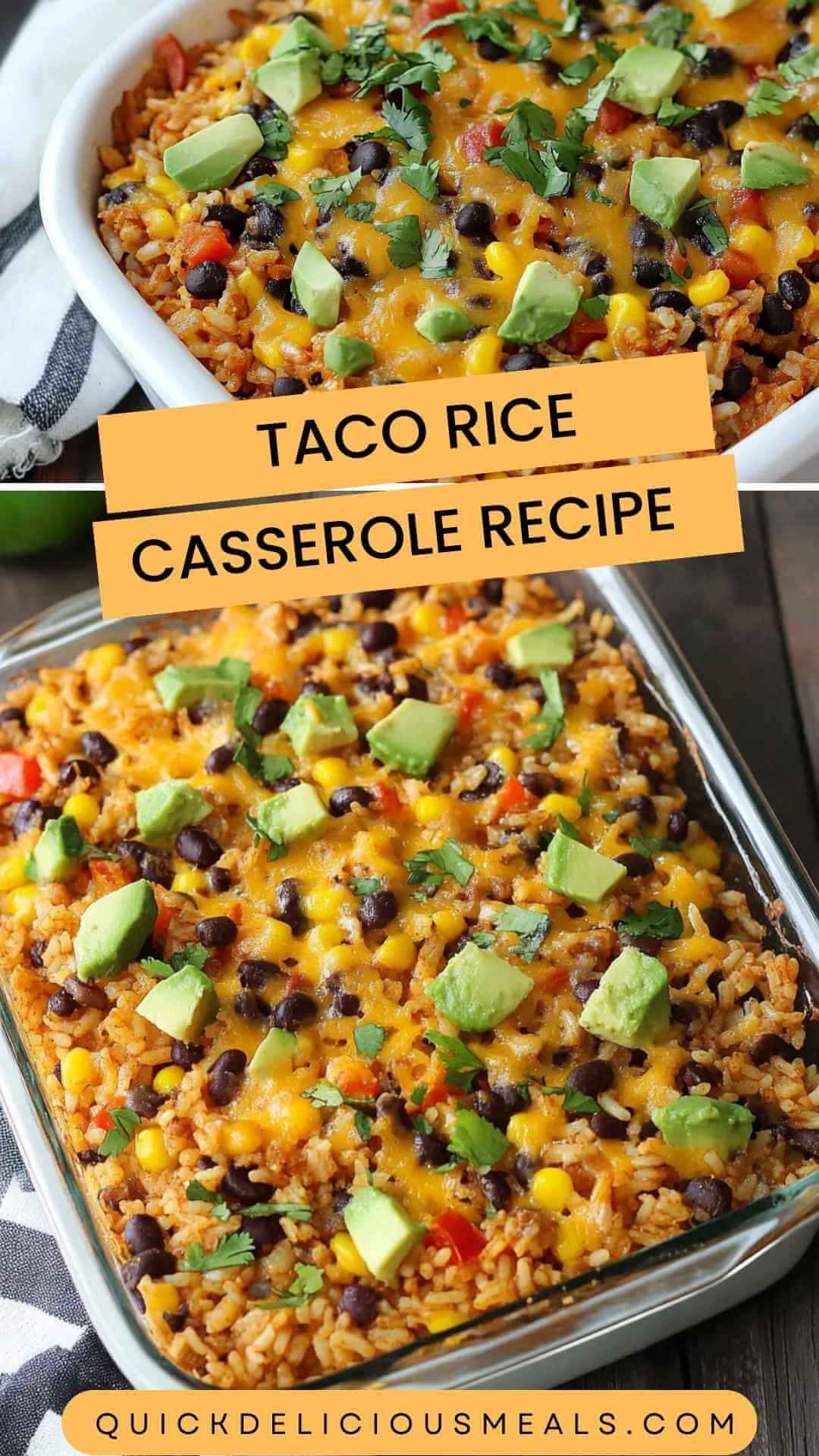
Casserole geometry changes the math. By folding that same single pound of ground beef into two cups of long-grain rice, a $1.10 can of black beans, a $1.89 jar of salsa, and eight ounces of cheese, the meal stretches to feed a family of six with leftovers. The dish lands at roughly $2.40 per serving, making it an indispensable tool for household budget management.
The dish has also moved into the domain of cast-iron cooking. Working parents increasingly favor one-dish skillet dinners, searing the beef, simmering the rice, and baking the entire dish in a single 12-inch cast-iron pan. This approach eliminates separate saucepans, cuts clean-up time to five minutes, and develops a crisp rice crust around the pan edges reminiscent of Spanish socarrat or Persian tahdig.
Textural Balance: Preventing Casserole Mush
The fatal flaw of amateur rice casseroles is uniform softness. When starch, meat fat, and cheese melt together inside an enclosed dish, the texture can turn unappealingly pasty. Professional test kitchens resolve this through sequential layering and finishing garnishes.
To retain crunch, modern recipes incorporate a crispy tortilla chip crust added during the final five minutes of baking. Placing crushed salted tortilla chips or crushed corn tostadas across the molten cheese layer exposes them to top-element heat, browning them without letting them absorb internal steam. High-heat baking keeps the crunch sharp.
Temperature contrast balances the final bite. Before serving, the hot bake receives a cold sour cream and cilantro garnish, alongside pickled jalapeños or diced scallions. The cold, acidic dairy cuts straight through the richness of the seasoned beef and cheese, mirroring the contrast Matsuzo Gibo originally designed for off-duty Marines in 1984.
Frequently Asked Questions (FAQ)
Q1: Can I make taco rice casserole ahead of time without the rice getting soggy?
A1: Yes, but keep the components slightly undercooked. Cook your rice to al dente rather than soft, assemble the layers in your baking dish, cover tightly with foil, and refrigerate for up to 48 hours. Add 10 minutes to the total baking time if cooking straight from the refrigerator. Never add the tortilla chip topping until the final five minutes of baking, or the chips will turn soggy.
Q2: Is authentic Okinawan taco rice baked in an oven?
A2: No. The original Okinawan dish is strictly an unbaked diner bowl. It is assembled by layering steaming-hot Japanese white rice, hot taco-seasoned ground meat, cold shredded cheese, cold iceberg lettuce, diced tomatoes, and salsa. The baked casserole is an American regional adaptation built for family-style baking and batch storage.
Q3: What type of rice performs best in a baked casserole format?
A3: Long-grain white rice or parboiled converted rice works best. These varieties contain higher amounts of amylose starch, which keeps individual grains separate and firm when baked under heavy sauces. Short-grain Japanese rice and Calrose rice contain more amylopectin, which can turn gummy if baked for extended periods under moist layers of salsa and beans.
The Lasting Appeal of Military Fusion Cooking
Culinary history shows that lasting comfort food rarely emerges from pristine laboratory kitchens. It comes from practical cooks solving real-world supply problems under tight budgets. Matsuzo Gibo did not set out to create a global food icon when he opened Parlor Senri; he was simply finding a way to feed hungry Marines using the ingredients available in post-war Okinawa.
The migration of taco rice from an island diner into mainland American oven dishes proves how adaptable smart food ideas can be. Whether served over short-grain rice in Kin Town or baked beneath cheddar jack in an Ohio kitchen, the core formula holds firm: seasoned beef, rice, sharp cheese, and a hit of acidity. In a home cooking landscape dominated by rising food costs and hectic evenings, this versatile one-pan dinner remains one of the smartest, most satisfying meals you can put on the table.