The Frozen Fruit Snack Craze: Viral Health Fad or Legitimate Low-Calorie Superfood?

Open the freezers of health-conscious eaters across the country, and the traditional tubs of churned cream have largely vanished. In their place sit resealable bags of frosty produce: jagged chunks of mango, frosted raspberries, and deeply pigmented wild berries. What started as an internet hack for curbing midnight sweet cravings has evolved into a full-scale dietary movement. Culinary professionals and nutritionists have taken note; an industry survey featured in an EatingWell Report revealed an overwhelming consensus among culinary leaders and clinical dietitians, who uniformly keep frozen fruit stocked as an essential daily pantry staple over ultra-processed snacks.
Yet as consumers consume entire bags under the halo of clean eating, metabolic specialists are raising nuanced questions. Does eating frozen fruit provide genuine metabolic advantages for weight management, or does the concentrated fructose trigger subtle blood sugar spikes? The answer lies at the intersection of cellular botany, thermodynamics, and digestive neurobiology.
📌 Quick Summary:
- The Behavioral Mechanism: Sub-zero temperatures alter fruit texture into a crystalline sorbet that forces slow, mindful chewing, dramatically cutting real-time consumption rates.
- The Biochemical Edge: Flash-freezing at peak harvest preserves up to 95% of anthocyanins and ascorbic acid, often beating refrigerated fresh supermarket produce transported over several days.
- The Metabolic Reality: Whole frozen fruit delivers intact dietary fiber that buffers glucose absorption, though individuals managing insulin resistance must monitor high-glycemic tropical fruits.
The Freezing Science Behind Texture, Satiety, and Ice Cream Swaps
The human brain registers pleasure through a combination of sweet taste, mouthfeel, and thermal sensation. Ice cream satisfies cravings because milk fats lubricate the palate while cooling nerve endings in the tongue. When fruit freezes, water within plant vacuoles expands, piercing plant cell walls through ice crystal formation. This cellular rupture yields an unexpected textural benefit: semi-thawed fruit mimics churned dairy.
Biting into frozen mango chunks offers a creamy, sorbet-like consistency without added hydrogenated oils or stabilizers. The presence of natural pectin, combined with tiny intercellular ice lattices, provides a velvety chew that fools the tongue. Consumers seeking an ice cream alternative lean heavily on this phenomenon.
Pacing dictates satiety. Snacking on cold items enforces portion moderation simply through oral mechanics. A cold berry cannot be swallowed rapidly; the sensory receptors in the mouth register the temperature, forcing smaller bites and deliberate mastication. This prolonged oral transit time gives leptin, the body's primary satiety hormone, roughly 15 to 20 minutes to signal the hypothalamus that caloric intake has occurred. The physical barrier of cold prevents the unconscious hand-to-mouth binge common with potato chips or confections.
Clinical Reality: Blood Sugar Impact and Glycemic Mechanics
Critics frequently point to sugar content when evaluating fruit intake. One cup of diced fruit contains anywhere between 12 to 24 grams of carbohydrates, predominantly fructose and glucose. The critical clinical distinction rests on food architecture. Liquid fruit smoothies and cold-pressed juices destroy the cellular matrix, unleashing free sugars that spike postprandial blood glucose. Whole frozen fruit preserves insoluble cellulose and soluble pectin.
Consider frozen blueberries, which register a low Glycemic Index (GI) score between 40 and 53. Their intact cellular walls slow enzymatic breakdown in the duodenum. The dietary fiber intake from a one-cup serving provides approximately 4 grams of fiber, which forms a gelatinous mesh in the small intestine. This mesh delays gastric emptying, flattening both blood glucose spikes and subsequent insulin surges.
Varietal selection matters when tailoring a nighttime eating routine. Temperate berries maintain a very modest glycemic load, whereas tropical offerings like pineapple, grapes, and bananas carry higher concentrations of readily accessible sucrose. For sedentary evening screen time, an unchecked bowl of high-sugar tropical fruit can still trigger an unwanted glucose surge followed by nocturnal hypoglycemia, leaving eaters awake and hungry at 2 a.m.
Nutrient Retention: Fresh Produce vs. Flash-Frozen Chemistry
A widespread assumption persists that fresh produce harvested days ago is nutritionally superior to items pulled from an industrial freezer. Agricultural food chemistry tells the opposite story. Fresh fruit destined for conventional grocery shelves is often harvested before physiological maturity, ripened artificially with ethylene gas, and subjected to days of heat, light, and vibration in transit. Oxidation begins degrading fragile micronutrients immediately upon picking.
Commercial operations utilize Individual Quick Freezing (IQF) technology within hours of harvest. Temperatures drop rapidly to -40°F (-40°C), suspending cellular degradation and immobilizing water before massive crystalline shears can pulverize all internal phytochemical structures. The resultant nutrient retention in flash-freezing protects key bioactive components, including polyphenol clusters and vitamin C.
| Snack Profile (100g Serving) | Caloric Density & Sugar | Fiber Content | Metabolic Impact / GI |
|---|---|---|---|
| Wild Frozen Blueberries | 57 kcal | 10g natural sugar | 4.1g | Low (GI ~45); rich in anthocyanins |
| Frozen Mango Chunks | 60 kcal | 14g natural sugar | 1.6g | Moderate (GI ~55); high beta-carotene |
| Frozen Dark Sweet Cherries | 63 kcal | 13g natural sugar | 2.1g | Low (GI ~22); rich in polyphenols & natural melatonin |
| Standard Vanilla Dairy Ice Cream | 207 kcal | 21g added sugar | 0.7g | High glycemic surge buffered only by 11g saturated fat |
Studies evaluating antioxidant density indicate that frozen wild blueberries, harvested and blast-frozen immediately, frequently present higher bioavailable concentrations of cyanidin-3-glucoside than chilled fresh counterparts that have spent a week in store distribution channels. Freezing crystallizes the plant tissue, effectively fracturing the botanical skins and releasing polyphenolic compounds during digestion.
Managing Late-Night Cravings and Portion Control Realities
Evening kitchen browsing often sabotages dietary interventions. Fatigue depletes prefrontal executive control, making the brain susceptible to cravings for energy-dense, hyper-palatable combinations of refined sucrose and lipids. A low-calorie dessert substitute must address both neurochemical reward seeking and volume-based mechanical distension in the stomach.
Volumetrics explains why frozen fruit works so effectively for weight management. For a modest 60 to 70 calories, an eater receives a large ramekin of frozen raspberries requiring over 10 minutes of deliberate eating. To obtain the same caloric load from processed cookies, one must stop eating after a quarter of a single pastry. Few individuals possess the psychological discipline to halt consumption after one bite of a processed treat at 10 p.m.
Practicing portion control with frozen produce requires basic boundaries. Pouring fruit straight from a two-pound bulk bag into a bowl invites unconscious snacking. Measured serving sizes keep carbohydrate loads predictable, protecting fat oxidation pathways during nighttime sleep cycles.
Strategic Kitchen Protocols: Combining Fats, Proteins, and Acids
Registered dietitians rarely recommend consuming frozen fruit in complete isolation if a consumer struggles with reactive hypoglycemia. Integrating microscopic amounts of healthy lipid or protein compounds curbs digestive speed, delivering sustainable morning energy levels without midnight spikes.
Culinary professionals often introduce contrasting elements to transform raw frozen fruit into an elevated culinary treat:
- The Acid-Salt Contrast: Dusting frozen mango with freshly squeezed lime juice and a micro-pinch of sea salt or chili powder suppresses sugar sensitivity on the tongue while intensifying perceived sweetness.
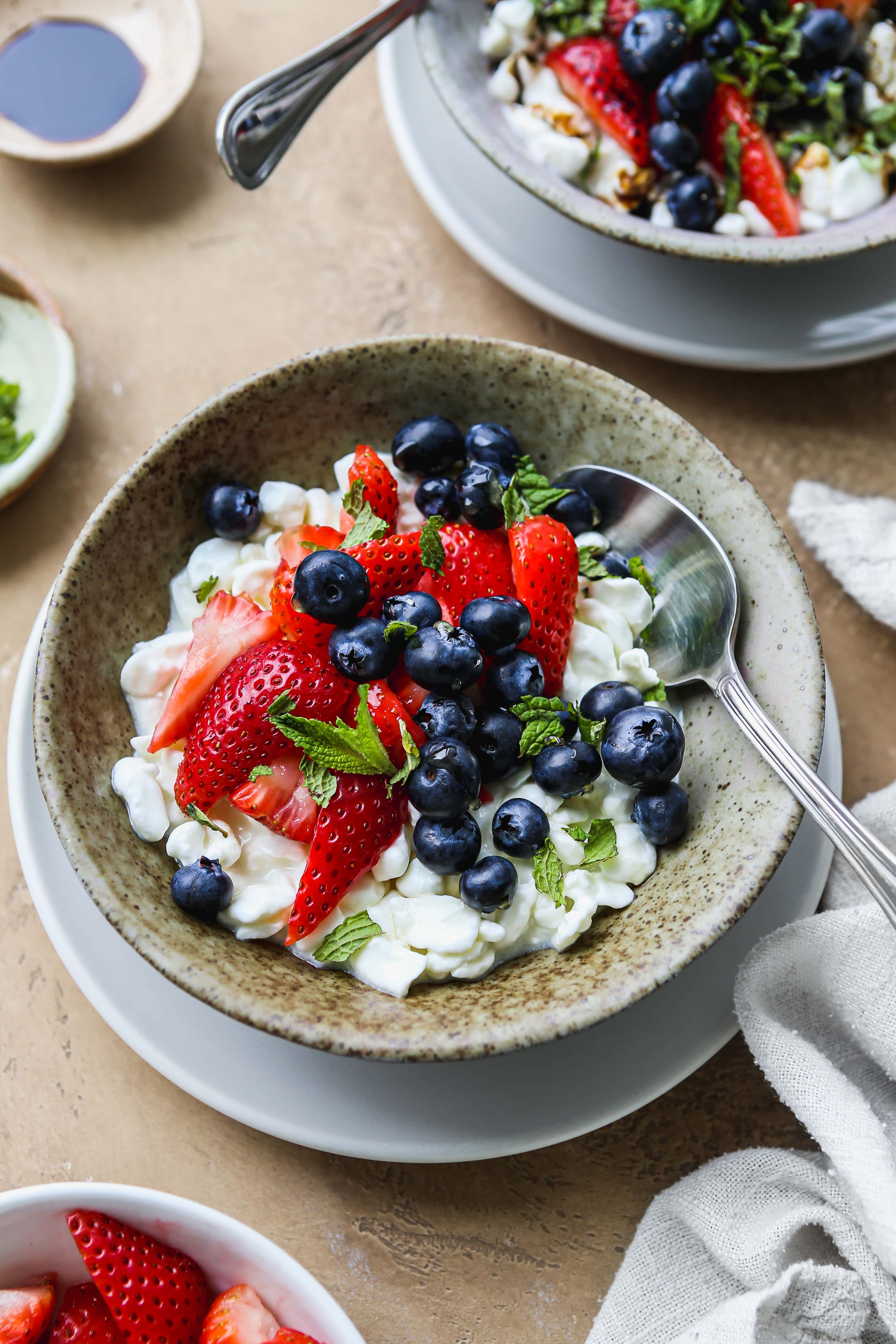
- The Greek Yogurt Pairing: Tossing cold blueberries into plain 2% or 5% Greek yogurt instantly freezes thin ribbons of the dairy around the berries, creating an impromptu frozen confection with 15 grams of muscle-sparing casein and whey proteins.
- Cinnamon and Tannin Additions: Sprinkling Ceylon cinnamon over semi-thawed cherries adds aromatic depth while providing cinnamaldehyde, a compound that supports peripheral insulin signaling.
Frequently Asked Questions (FAQ)
Q1: Does eating fruit while frozen damage tooth enamel or cause dental harm?
A1: Biting forcefully into rock-hard fruit straight from a deep freeze running at 0°F (-18°C) can risk microscopic enamel fractures or dental work damage. Allow the fruit to sit at room temperature for 3 to 5 minutes until the outer surface yields slightly to a spoon.
Q2: Are frozen fruit products treated with preservatives or added sugar?
A2: Always check the ingredient deck on the package. High-quality flash-frozen items list solely the fruit itself. Lower-cost options or frozen pie mixes often hide high-fructose corn syrup, artificial colorings, or concentrated cane syrup inside the bag.
Q3: Can people with type 2 diabetes safely use frozen fruit as a daily snack?
A3: Yes, provided they select low-glycemic options like blackberries, raspberries, and wild blueberries while keeping servings around one cup (100, 120g). Pairing the snack with a few raw walnuts or unsweetened almond butter helps mitigate blood glucose spikes.
Q4: Why does frozen fruit sometimes develop a freezer burn taste or spongy texture?
A4: Freezer burn occurs when air enters poorly sealed packaging, allowing moisture to sublimate out of the food matrix. To prevent this, evacuate excess air from the bag before sealing, or divide bulk purchases into airtight glass containers.
Rethinking the Sub-Zero Snack Strategy
Snacking on frozen fruit succeeds because it honors basic human cravings rather than trying to erase them through sheer willpower. It offers a naturally sweet, cold, highly textured experience that occupies the hands and mouth without overwhelming the body with refined carbohydrates and trans fats. By relying on slow gastric breakdown and high fiber counts, frozen fruit functions as an accessible, cost-effective tool in modern nutritional strategies.
Rely on low-sugar berries for late evenings, measure servings into bowls rather than grazing from bulk packaging, and let the fruit thaw slightly to unleash its natural sweetness. When combined with whole proteins or modest fats, sub-zero produce turns the routine urge for ice cream into an opportunity for consistent, measurable cellular nourishment.