Why Everyone Is Eating Cottage Cheese Wrong: The Science-Backed Shift Transforming Daily Diets
For decades, cottage cheese remained frozen in cultural memory as a joyless diet relic of the 1970s, scooped unceremoniously out of plastic tubs alongside canned peaches. That era is over. As documented in a recent Kansas City Star Report, a wave of consumers who previously detested the product are blending it into everything from pasta sauces to high-protein doughs, bypassing texture issues while capturing its remarkable nutritional density.
The modern culinary renaissance around cottage cheese is driven by metabolic biochemistry rather than nostalgia. When consumed cold and plain, the curd structure and watery whey fraction often trigger sensory aversion, prompting people to drown the dairy in high-glycemic syrups. Clinical dietitians emphasize that preparing cottage cheese with intentional cooking techniques preserves its micronutrient integrity, blunts blood sugar excursions, and prolongs metabolic fullness throughout the day.
📌 Key Takeaways:
- The Sensory Breakthrough: Food processors and immersion blenders dissolve curd texture barriers, yielding an emulsified base identical to ricotta or sour cream.
- Sustained Metabolic Impact: Slow-digesting micellar casein provides a continuous release of amino acids, maintaining satiety for up to five hours.
- Savory Versatility: Shifting prep from sugary fruit toppings to salt, acid, and heat creates stable, high-yield replacements for heavy dairy creams.
The Curd Texture Hack That Conquered Kitchen Resistance
Textural hesitation represents the single largest barrier to eating cottage cheese. The loose, wet curds, formed when lactic acid coagulates milk proteins, produce an irregular mouthfeel that divides eaters. Modern home cooks have countered this hurdle through an aggressive curd texture hack: high-speed mechanical blending.
Subjecting traditional whole-milk or 2% cottage cheese to sixty seconds in a food processor shears the casein aggregates. The result is blended cottage cheese: a velvety, micro-aerated spread indistinguishable from whipped cream cheese or mascarpone. This mechanical transformation does not degrade the protein matrix or alter the macro profile. Instead, it unlocks culinary flexibility. Home cooks use the whipped emulsion as a dip and spread substitute, spreading it over seeded sourdough or whisking it into pancake batters without moisture separation.
The technique also resolves the temperature problem. Traditional curds weep whey when warmed improperly, leaving a watery residue. Blending the dairy stabilizes the emulsion, allowing it to incorporate into hot dishes without breaking under moderate heat.
Slow-Burning Casein and the Science of Appetite Control
Cottage cheese acts differently in the human gut compared to ultra-filtered milk or whey isolate powders. Roughly 80% of the protein content consists of casein, specifically micellar casein, while the remaining 20% is whey. When casein enters the acidic environment of the stomach, it coagulates into a dense gel matrix.
This biological clot slows gastric emptying rates. Digesting enzymes break down the casein matrix gradually, discharging a steady trickle of amino acids into the bloodstream over four to six hours. In a 14-day dietary tracking assessment published by Women's Health, participants consuming cottage cheese daily reported sudden drops in mid-afternoon snacking cravings. The physiological culprit is peptide YY and glucagon-like peptide-1 (GLP-1), two satiety hormones triggered when dietary peptides linger in the upper intestine.
A parallel investigation conducted by Prevention observed that replacing standard morning carbohydrates with a single cup of cottage cheese suppressed hunger spikes until early afternoon. The prolonged casein protein benefits deliver steady amino acid levels to skeletal muscle tissue while holding baseline ghrelin production in check.
Nutritional Benchmarks: How Dairy Bases Compare
Selecting an ideal dairy base requires understanding differences in protein density, sodium, and fat distribution. The following data highlights how standard cottage cheese varieties compare against common alternatives per 200-gram serving.
| Dairy Base (200g) | Protein (g) | Predominant Protein | Sodium (mg) | Average Satiety Window |
|---|---|---|---|---|
| Cottage Cheese (4% Whole Milk) | 24, 26g | Casein (~80%) | 650, 750mg | 4.5, 5.5 hours |
| Cottage Cheese (Low-Fat 1, 2%) | 26, 28g | Casein (~80%) | 700, 820mg | 3.5, 4.5 hours |
| Plain Greek Yogurt (0% Nonfat) | 20, 22g | Casein/Whey blend | 65, 85mg | 3.0, 3.5 hours |
| Part-Skim Ricotta | 14, 16g | Whey (~90%) | 180, 220mg | 2.0, 2.5 hours |
| Silken Tofu (Firm) | 12, 14g | Soy Glycinin | 30, 45mg | 2.5, 3.0 hours |

Savory Meal Prep Tactics That Outperform Traditional Dishes
The standard convention of pairing cottage cheese with pineapple rings or sugary jellies undermines satiety and appetite control. Rapidly digested simple sugars counteract the stabilizing effects of casein, triggering reactive glycemic dips. Culinary professionals and nutritionists have pivoted toward savory cottage cheese bowls to maximize nutritional efficiency.
Savory preparations harmonize with the natural salinity of the cheese. A base of whole-milk cottage cheese combined with extra virgin olive oil, cracked black pepper, diced Persian cucumbers, and sumac provides essential lipids that slow digestion further. The fat-soluble vitamins (A, D, and K2) in full-fat dairy absorb more efficiently when paired with cold-pressed plant fats.
For high-protein meal prep, blended cottage cheese functions as a direct substitute for heavy cream in an Italian-style protein pasta sauce. Whisking half a cup of blended curds into simmering marinara or roasted garlic puree boosts total protein yield by 14 grams per serving. Unlike heavy whipping cream, which rapidly destabilizes under prolonged storage, blended cottage cheese holds its consistency in airtight glass meal prep containers for up to four days.
Creative cottage cheese toast toppings follow this savory trajectory. Spreading cold whipped cottage cheese onto hot rye toast topped with smoked salmon, pickled shallots, and fresh dill adds complete marine fatty acids while reaching 30 grams of high-quality morning protein without using a single egg.
Pairing Protocols for Blood Sugar Management
Sweet flavors do not need to be eliminated; they require structural guardrails. The human sweet tooth responds well to sweet honey and fruit pairings, provided the sugars are accompanied by active plant fibers.
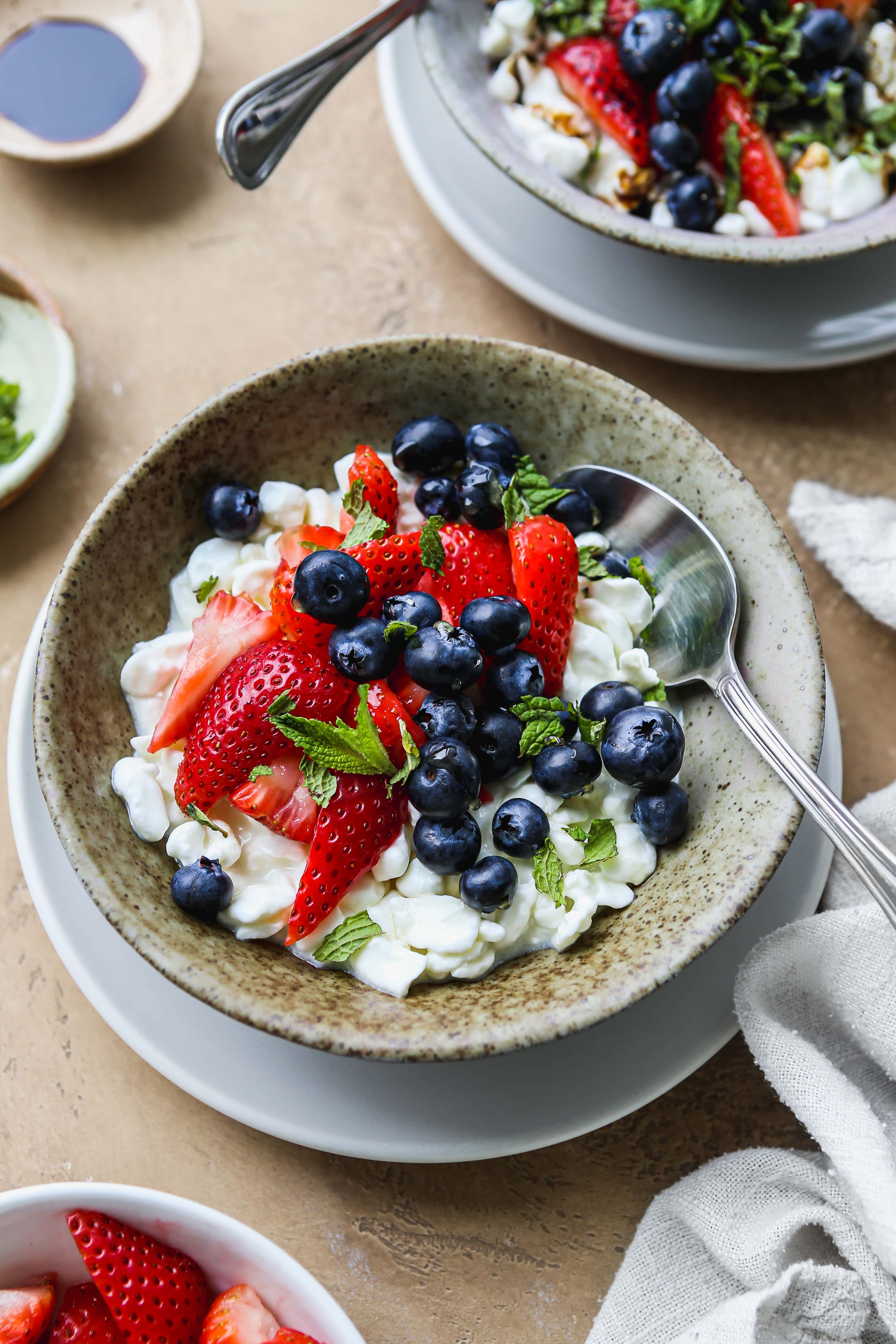
Instead of honey-drenched curds eaten alone, layer cottage cheese with unpeeled blackberries or macerated raspberries. The pectin and insoluble skins create an intestinal fiber network. When honey is added, measure it by the teaspoon rather than a blind pour. Raw local honey contains trace enzymes and floral polyphenols, but capping simple sugars at five to seven grams preserves glycemic stability.
Fitness enthusiasts frequently use cottage cheese as a smoothie protein booster. Adding 100 grams of curds into a blender with frozen wild blueberries, spinach, and unsweetened almond milk yields an unctuous, milkshake-like consistency. The natural salts in the cheese subtly enhance fruit sweetness, eliminating the need for commercial sweeteners while elevating overall daily protein intake.
Frequently Asked Questions (FAQ)
Q1: Does cooking or blending cottage cheese destroy its high protein content?
A1: No. Mechanical blending merely shears curd clumps without damaging amino acid bonds. While extreme, prolonged boiling can denature proteins and cause separation, standard baking or gently stirring blended curds into sauces preserves complete nutritional potency.
Q2: How do I manage the high sodium levels found in commercial cottage cheese tubs?
A2: Commercial brands contain between 600mg and 800mg of sodium per cup due to brine-curing preservation. Individuals monitoring blood pressure should seek out "no salt added" labels or mix standard varieties half-and-half with unsalted Greek yogurt to reduce sodium concentrations by 50%.
Q3: Can cottage cheese help with nighttime muscle recovery?
A3: Yes. Consuming 20 to 30 grams of casein protein approximately 30 to 45 minutes before sleep provides a steady amino acid stream that fuels overnight muscle protein synthesis and minimizes muscular breakdown during prolonged fasting windows.
Rethinking Daily Protein Intake Strategies
Treating cottage cheese as an isolated diet snack limits its real potential. When approached as a malleable culinary foundation, whether transformed into a rich pasta binder, whipped into a herb-flecked spread, or seasoned with savory crunch, it turns into one of the most efficient nutritional tools in the modern kitchen.
Meeting daily protein benchmarks requires culinary sustainability, not punitive meal plans. By moving past outdated diet stereotypes and adopting mechanical blending alongside savory profiles, eaters gain stable glucose responses, sustained daytime satiety, and practical culinary versatility across every meal.